


Everyone knows Microsoft's path to success is paved with failures. But some of the products they killed along the way were actually impressive — genuinely ahead of their time, and in a few cases, better than what replaced them. Here's a look back at three of the coolest things Microsoft ever built, then walked away from, that you might've forgotten existed.
Microsoft Surface Duo
It begged you to multitask


 Credit: Brandon Miniman / MakeUseOf
 Credit: Brandon Miniman / MakeUseOf
 Credit: Brandon Miniman / MakeUseOf
 Credit: Brandon Miniman / MakeUseOf
 Credit: Brandon Miniman / MakeUseOf
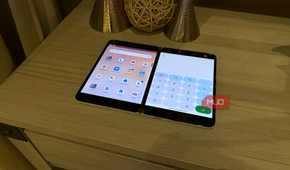
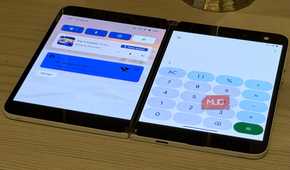
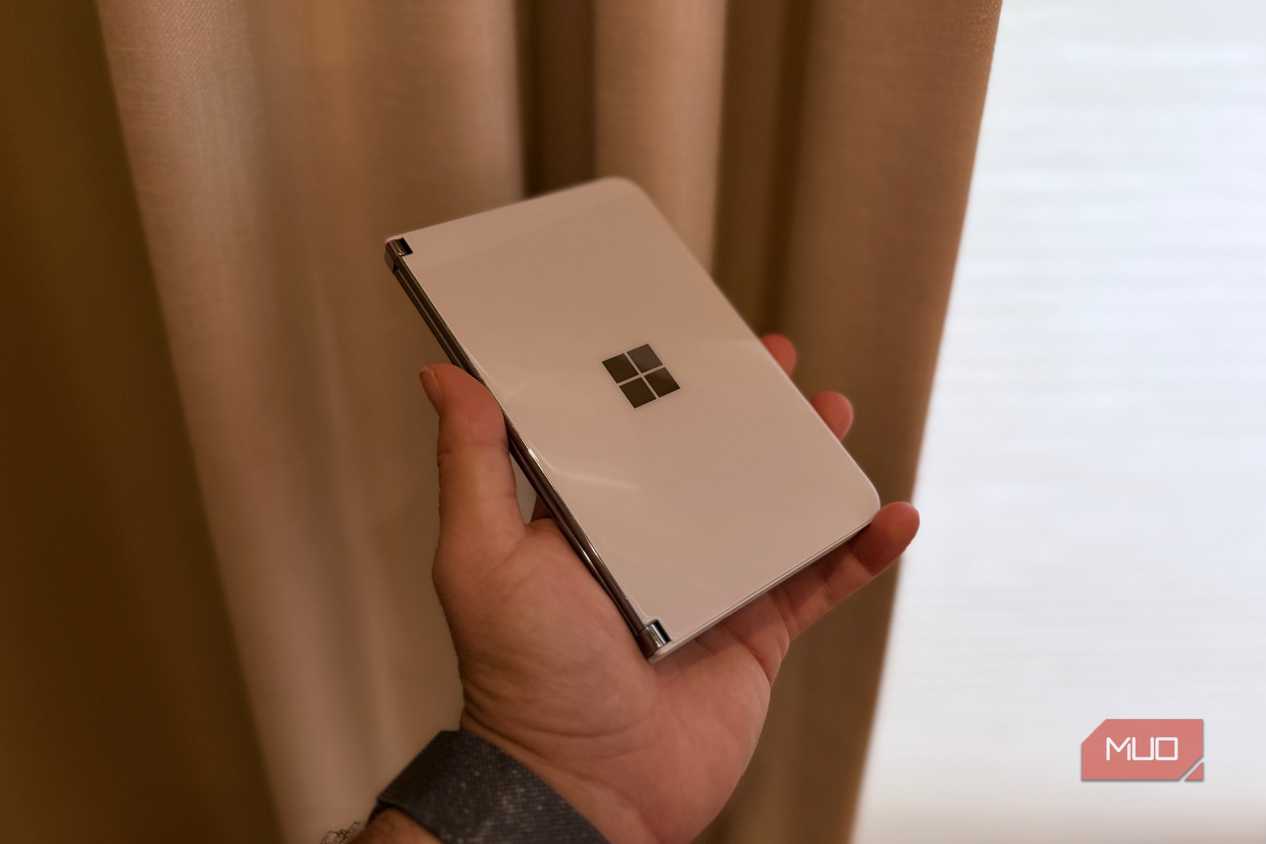
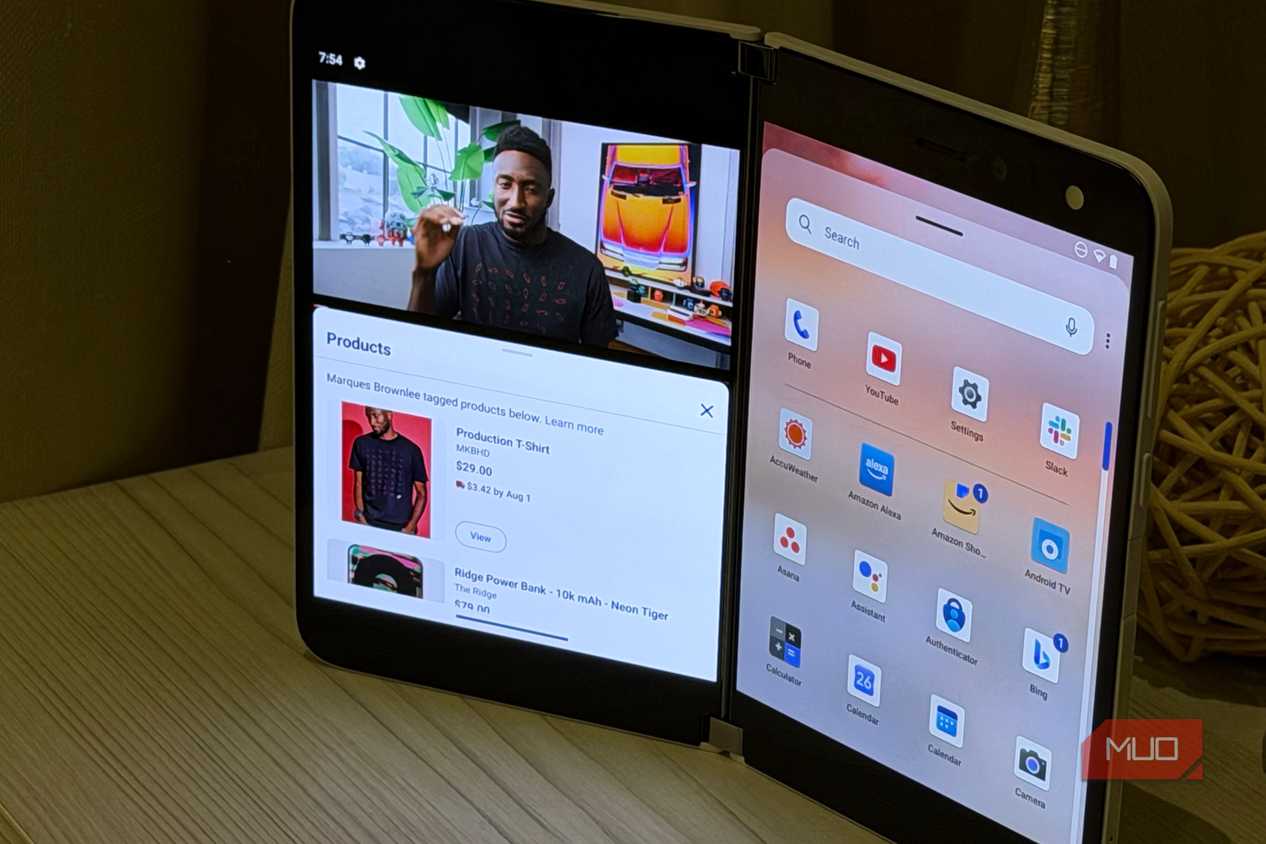
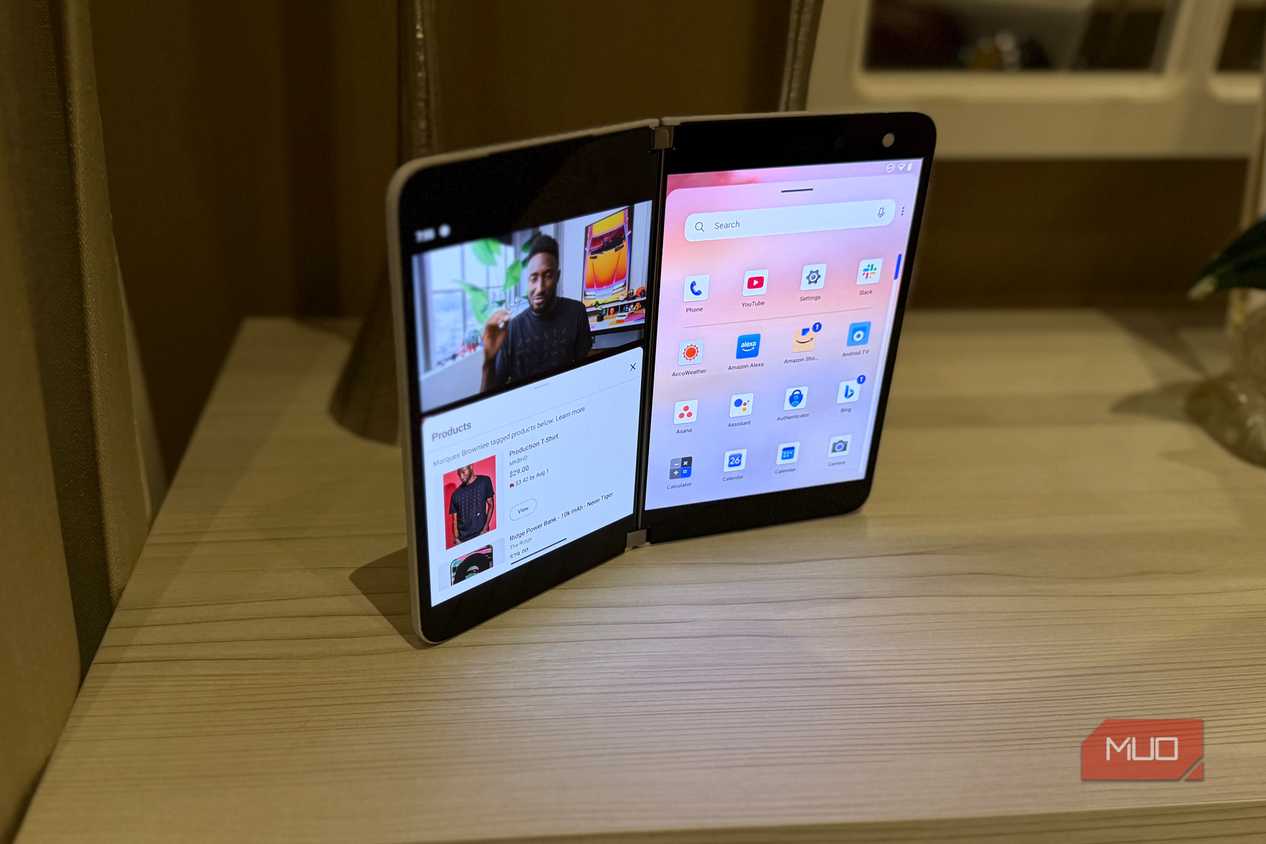
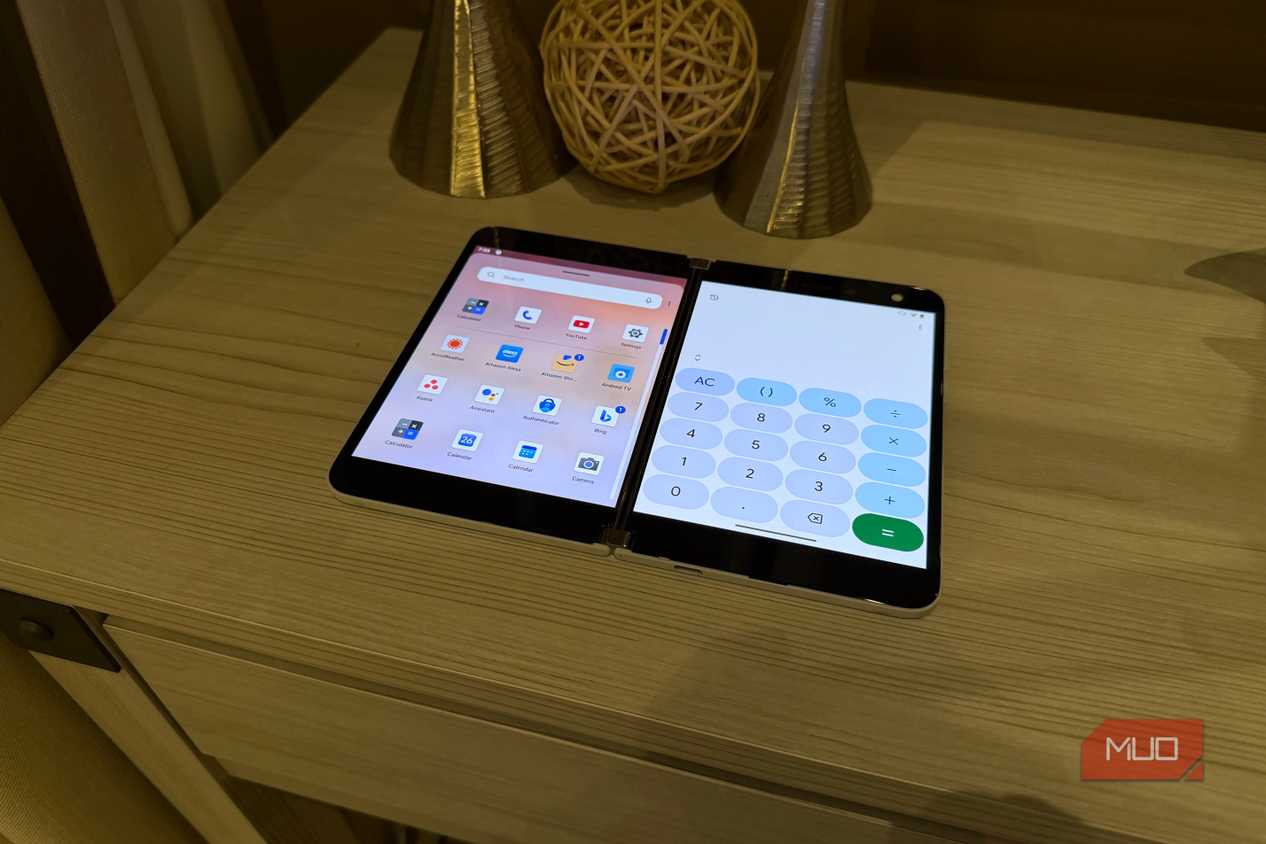
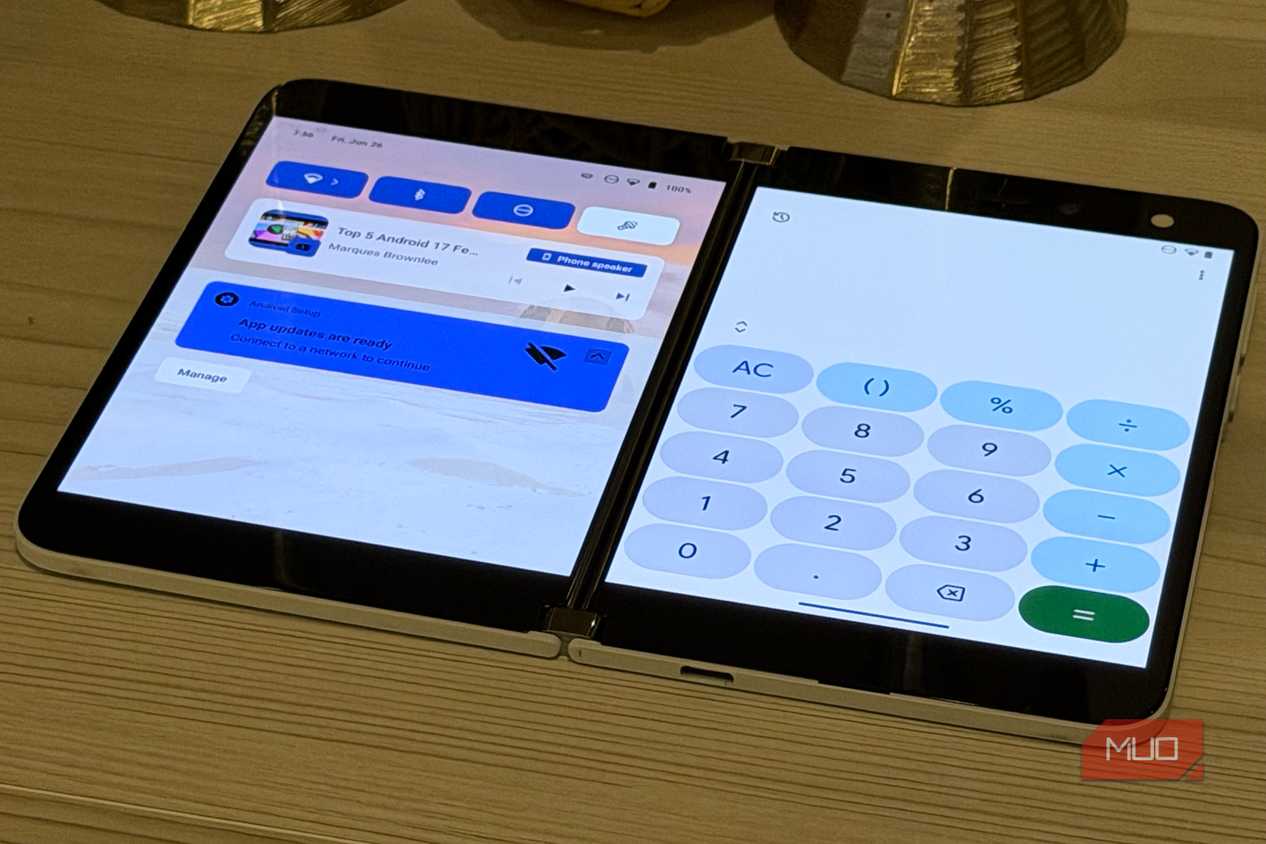
The Android-powered Surface Duo was a cool phone that begged you to multitask. Its slim dual-screen design let you stretch one app across both displays, or 'fling' an app to either side to truly run two at once.
It was great for reading (where each screen would be like a separate page of a novel) since the Surface Duo could read ebooks from a variety of sources, including Amazon Kindle.
Why did it fail? Sales. It was an expensive, weird form factor that was similar to a folding phone but had no cover display like other foldables which could let you use it closed. Instead, Microsoft made a product you almost have to always open, which made it very unwieldy to use. Not only that, but Surface Duo was nearly $1400 when it came out, making it one of the most expensive phones that year.
There was a weird mode that let you use one screen at a time while folded, but the device was far too wide to use one-handed and so the Surface Duo was mostly a two-handed phone.
Despite lackluster sales for the first Surface Duo, there was actually a successor. The Surface Duo 2 came out a year after the original, in 2021. It offered a thinner design, more power, and higher refresh screens. It came with an even-higher price tag, at $1500. By then, Samsung had already nearly perfected the folding phone form factor with the Z Fold 3, and Surface Duo 2 again didn't sell well.
But the Surface Duo wasn't even the most beloved thing Microsoft gave up on.
Zune HD
Perhaps the best music playing device ever made

Microsoft's beautiful text-based UI called Metro UI that we saw on Windows Phone 7 in 2010 first showed up in 2009 in an amazing music player called the Zune HD. This slim and light music player had a vibrant OLED screen (though nowadays, OLED is no longer king) and weighed a mere 74 grams. The 16GB model let you store 4,000 songs while the most common 32GB model let you store 8,000 songs. The Zune HD was this incredibly small and beautiful music player that could hold thousands of songs.
Most importantly, Zune HD was paired with the Zune marketplace, the first "all you can eat" unlimited music subscription that let you download and listen to any song as long as you paid the $14.99 per month fee for Zune Pass. Unlike the iPod, the Zune HD had Wi-Fi which enabled wireless syncing of music, which was a huge deal at the time.
In 2011, Microsoft killed the Zune HD as it shifted its focus to Windows Phone — only to kill that, too, six years later.
But this wasn't the first time Microsoft did something cool in mobile — and the next one was a genuine mess. A decade before the Zune, Microsoft put a whole desktop OS in your pocket, across dozens of different devices.
The Zune HD was this incredibly small and beautiful music player that could hold thousands of songs
The Pocket PC Operating System
It came in dozens of form factor, but was too early

This is the HTC Tilt 2, a Microsoft Pocket PC device, that had a super cool tilting screen that slid open to reveal a full QWERTY keyboard (though superior keyboard layouts do exist). This form factor gave you a smartphone when closed and a mini laptop when open.
The software was the downfall — not just for this HTC device, but for the dozens of form factors HTC, Samsung, and others built around Microsoft's Pocket PC OS.
Microsoft mistakenly thought people wanted the desktop Windows experience in their pocket, so they skinned Windows CE to look like a Windows desktop, with tiny touch targets that only a stylus could work with. Microsoft didn't do the work to touch-optimize the Pocket PC operating system, and overall it was a terrible experience despite it coming in a range of form factors from many different companies.
In 2010, Microsoft abandoned the Pocket PC operating system, pivoting all of their efforts to the also ill-fated Windows Phone operating system. The truth is that around this time the iPhone and Android was gaining hugely in popularity thanks to Apple and Google creating mobile-first operating systems, and Microsoft left its mobile devices behind which helped to elevate iPhone and especially Android.
And these three are just the products people remember. Microsoft's graveyard runs much deeper.
Microsoft's Graveyard is extensive
Also includes Microsoft Band, Kinect, Courier and others

Take the Microsoft Courier: a dual-screen folding tablet that opened like a leather journal, with a stylus on one side and touch on the other, years before foldables were a thing. Microsoft killed it in 2010 before it ever shipped — and you can see its DNA in the Surface Duo it built a decade later. Then there's the Microsoft Band, a wearable fitness tracker crammed with an absurd number of sensors, including a UV sensor and a skin conductivity sensor. Or the Kinect, a sensor that used computer vision to make your body the controller for Xbox games. Microsoft has had its fair share of really cool products that it ended up killing.
Microsoft has a habit of building something genuinely ahead of its time, getting cold feet, and handing the lead to someone else. The Surface Duo, the Zune HD, and Pocket PC were cool enough to deserve better than they got — and a little piece of each one shows up in the devices we actually use today.

ASUS Vivobook 14
- Operating System
- Windows 11
- CPU
- Snapdragon X