


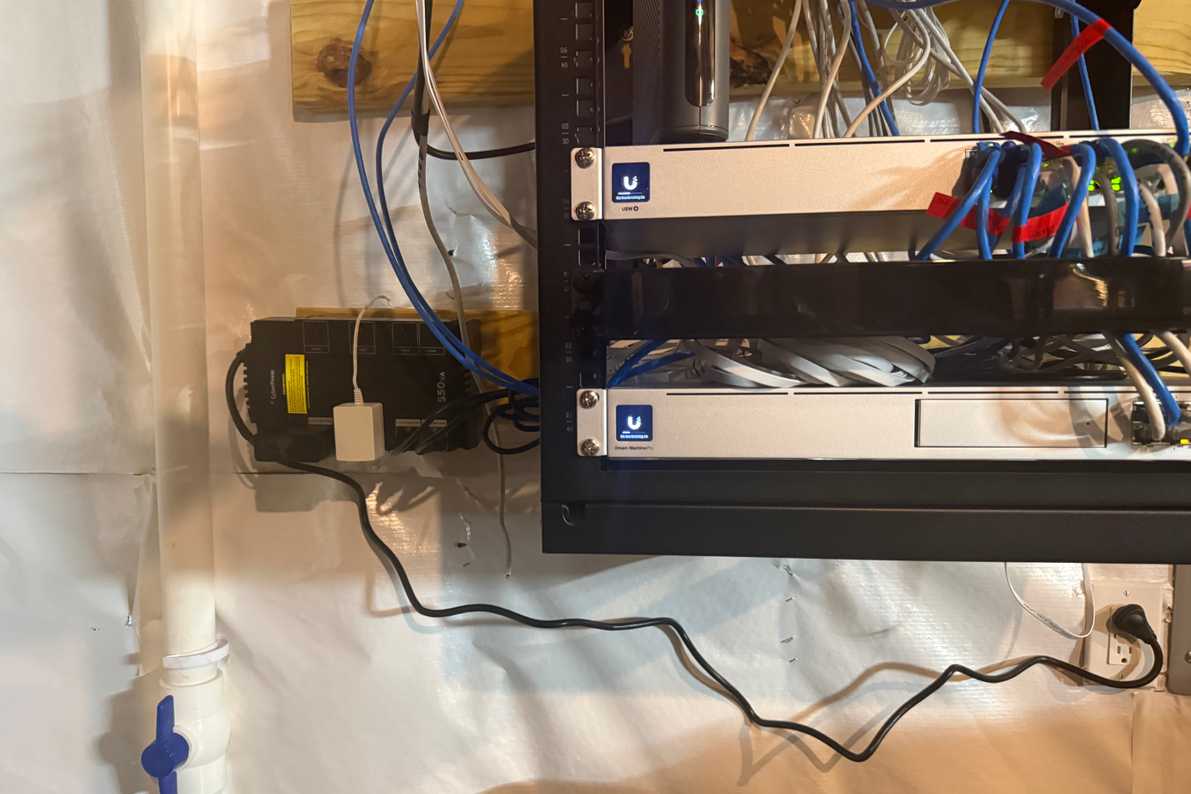
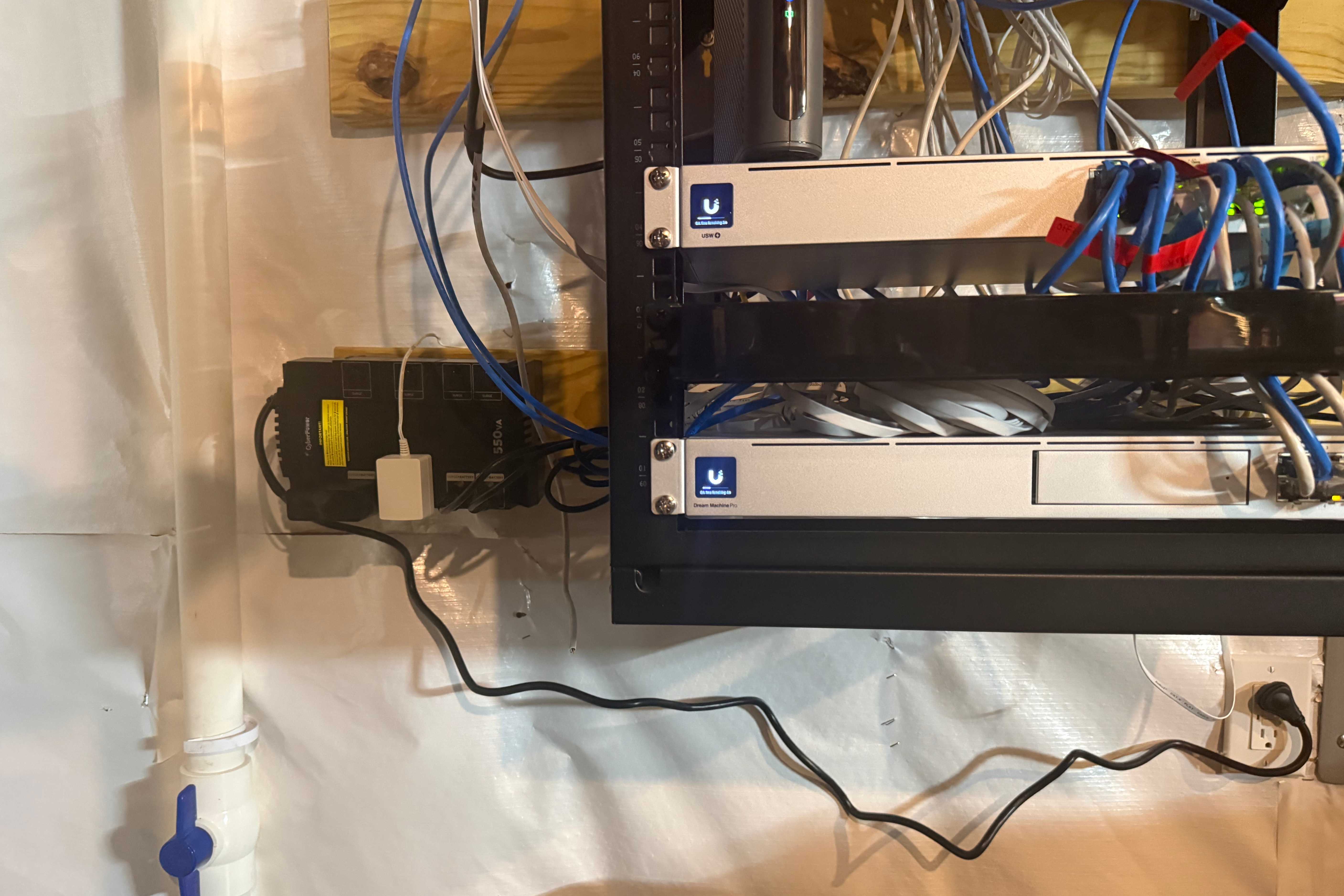
Summer storms in Northern Indiana rarely cut my power for long. The typical event is a flicker: lights dim or go out for a second, the microwave clock resets, and everything carries on. My network takes those flickers much harder. Each one forces the entire rack into a cold reboot, and for close to 10 minutes afterward, every smart device in the house sat disconnected and confused. The fix was a CyberPower CP550SLG USP, a compact $77 battery backup that now sits on a shelf in the rack I built after replacing my ISP router with UniFi. It absorbs the blips my gear used to feel, and my network has stayed up through every storm since.
A one-second flicker meant 10 minutes of dead network
The reboot always hurt more than the blip


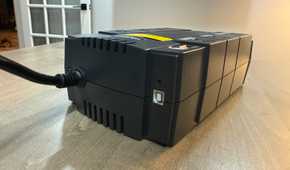
The pattern repeated all last summer. A storm would roll through, the power would hiccup for a second or two, and my Dream Machine, switch, and cable modem would all restart from scratch. The modem had to renegotiate its connection with Xfinity. The Dream Machine needs several minutes on its own to fully boot. My access points draw power over Ethernet, so they waited on the switch before even beginning their own startup sequence. One second of lost power turned into roughly 10 minutes of no internet and no Wi-Fi.
The smart home noticed before I did. Ring cameras dropped offline and stayed that way. Echo speakers rebooted in seconds, then sat there unable to reach anything. The thermostat app just spun. None of the devices were broken. They simply came back faster than the network that connects them, then gave up waiting. It stung a little after I'd spent real time organizing the cables in that rack. The gear finally looked professional and still fell over every time the lights blinked.
My surge protector was never going to fix this
Spikes and dropouts are opposite problems


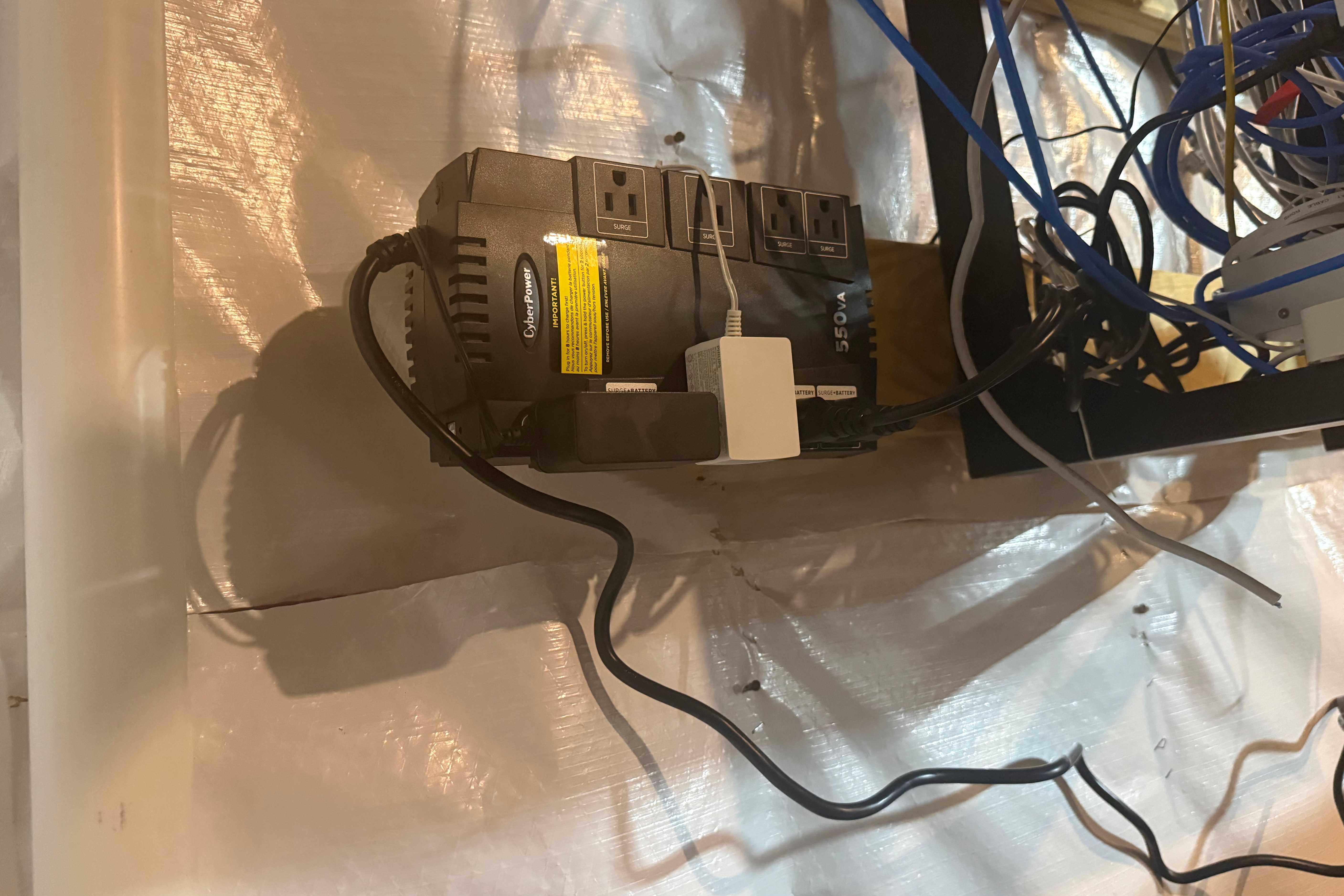
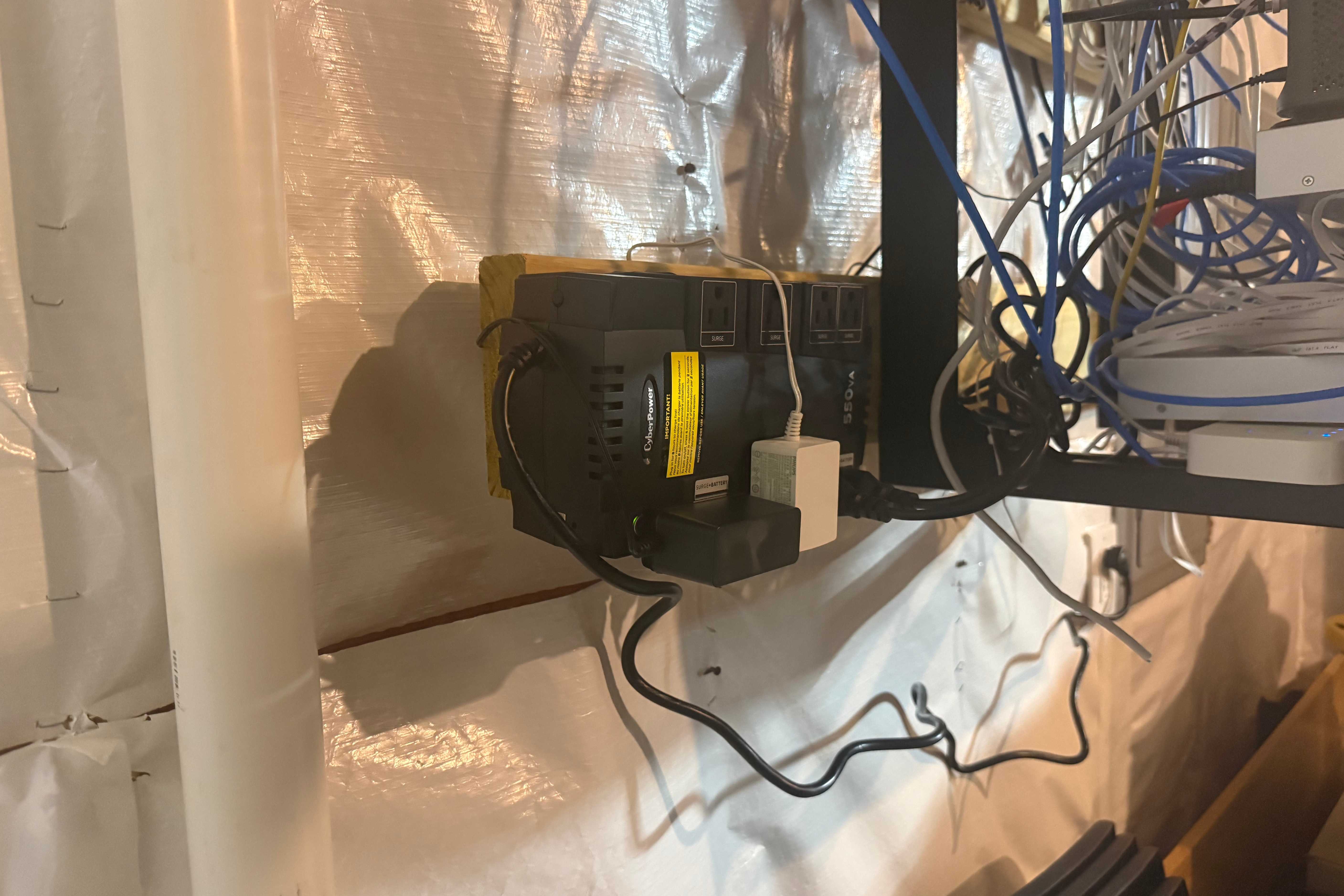
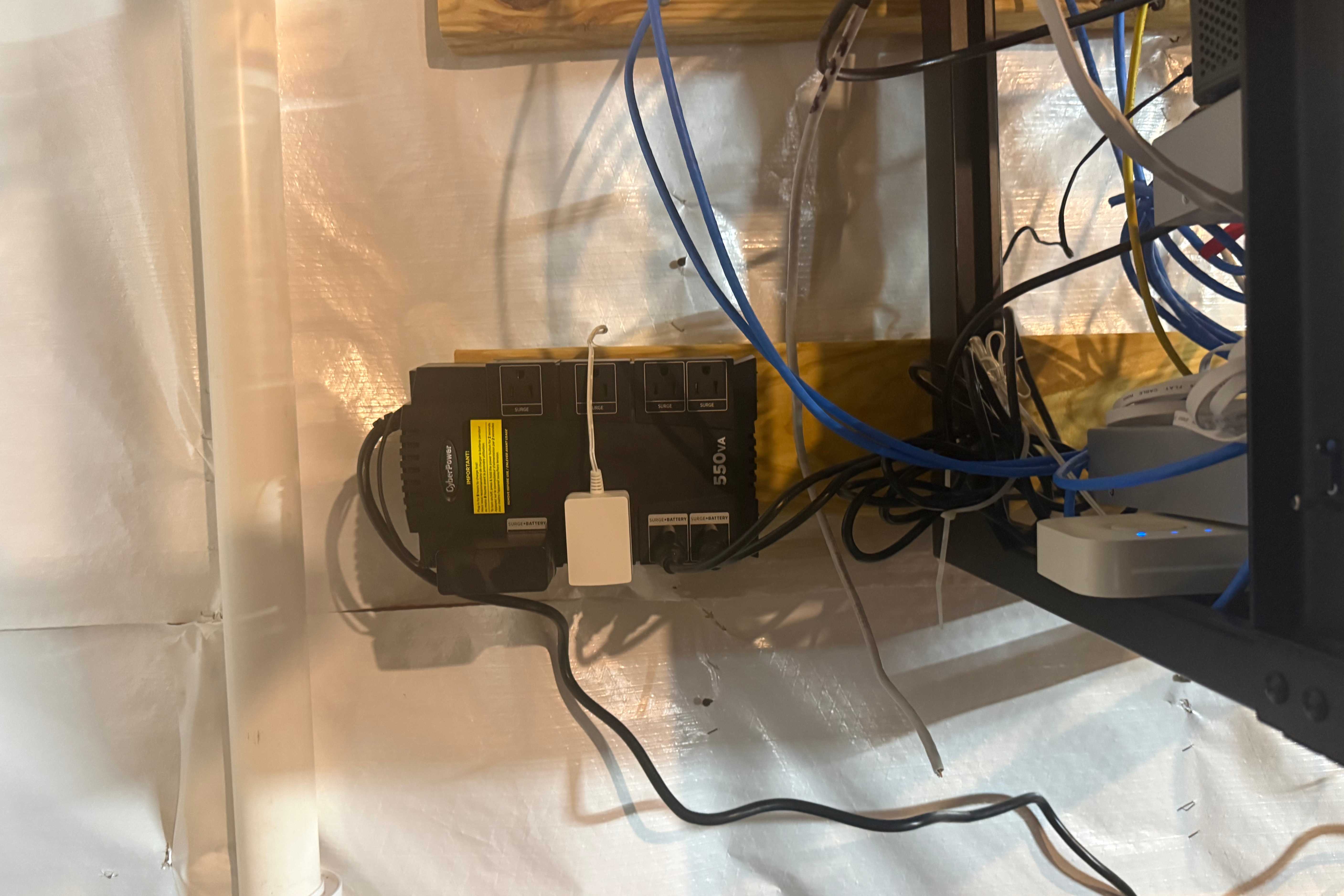
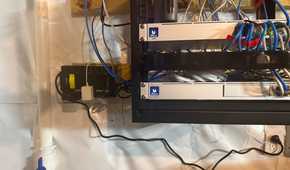
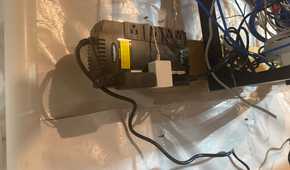
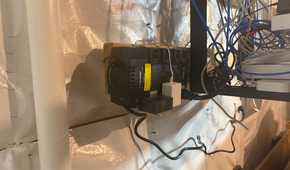
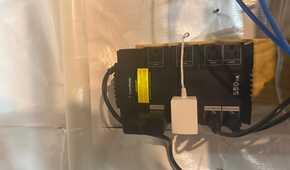
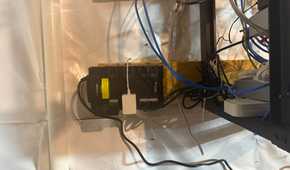
Everything in the rack was already plugged into a surge protector, which felt responsible at the time. It was solving the wrong problem. A surge protector defends against too much electricity arriving at once. A blip is the reverse failure, where the electricity briefly disappears. No surge strip bridges that gap, and plenty of older ones have quietly stopped doing their original job anyway. It only takes a minute to check whether your surge protector still works, but even a brand-new one would have left my rack rebooting.
A UPS closes the gap with a battery. The CP550SLG uses a standby design, passing wall power through during normal operation and switching to battery the instant the line drops. CyberPower lists the transfer time at 4ms. My equipment has never registered the handoff.
The $77 UPS that ended it
Four battery outlets cover the gear that matters

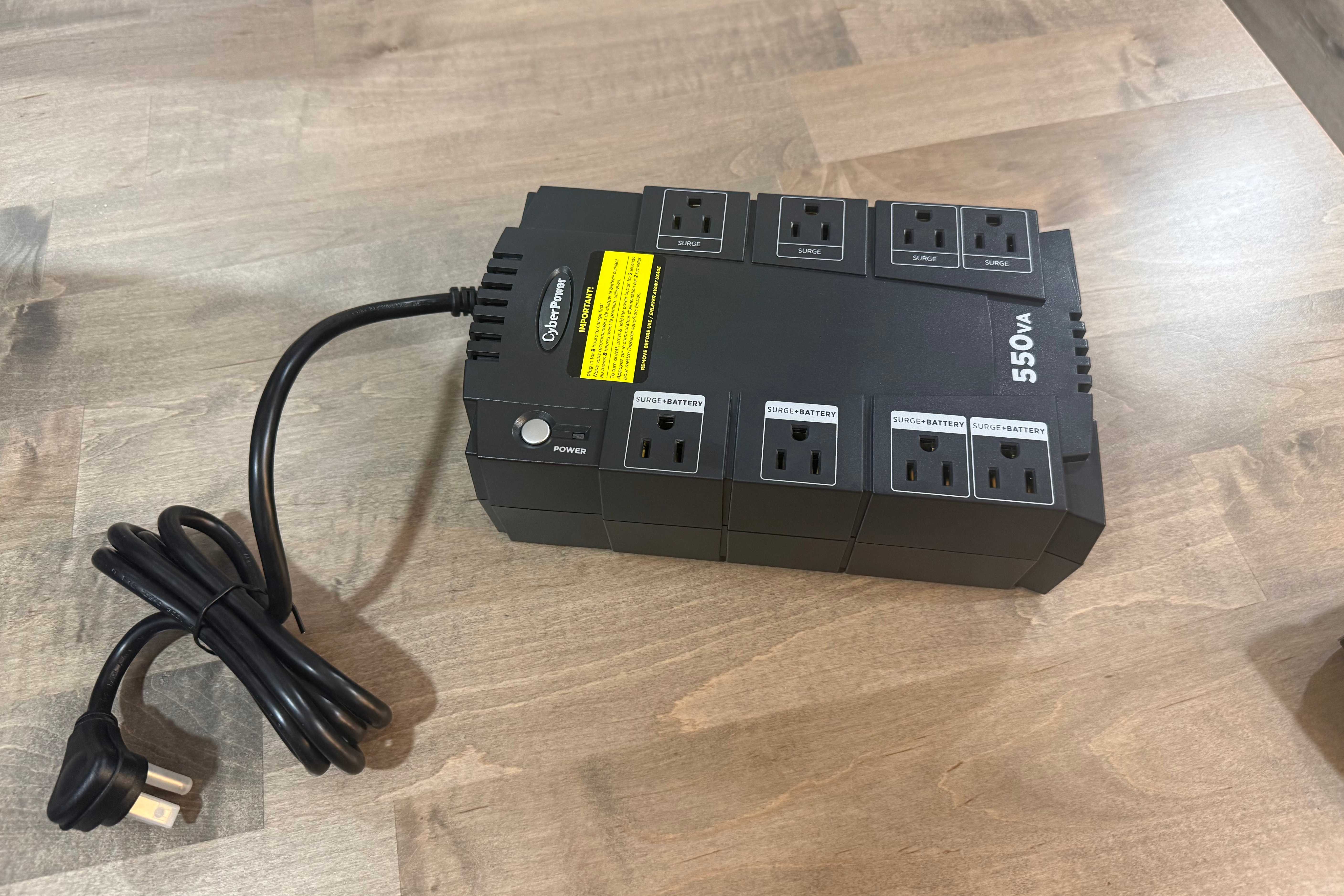
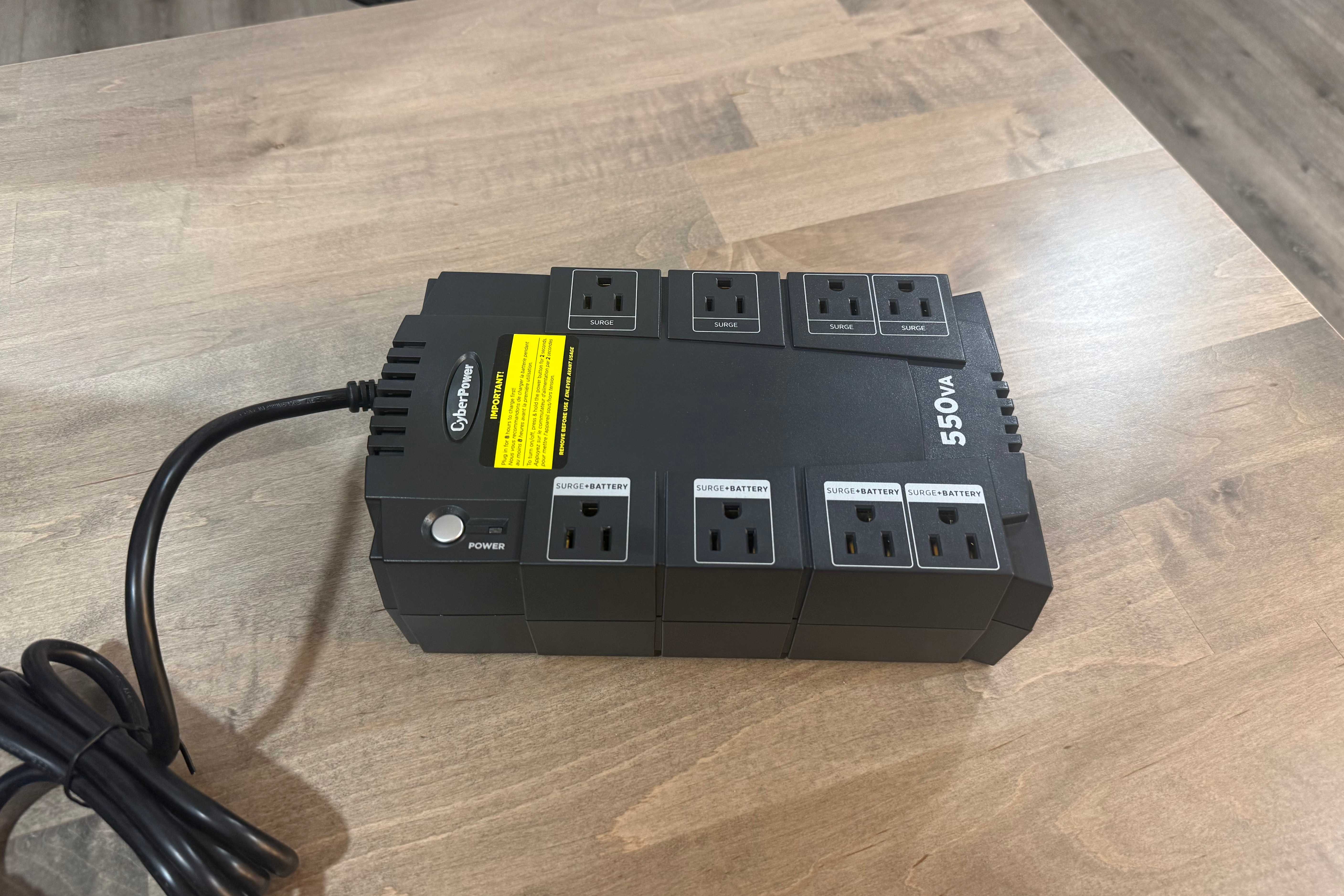
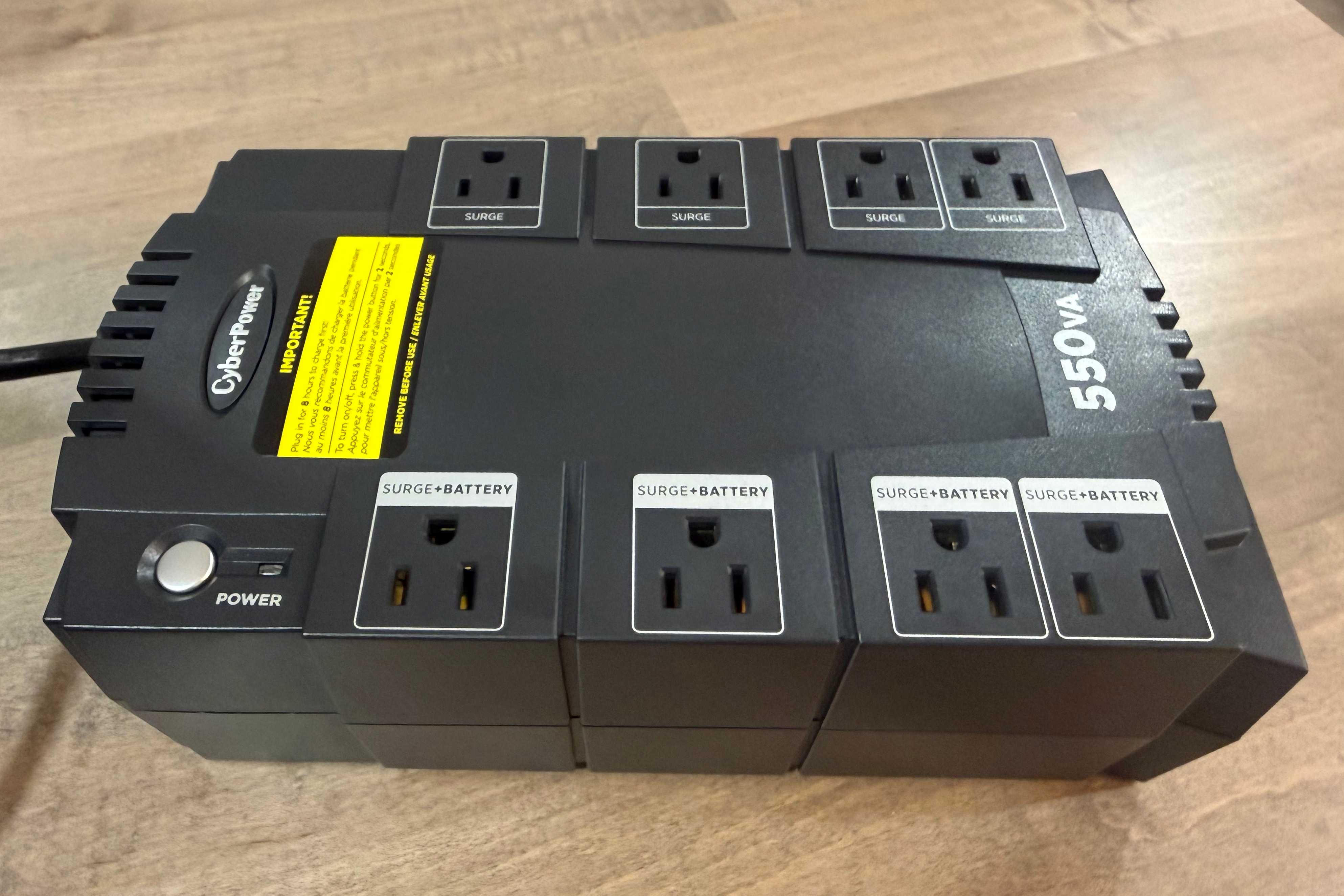
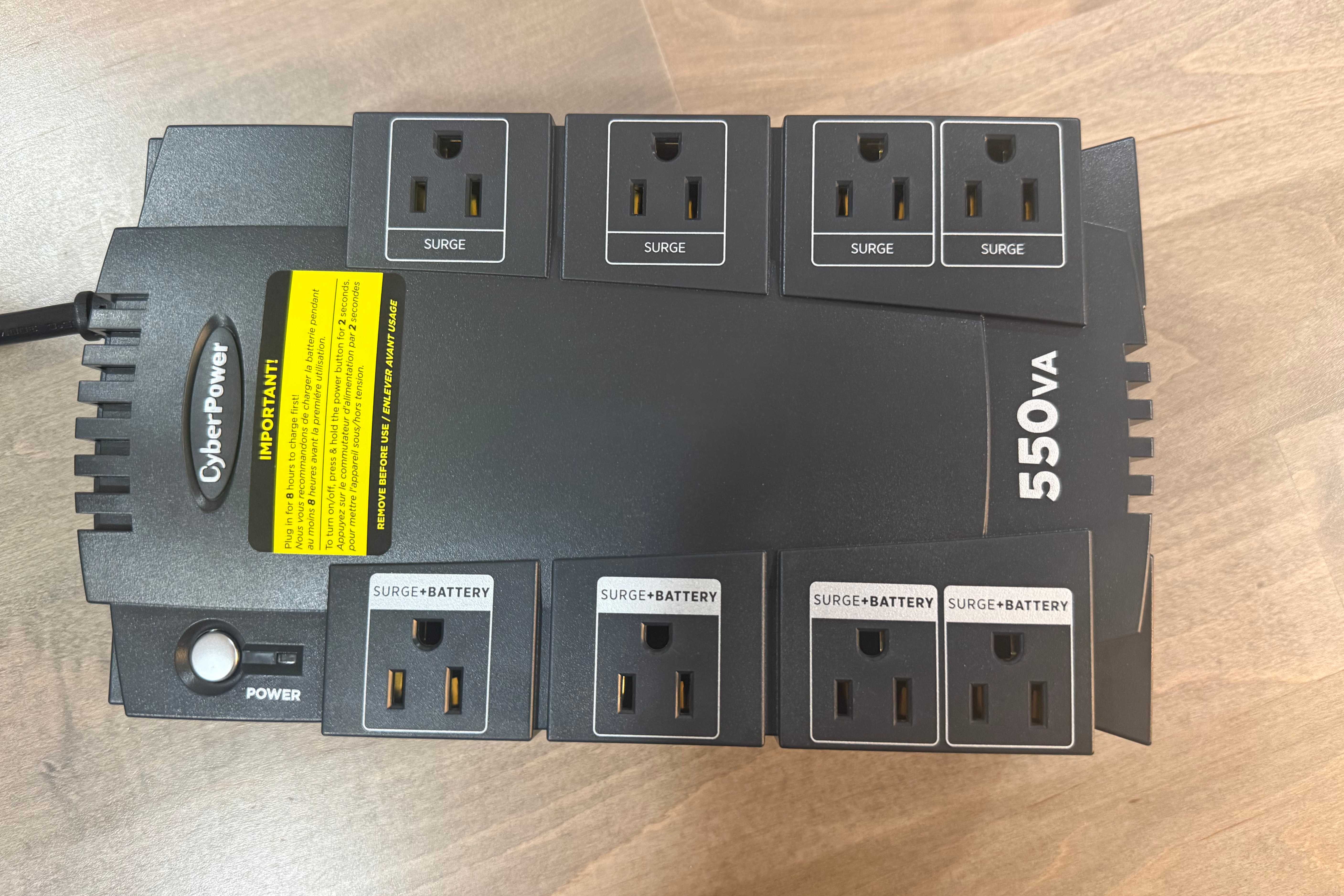
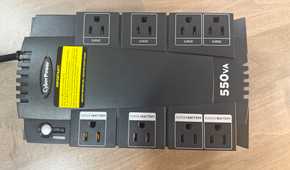
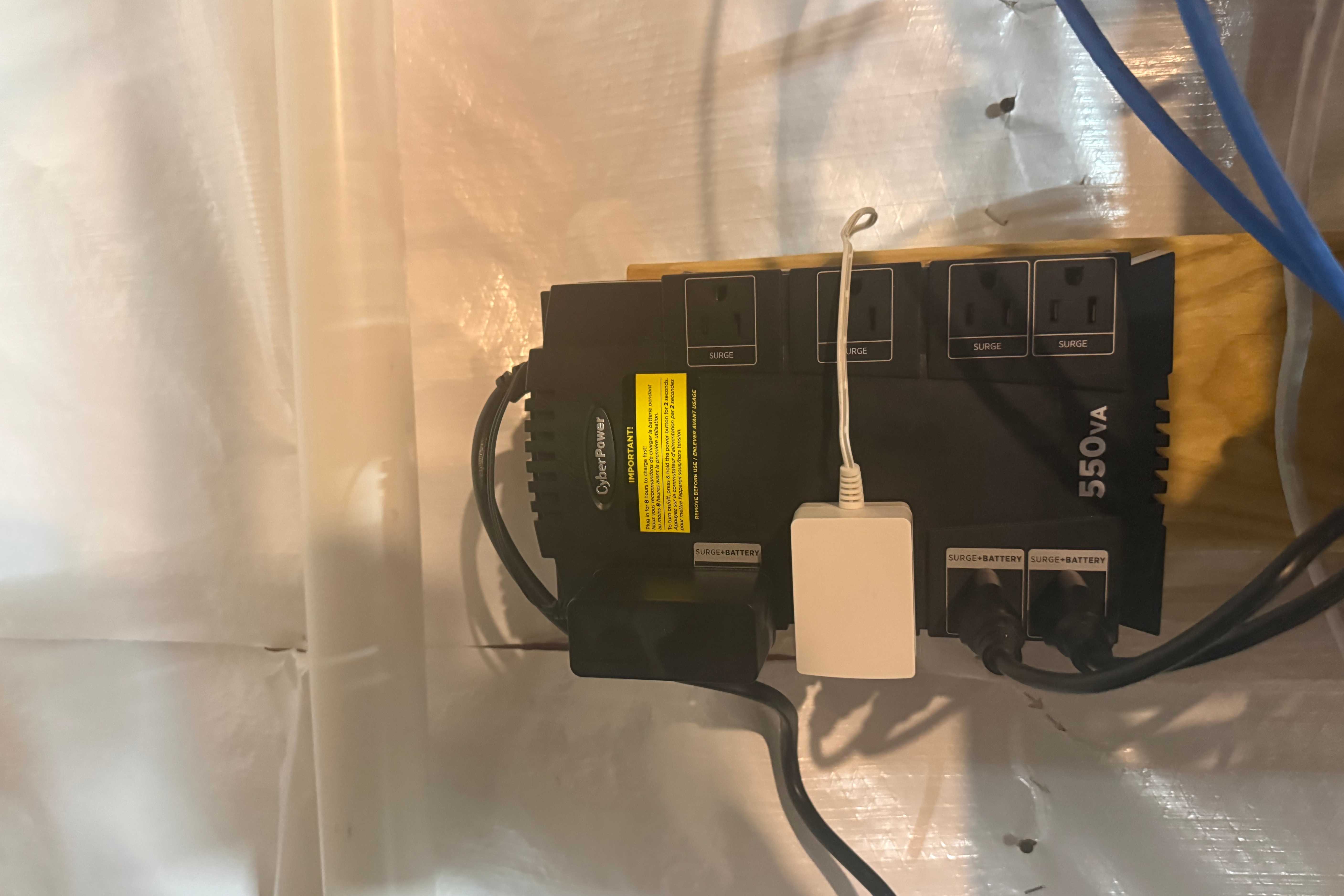
The CP550SLG is rated at 550VA/330W and splits its eight outlets down the middle: four with battery backup plus surge protection, and four with surge protection only. The whole unit measures just under 10 inches wide and 6 inches tall, so it lies flat on a rack shelf without eating meaningful space. Mine cost $77.30 shipped.
My three critical loads went on the battery side. The cable modem keeps the internet connection alive. The Dream Machine keeps routing. The switch matters most, because it pushes power over Ethernet to the access points in my ceilings. A router and a switch aren't interchangeable, but during a blip they share one requirement: staying powered. With those three covered, the entire wired and wireless network rides through an interruption untouched.
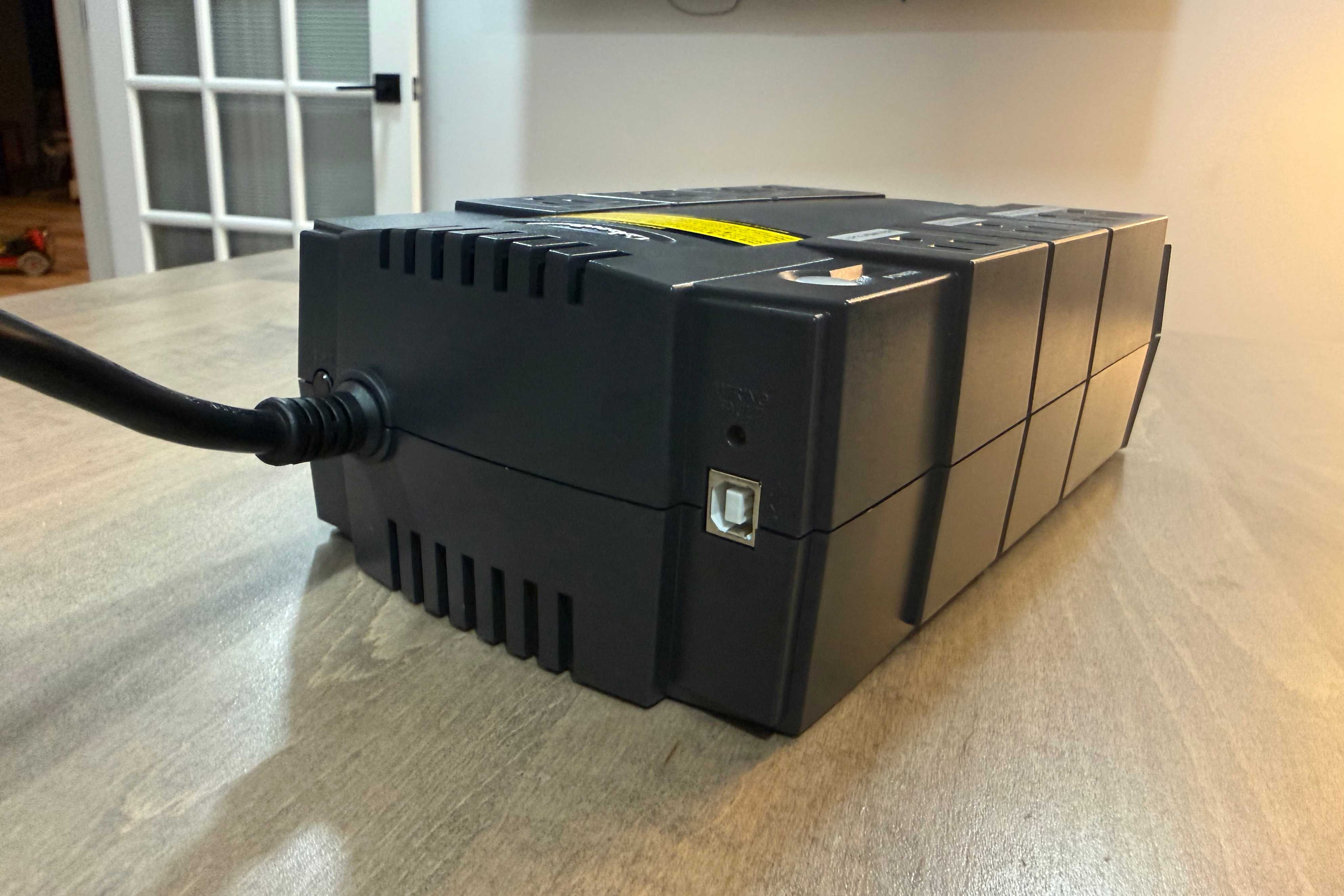
The surge-only outlets picked up the leftovers in the rack. There's also a USB port that can signal a connected computer to shut down gracefully, a genuinely useful feature on a desk, though nothing in my rack needs it. On top of the battery, the unit adds 890 joules of surge suppression and a three-year warranty that covers the battery itself.
Blips still happen, and nothing notices anymore
The runtime math works for a network rack

Three storms have rolled through since the install. Each time, the lights flickered and something in the kitchen beeped, but the rack kept humming. The Ring cameras that lose power reconnect within seconds, because the Wi-Fi they're searching for never went anywhere. Echo devices rejoin quietly. Nobody in the family notices anything happened, which is the entire point.
The runtime numbers back this up. CyberPower rates the CP550SLG at eight minutes of battery at half load, which works out to 165W. My modem, Dream Machine, and switch draw well under that combined, even with the access points pulling power through the switch, so real-world runtime stretches comfortably past the official figure. That covers every flicker, brownout, and short outage this unit will realistically face. It is not a whole-house generator, and a multi-hour outage will eventually drain it. When that happens, the gear shuts down and reboots exactly as it did before, and I've lost nothing by trying.

CyberPower CP550SLG Standby UPS Battery Backup and Surge Protector
- Cord Length
- 5 ft
- Indicator Light?
- Yes
- Brand
- CyberPower
- Warranty
- 3-Year
- Number of Outlets
- 8
The cheapest gear in the rack protects everything else
I've put real money into this network: the UniFi hardware, the access points, hundreds of feet of Ethernet, and plenty of basement labor. The device that made all of it resilient cost $77 and took five minutes to install. If your smart home resets itself every time the lights flicker, the problem probably isn't the devices. It's the 10 minutes your router spends rebooting behind them. Keep the rack powered through the blip, and everything downstream takes care of itself. A small UPS is the easiest upgrade I've made to this network, and easily the one working hardest per dollar.