


There was a time when using Adobe was not really a choice. If you edited images, you used Photoshop. If you worked in vector graphics, you used Illustrator. If you handled layout, you used InDesign. If you dealt with serious documents, you used Acrobat. Even if you disliked Adobe, even if you pirated it, even if you only opened it because a client sent you a file you could not properly open anywhere else, the conclusion was the same: Adobe was the default.
That era is ending. Not because Adobe is suddenly broke, irrelevant, or bad at making software. Adobe is still enormous. Its revenue is higher than ever. Its margins are still the kind of thing most software companies can only dream of. But the old assumption that Adobe is the unavoidable center of creative work no longer feels true.
To understand why the market suddenly lost faith in one of software's most durable monopolies, we must understand Adobe, and the tension between pure engineering innovation and cold corporate dominance.
Adobe earned the throne
It was a breakthrough before it was a cage

|
|
A panorama shot of Adobe Creek, Los Altos. |
The stream that ran behind John Warnock's home in Los Altos, California, was called Adobe Creek. In December 1982, when Warnock and Charles Geschke quit their stable jobs at Xerox PARC to start a software company, they named it after that creek — a humble bit of nomenclature for a company that would go on to reshape the visual culture of the modern world.
Their breakthrough was PostScript. Rather than telling a printer to place individual ink dots at specific coordinates, PostScript described a page mathematically. It treated text characters and shapes as vector mathematical formulas (lines, arcs, and Bezier curves) rather than fixed pixel grids. This meant a document could scale infinitely, whether it was being rendered on a low-res computer monitor or a high-end commercial typesetting machine.

|
|
1980s advert for the Apple Laserwriter Select 360. |
Steve Jobs (at the time a young visionary steering Apple) understood immediately what that meant. In 1983 he tried to buy Adobe outright for $5 million. Warnock and Geschke refused, and Jobs settled for a 19% stake and a licensing deal that put PostScript inside Apple's LaserWriter. When the LaserWriter shipped in 1985 alongside the Macintosh and Aldus PageMaker, desktop publishing was born overnight — and Adobe collected a royalty on effectively every professional page printed from a computer. Literally printing money.
Then came Photoshop

In 1989, Thomas and John Knoll brought Adobe an image-processing tool that had started as a side project called Display. Thomas was a PhD student at the University of Michigan. John worked at Lucasfilm's Industrial Light & Magic, the effects house behind Star Wars, and immediately recognized what his brother had built: the foundation of a digital compositing tool that studios would kill for. Adobe licensed it, and Photoshop 1.0 shipped in February 1990.
Photoshop's masterpiece was its virtual memory system. In an era when a few megabytes of RAM was a luxury, Photoshop could swap image tiles between RAM and disk so users could edit photographs far larger than their machine's physical memory. That sounds ordinary now. At the time, it felt like sorcery.
The third pillar was PDF. It began in 1991 as a Warnock skunkworks project codenamed Camelot, with a simple goal: make documents viewable on any machine. It shipped in 1993 as the Portable Document Format. That's our good old PDF.
That was the old Adobe at its best: deep engineering, practical standards, and products that solved problems other companies had barely understood. But then Adobe learned a different tactic.
Adobe learned to acquire
Engineers and acquirers

|
|
Adobe World Headquarters in San Jose, California. |
Warnock ran the company as a founder-engineer until 2000, then handed the CEO seat to Bruce Chizen — a salesman, not an engineer, and the man who deliberately transformed Adobe from a research-driven tools company into a commercial machine built around Acrobat and the enterprise. The founders retreated to co-chairman roles, and Adobe's instincts changed with the leadership. The company stopped merely out-engineering competitors and started buying them.
Adobe paid $3.4 billion for its bitterest rival, Macromedia.
The 1994 Aldus acquisition ($437 million) brought in After Effects and PageMaker, the latter eventually reborn as InDesign to systematically dismantle its rival QuarkXPress. But the defining move came in 2005, when Adobe paid $3.4 billion for its bitterest rival, Macromedia — which included Dreamweaver, Flash, and FreeHand — and then stripped the carcass with surgical precision. Dreamweaver was absorbed; Adobe's own GoLive was quietly executed. Flash was ridden hard until Steve Jobs personally ended it with his 2010 "Thoughts on Flash" essay.
Free FreeHand

The most instructive casualty was FreeHand. Vector artists simply preferred it to Illustrator. It was better. Adobe simply stopped developing it after the merger. In 2011, a coalition of designers calling itself the Free FreeHand Organization sued on antitrust grounds, arguing Adobe had bought Macromedia in part to euthanize Illustrator's only real competitor. Crucially, their demand was never money: what they actually wanted was for Adobe to release FreeHand's source code, so the community could turn it into an open-source project and keep it alive on modern operating systems.
They never got it. The case settled quietly in 2012. There was no source code. FreeHand stayed dead. The migration Adobe wanted happened anyway.
That was the shape of Adobe's mature empire. If it could out-engineer a rival, it would. If it could buy one, it would. If users begged to preserve the thing Adobe had killed, they could migrate to Adobe's preferred replacement.
Here comes the subscription that ate the industry
The perpetual license had an expiration date

Shantanu Narayen, who took over from Chizen in December 2007, is the architect of everything modern about Adobe — including the decision that made the company a financial juggernaut and a cultural villain in the same stroke.
Through the Creative Suite era, Adobe's business was cyclical: a new CS release every 18–24 months, a ~$2,600 perpetual license for the Master Collection, and a revenue chart that spiked and cratered with each cycle. Users held the ultimate veto — if CS6 was good enough, they simply didn't upgrade.
In May 2013, Adobe removed the veto. Creative Suite 6 would be the last perpetual release; from now on, the software was $50 a month, forever, via Creative Cloud.
After this pivot, the "perpetual" in perpetual license turned out to have an expiration date. Adobe declared CS6 end-of-life in 2014, shipped its final maintenance patches in 2015, and halted sales altogether. With no updates coming, the software was frozen against operating systems that kept moving: officially, Windows 8.1 and OS X Mavericks were the last supported platforms, and on the Mac the wall became literal — CS6's installer and several components were 32-bit, so nothing past Mojave would even install it, and Apple Silicon shut the door entirely.
Then Adobe eventually switched off the CS6 activation servers, meaning even a legitimate serial number could no longer activate a fresh install. The license users had paid $2,600 to own forever now depended on a server Adobe chose to unplug.
The fury was immediate. Over 35,000 people signed a Change.org petition demanding Adobe reverse course. It didn't matter. Adobe held power over everyone's workflows through the file formats. Years of work saved as .psd, .ai, and .indd files became functional hostages.

And even the price wasn't quite the price. The plan Adobe steered new subscribers toward by default — the "annual plan, paid monthly" — looked like a month-to-month deal but was legally a twelve-month contract billed in installments. Cancel partway through, and Adobe charged an early termination fee of 50% of everything remaining on the contract. This detail was disclosed in fine print and behind hover-over tooltips. The economics were elegant: if a subscriber stayed, Adobe made money. If a subscriber canceled, Adobe made money. Heads and tails.
Everything was going well for Adobe. They successfully crossed the chasm and shifted from perpetual licenses to subscriptions, and with massive increases in revenues. But now, the empire started to show its cracks.
Figma proved Adobe could be outbuilt
The future ran in a browser tab


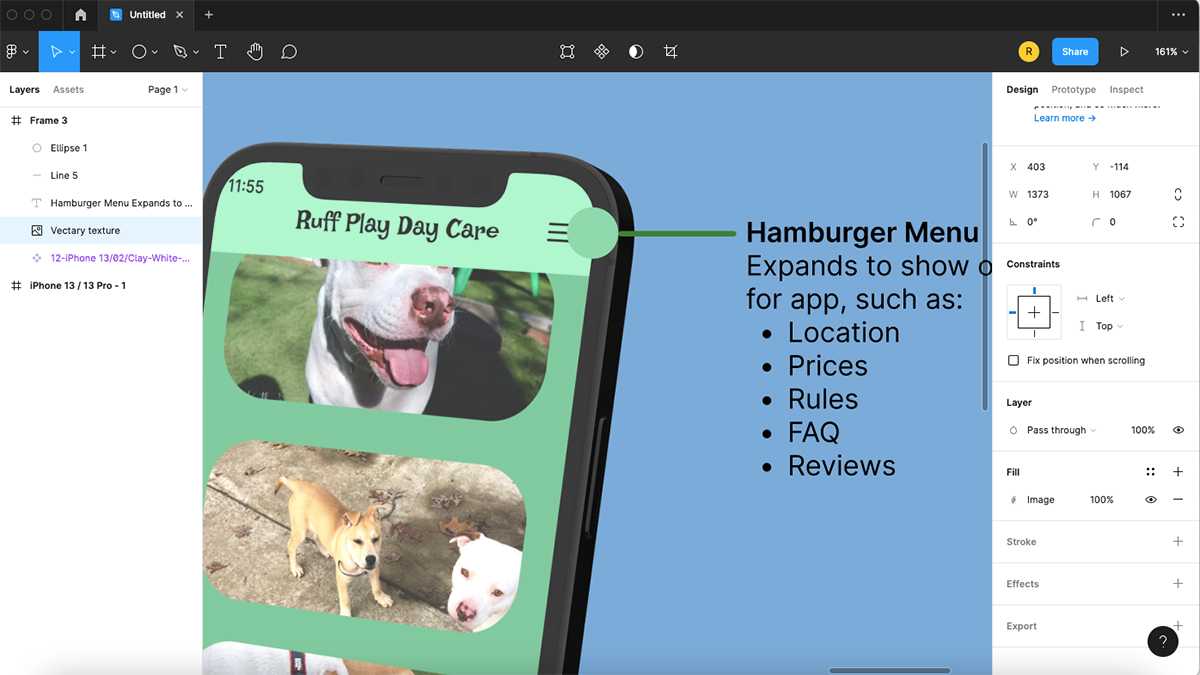




In September 2022, Adobe reached for the Macromedia playbook one more time, this time announcing a $20 billion acquisition of Figma — roughly 50 times the startup's revenue at the time. A multiple like this made sense only as the price of eliminating a threat.
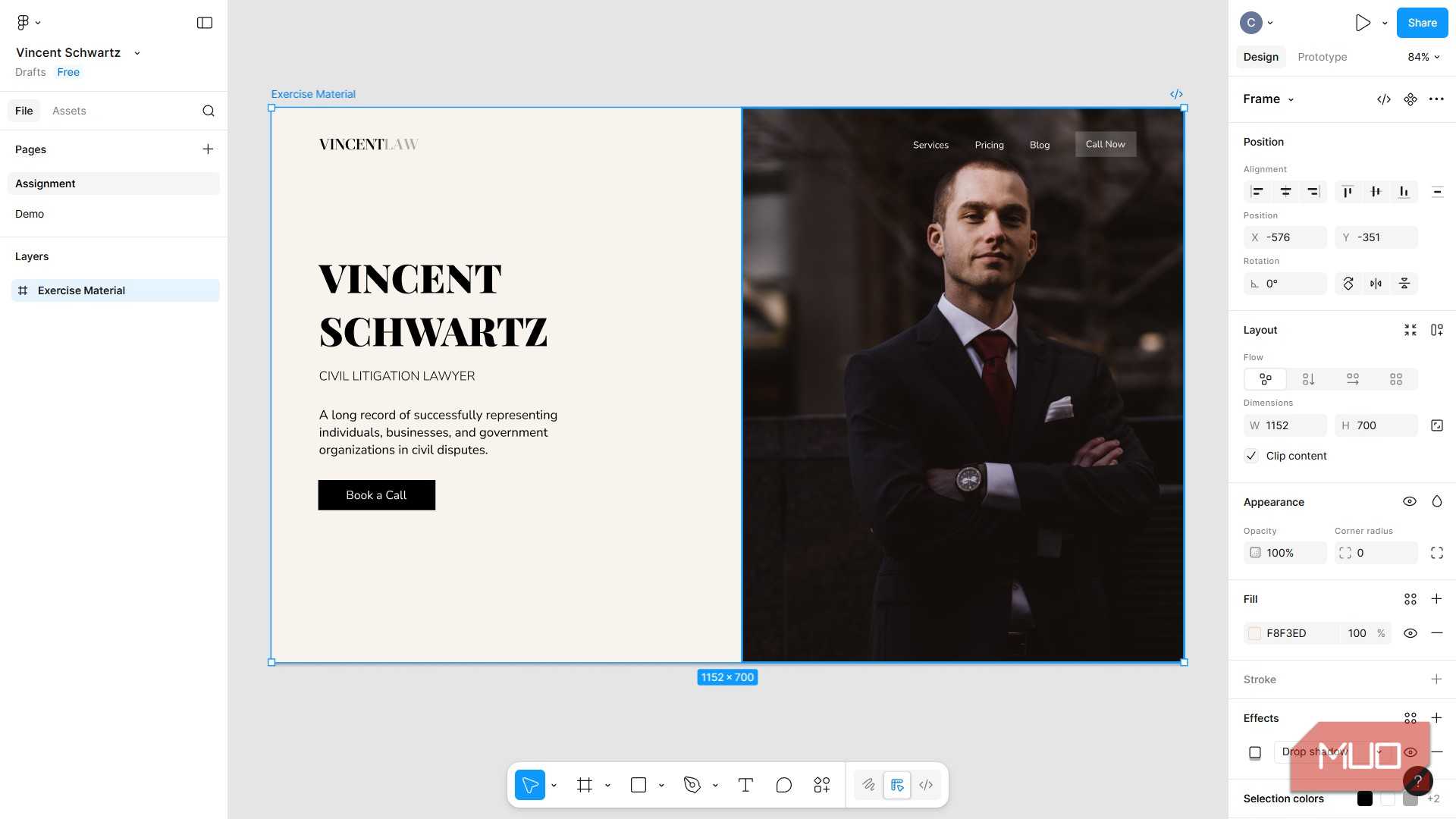
Figma had done something Adobe's engineers had publicly deemed impractical: it ran a full professional design tool inside a browser tab, with its rendering engine written in C++ and compiled to WebAssembly, drawing through WebGL, and synchronizing every cursor and every edit through a homegrown multiplayer protocol inspired by CRDT research.
There was no file to save, no version to email, no install. Against that, Adobe XD's desktop-first architecture looked like it was designed for a different century. An entire generation of UI designers came of age never having opened an Adobe product.
But 2022 was not 2005. The UK's Competition and Markets Authority and the European Commission blocked the deal under a "potential competition" theory of harm — the argument that Adobe was buying a nascent rival precisely to prevent the competition it would otherwise face.
The FreeHand playbook had finally been pattern-matched. In December 2023 the companies abandoned the merger, and Adobe had to pay Figma a $1 billion breakup fee.
Three years later, on July 31, 2025, Figma went public on the NYSE at $33 a share and closed its first day at $115.50 — a 250% pop and the largest first-day gain for a billion-dollar tech IPO in decades. It briefly valued the company at $68 billion, which was more than triple what Adobe had offered. Adobe had paid a billion dollars for the privilege of watching its would-be acquisition become its most dangerous public competitor.
POLL
The regulator finally knocked
The escape door had to be labeled

The subscription machine's dark patterns eventually became a federal matter. The FTC sued Adobe in June 2024 over that same "annual plan, paid monthly" scheme and its hidden termination fee, plus cancellation flows engineered as obstacle courses of extra steps, delays, and retention offers. In March 2026, Adobe settled for $150 million — $75 million in civil penalties and $75 million in free services to affected customers — while denying wrongdoing.
The court order forces Adobe to disclose termination fees upfront and provide genuinely simple cancellation. The fine is a rounding error against $26 billion in revenue that Adobe made. The reputational arithmetic is worse: the U.S. government formally documented, in a public complaint, that Adobe's growth machine ran partly on customers who couldn't figure out how to escape.
Generative AI joined the competition
Adobe is getting challenged by multiple rivals

Generative AI arrived, and Adobe, terrified of being disrupted, became its loudest evangelist. Firefly, its family of generative models, was trained exclusively on licensed Adobe Stock and public-domain content, letting Adobe offer enterprises legal indemnification that scraped-web competitors like Midjourney couldn't match. Generative Fill went into Photoshop. Every keynote, every ad, hammered the same message: you no longer need years of skill with expensive software — just describe what you want.
The message worked too well. Almost every company now carries a general-purpose AI subscription — ChatGPT, Claude, Gemini — and those models have become really competent at generating and editing images. The designer that once needed a Creative Cloud seat to build a banner, can now use much cheaper (or free) alternatives that were once dismissed as toys — Canva, Photopea, Affinity, Krita, GIMP — and then cover the gap with AI touching up whatever they miss.
Figma, Canva, Affinity, GIMP, Krita, Darktable, and so many more. These are all tools that have caught up. None of these has to destroy Adobe on its own. They only have to make Adobe unnecessary often enough. A social graphic that once required Photoshop can now be built in a browser by someone who has never touched a layer mask. Adobe software is no longer absolutely necessary.
Adobe insists the fear is overblown, and its numbers so far back it up. Narayen told investors on his final earnings calls that overall revenue growth actually accelerated in the first half of 2026.
But one canary has already died. Adobe Stock's traditional photography business is declining rapidly, cannibalized by the very generative models Adobe is selling. It is the first Adobe business demonstrably killed by AI, and investors can't stop wondering which is second.
And presiding over this pivot is... no one. In 2026, Narayen announced he would step down as CEO, remaining chairman while the board weighs internal candidates against outsiders with AI credentials. Nineteen years, the subscription revolution, the Figma debacle, and the Firefly bet, and now the CEO leaves without a named successor at precisely the moment the company's biggest strategic gamble needs execution.
Insider filings showed Narayen selling roughly 75,000 shares in April at around $244. Whatever the intent, we won't know.
An empire priced like a ruin
Why do stock prices matter?

|
|
Adobe stock prices from 2024 to 2026. |
A stock's price normally reflects how much profit investors expect a company to make in the future. Healthy, growing software companies typically trade at 25 to 40 times their annual earnings. Adobe today trades at around 9 times, a level Wall Street usually reserves for businesses in terminal decline.
Yet Adobe is not that. Its revenue is still growing at double digits, it converts nearly $10 billion a year into cash, and its profit margins are among the fattest in software. In other words, investors are pricing Adobe as if it's dying while its books say it's thriving. The gap between the two is a bet that the decline just hasn't shown up yet.
Adobe today trades at around 9 times its annual earnings, a level Wall Street usually reserves for businesses in terminal decline.
Adobe's board responded the only way it could: committing $25 billion to buying back its own shares through 2030, on top of the roughly $12 billion it spent repurchasing stock in fiscal 2025 alone. A buyback of that size is a company publicly wagering its own cash that the market has mispriced it.
Empires rarely fall from a single blow, but this one is absorbing several at once. Adobe made the world's creatives into perpetual tenants. The cracks appearing now all point at the same uncomfortable possibility — that for the first time since two engineers walked out of Xerox PARC, the tenants can see the door.