


I could never remember whether I'd closed the garage door. I'd back the 4Runner down the driveway, get half a mile down the road, and the doubt would start. A few mornings a year I'd walk out to find it had been up all night, with January air pouring into the attached garage and creeping toward the house. Yelling at Alexa never solved the real issue, because the door has no idea what state it's in or whether anyone meant to leave it that way. A roughly $20 Ring Alarm Contact Sensor changed that the moment I tied it into the Ring app and one simple Alexa routine. It dropped right into the web of smart sensors and triggers running my house, and it's the cheapest peace of mind I've bought for the garage.
The one garage habit I could never break
Never knowing if the door was actually down
The problem was never the door itself. It was me. I'd hit the button, get pulled away by a kid or a phone call, and lose track of whether it finished closing. Most days that meant nothing. Every so often, it meant an open garage for hours, with the bikes, tools, and everything else parked in plain view of the street.
Winter made it worse. An open door in Northern Indiana turns the attached garage into a wind tunnel, and that cold works its way through the shared wall into the house. My furnace would run longer for reasons I couldn't see at the time. Then there's the security angle. An open garage is an open invitation, and the interior door into the house isn't exactly a vault.
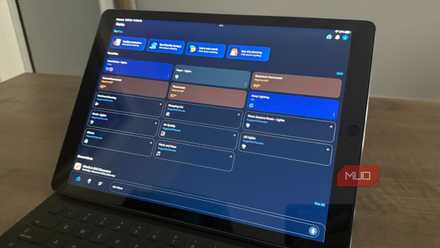
I turned my old tablet into a smart home dashboard, and it's perfect
I use my 1st-gen iPad Pro as a smart home dashboard
Why a $20 contact sensor beat the obvious fixes
A security device that doubles as a safety net

A Ring Alarm Contact Sensor is a two-piece magnetic sensor: a slim magnet on the moving part, a slightly larger sensor on the fixed part. When the two separate, Ring knows the door opened. It runs on two CR2032 coin cell batteries that last around 3 years, and it talks to a Ring Alarm Base Station, which I already had running.
A single sensor is about $20, and buying a multipack drops the price per sensor a good bit. That made it an easy purchase on its own. What actually sold me was the part most garage sensors can't pull off. A tilt sensor tells you the door is open, and that's where it stops. Because this one is part of the Ring Alarm system, the open garage can be armed like any other entry point. Leave the house, set the alarm, and if that door goes up, it can sound the siren and reach professional monitoring, not just light up a notification. The same cheap part covers the daily reminder and the worst-case scenario. It's one of the few cheap smart home buys I've made that pays me back every single day.
Getting it to read an overhead door
A simple bracket and a few minutes of work

There's a catch I should be upfront about: this sensor was designed for a standard swing door, not a sectional door that rolls up overhead. Straight out of the box, there's no clean way to attach it to a panel that folds as it lifts.
The fix is a small mounting bracket built for exactly this. It holds the magnet and sensor together when the door is down, then lets them pull apart the second the panel tilts up past about 20 degrees. You screw it near the top section of the door, set the sensor up in the Ring app, and you're finished in under 10 minutes. No wiring, no electrician.
One warning for anyone in a cold climate like mine. Ring rates the contact sensor for indoor temperatures, so a garage that sits below freezing all winter can shorten battery life or cause it to drop offline. My garage stays attached and reasonably tempered, so it's held up fine. If yours runs cold, mount it on the heated side of the wall, or put it on the garage's service door instead, where it works with no bracket at all.
The Alexa routine that does the remembering for me
An announcement, then an automatic close
With the sensor live, the Ring app shows the door's status at a glance and pushes an alert the second it opens. That alone killed the half-mile-down-the-road doubt. The routine is where it started, actually saving me from myself.
In the Alexa app, I set a routine that fires whenever the contact sensor opens. Every Echo in the house calls out that the garage door is open. Down in the basement office or out on the back patio, I still hear it. I built a second routine for a long open: if the door's still up after a set delay in the evening, it alerts me on my phone.
There's a security wrinkle worth knowing. When the alarm is armed, opening that door behaves like any monitored entry, so you'll want to set it as a secondary contact or add an entry delay. Otherwise, a normal trip to grab the lawnmower or take the trash out triggers the siren. Five minutes in the app, and the door finally manages itself.

$20 to stop second-guessing the garage
I've spent more than this on phone chargers that died inside a month. For about $20, the most nagging loose end in my garage is simply gone. I don't crane my neck on the way down the street anymore, the furnace isn't fighting an open door overnight, and the one entrance most people leave unguarded is now part of my actual security setup. If you already live in Ring and Alexa, it's an afternoon project at most. It also pairs nicely with the rest of my garage projects, like the bike hoist that finally cleared my floor. These are small sensors, surprisingly large payoff.