


Gemini Notebook (NotebookLM) built its name as the AI tool that reads your PDFs so you don't have to. That's true, but it's still a bit of an undersell. It's still one of the few tools that think only about what you feed it (as a strict, Retrieval-Augmented Generation synthesis engine). With your sources as raw material, Gemini Notebook turns into a research partner, a sparring partner, and even a study coach. It can argue with you about it, quiz you on it, or find a pattern you'd otherwise miss entirely.
Turn Gemini Notebook into a timeline auditor
Stop losing the thread across dozens of files

I had to read a few legal documents related to an inheritance a few days back. Each document had too many dates scattered across too many documents. Upload every source into one notebook, and Gemini Notebook hunts down every date and event for you, citations included, so nothing slips through the cracks no matter how many files you throw at it. It's the same problem shared by family history projects, and even studying from YouTube videos.
Before AI, we built these timelines by hand in a spreadsheet, cross-referencing page numbers. I remember feeling utterly bored until my eyes crossed. Handing that job to an AI is a chore I can gladly part with.
But Gemini Notebook doesn't just spit out a bare list; it links every entry back to its exact source, so you can check the context in seconds instead of minutes. With one prompt, you can skip the hours of manual cross-referencing it used to take to get there.
List every date mentioned across these sources in chronological order, and note what happened on each one with a citation to the source.
Turn dry SOPs into a self-quiz sandbox
Help new hires quiz themselves


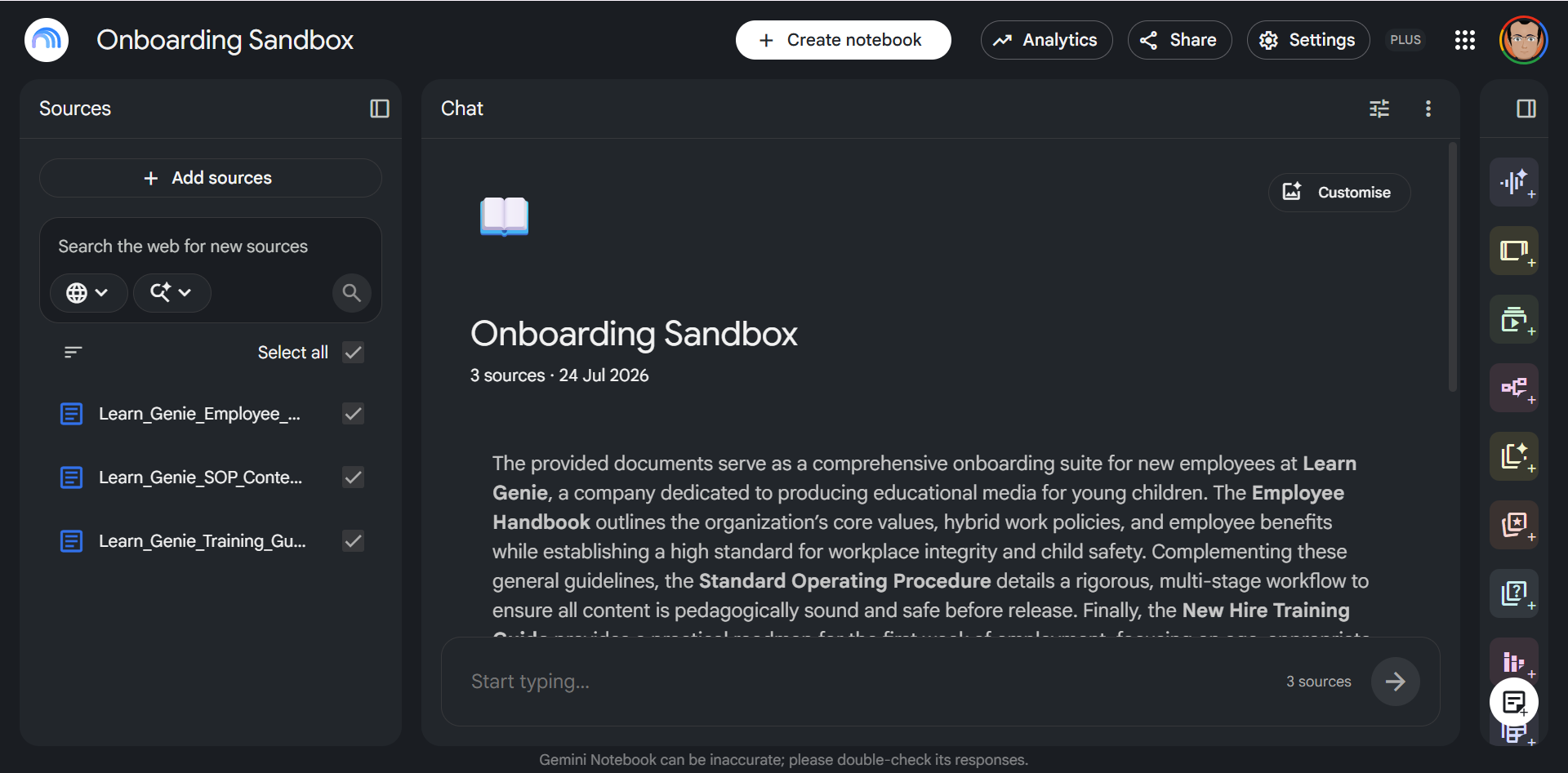
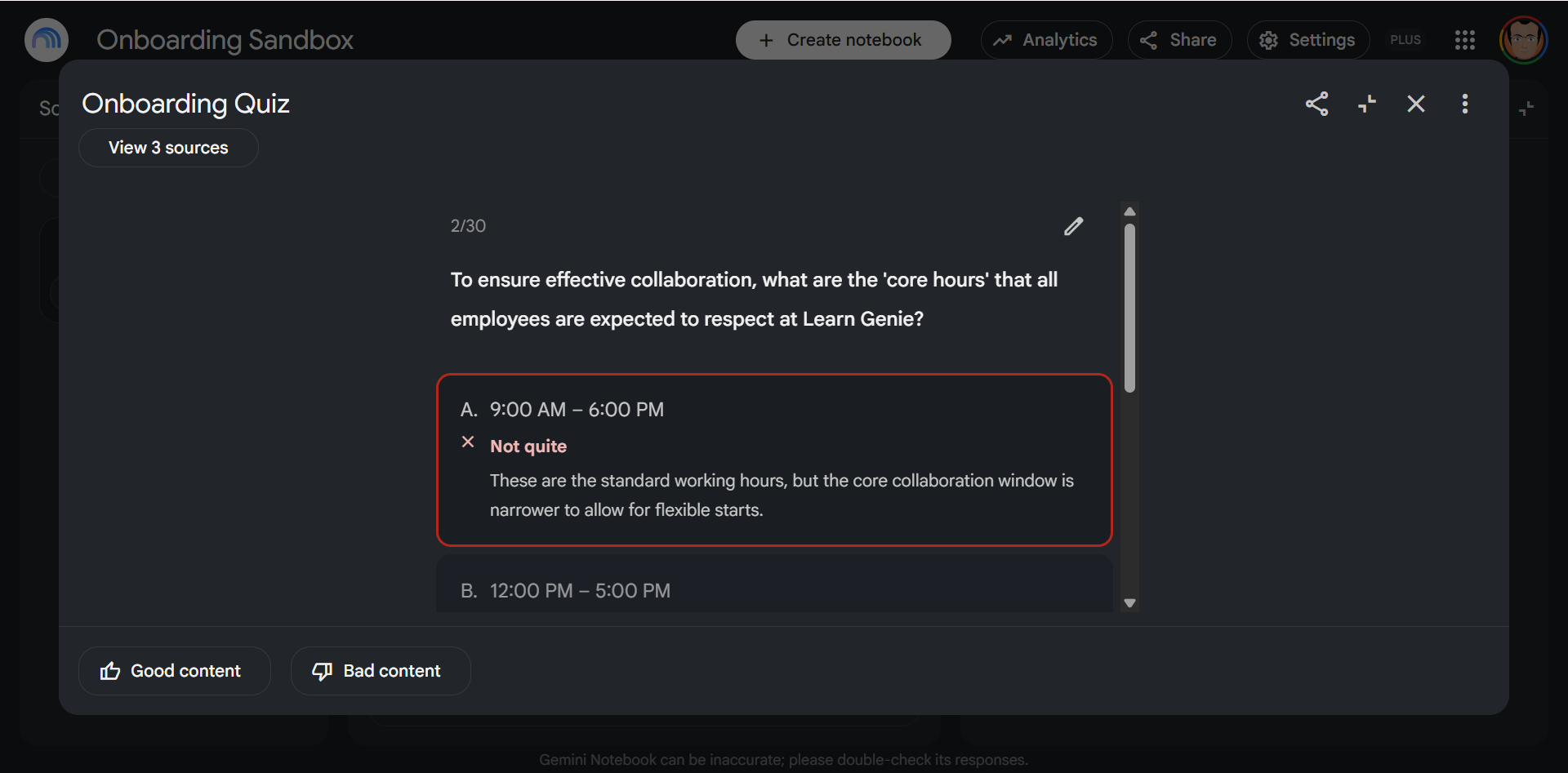
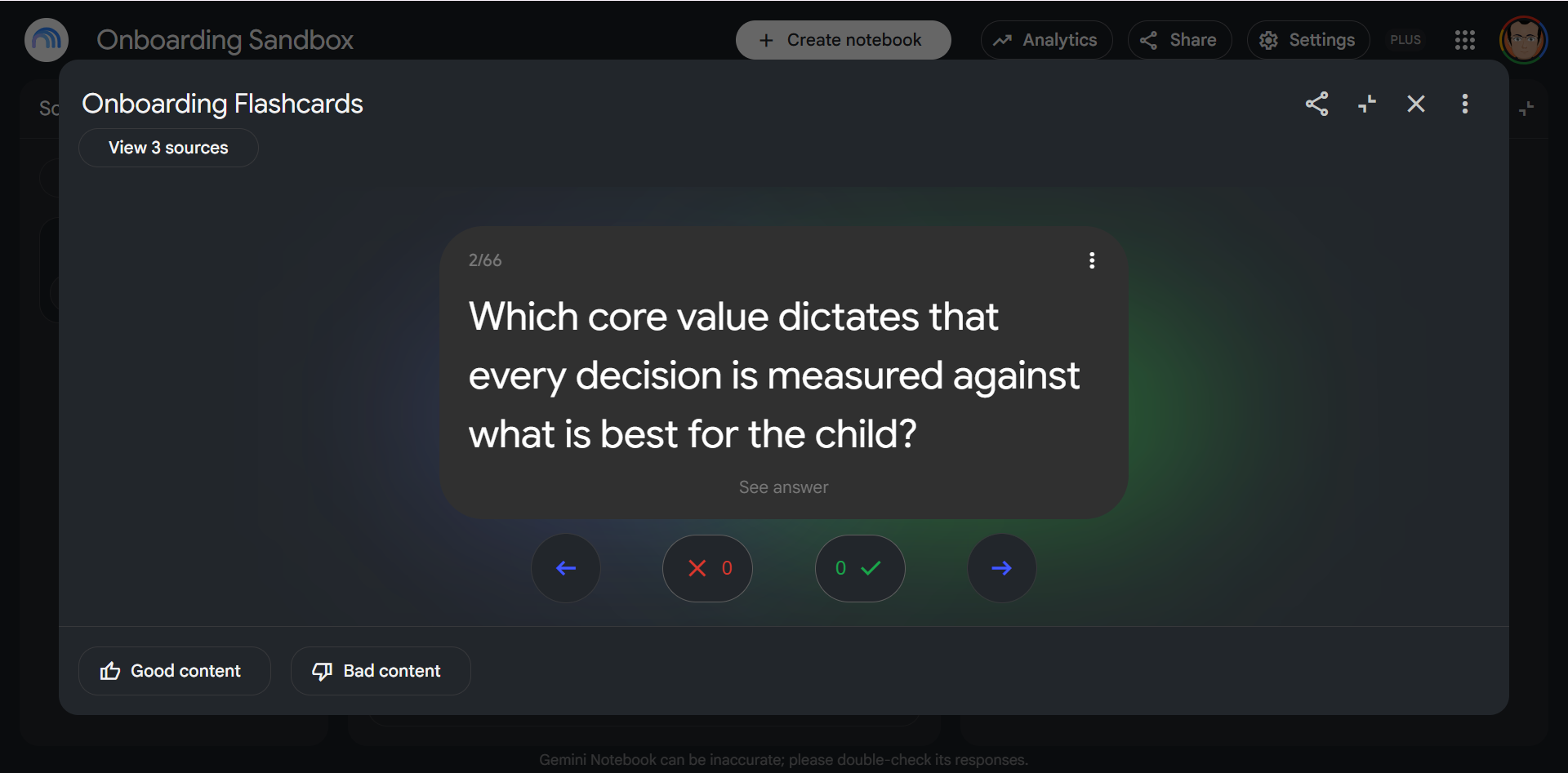
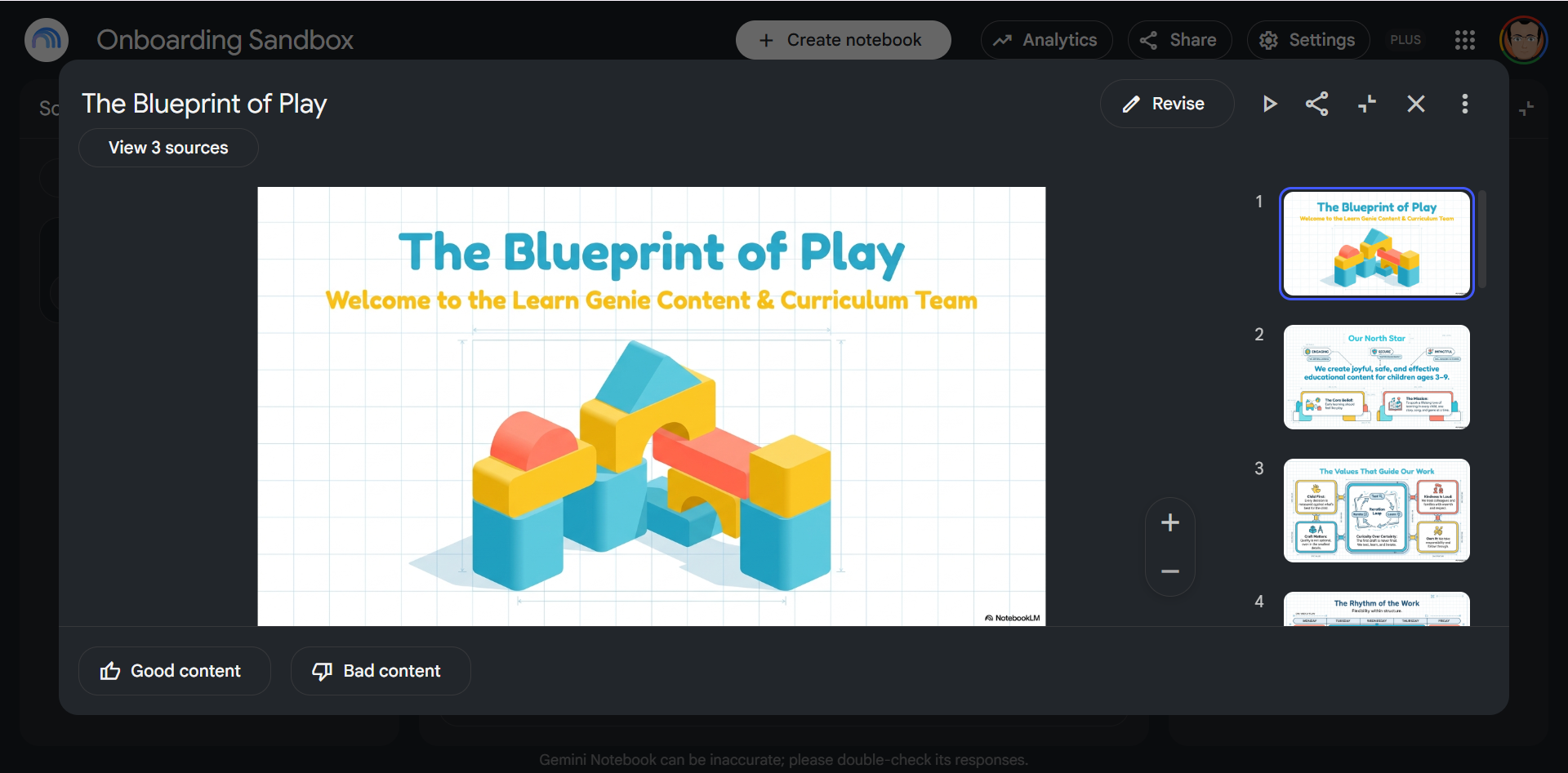
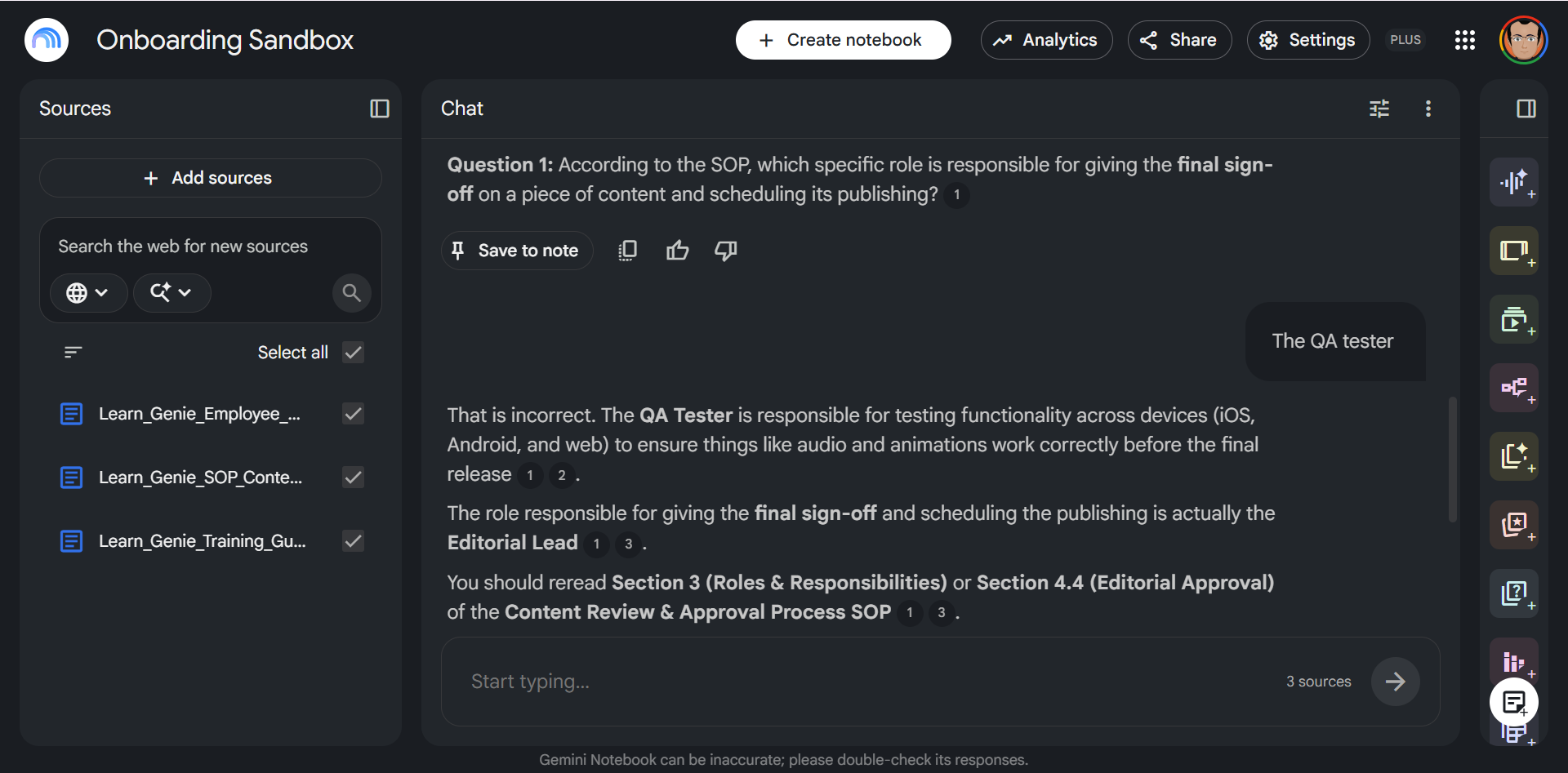
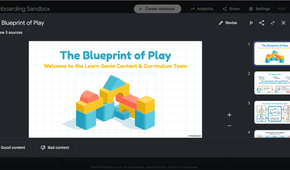
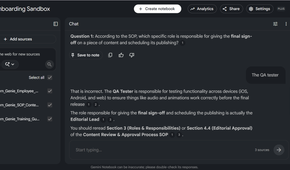
Nobody retains a 40-page onboarding PDF after one read-through, no matter how well it's written or how many bullet points it has. Upload your SOPs, employee handbook, or training wiki, and ask Gemini Notebook to quiz a new hire on the material instead of just giving them slideshows or sheaves of paper.
I tried a quiz generator built on internal documents and Gemini as an experiment. My worry with continuing this is that it might "invent" plausible answers instead of the facts as written in the source material. It's risky with legal clauses in many onboarding documents.
Gemini Notebook stays grounded to the sources, and it flags clearly when something isn't covered at all rather than guessing. Also, reading company policy or compliance rules can make for dense reading. Gemini Notebook's interactive Quiz, Flashcard, and even the Slide Deck can easily help a new hire get familiar with the boring materials and practice a slower form of active reading.
Quiz me on this SOP one question at a time. Tell me if I'm wrong, and point me to the exact section I should reread.
Make Gemini Notebook argue against your draft
Stress-test your pitch before anyone else does

We go back to Gemini Notebook's role and specific prompts to make it play the Devil's Advocate. Before you send a pitch, proposal, or article draft out into the world, upload it as a source. Ask Gemini Notebook to poke holes in it as any cynic would. Let it build the strongest counterargument it can manage, using only what's already on the page, no outside opinions or assumptions mixed in.
Asking a tool to attack my own work always feels a little uncomfortable, like I'm inviting criticism I don't need yet, before I've even hit send on the thing I just spent hours finishing.
That discomfort is exactly the point. It's a lot cheaper to find the weak spot now, in private, than after an editor, a client, or an angry comment section finds it first for you. And no surprise, the glaring holes in my first draft have often led to other article ideas. I now save a version of the prompt example in a text expander and use it as a litmus test on most pieces of content.
Read this draft and argue against its main point as convincingly as you can, using only evidence from the source.
Find where your own notes contradict you
Spot the blind spots hiding in your journal

If you journal, keep meeting notes, or log voice memos, upload a few months of them into one notebook. Ask Gemini Notebook where your own stated opinions or plans conflict with each other over that stretch of time, even loosely.
I assumed my notes were mostly consistent with each other, so running this check felt like a strange, almost pointless thing to even bother trying in the first place, honestly.
Gemini Notebook found plans I'd quietly contradicted within weeks and never noticed at the time. It's less about being right or wrong, and more about catching drift before it turns into a real blind spot I can't see on my own. Remember to set up the conversation settings for your notebook.
Compare my notes from the last three months, and point out any place where I contradicted an opinion or plan I stated earlier.
Crash two unrelated sources together
Let one source teach you about another

Bashing two unrelated concepts together is a fun creative exercise. Drop two unrelated sources into the same notebook, say a psychology paper and a marketing case study, and ask Gemini Notebook what one could teach the other. It's a quick way to land on an angle nobody else has written yet.
Forcing two random sources together isn't an AI party trick. It's a lateral thinking technique that can help us find solutions or just break out of a creative rut.
The results won't always be brilliant, but even the weak connections tend to spark a better question than you started with. My recommendation is to always get into this exercise expecting failure. As an example, I picked a case study on the marketing strategies for selling smartphones and a psychology paper on doomscrolling behavior.
Based on these two sources, what idea from one could apply to the other? Give me three possible connections.
Pick one use case and run it as a test
Gemini Notebook's summarize prompt will always be there when you need it. But the more interesting work happens once you stop asking it to shrink your sources and start asking it to interrogate them instead. Grab a notebook you already have sitting around, plug in one of these five prompts, and see what it throws up. There's a decent chance you'll find something in your own material that genuinely surprises you, and that's a much better use of the tool than another summary you'll skim through.