


NotebookLM isn't just a tool for college students. It's a versatile AI app that you can use to process any information source in a different way. Supply NotebookLM with a pile of notes, and the app can turn them into flashcards. Give it an article, and NotebookLM can transform it into a podcast-style Audio Overview. The possibilities are endless, and I use NotebookLM even now that my college days are over. Start with a source or a collection of them, and the program will use Gemini models to analyze, summarize, or recreate those sources as you see fit.
It's come a long way since it was a Google Labs research project, and you might've missed some of NotebookLM's best features. The biggest NotebookLM upgrade in my book is the way the study tool now handles finding sources. It supports a variety of file types, web links, and Google Drive content, and will even help you discover sources if you don't know where to start. You can use YouTube videos as a source for NotebookLM projects, and it's a genius solution for when you have more videos to watch than time left in the day.
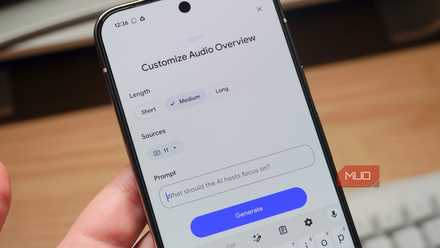
NotebookLM's best feature got much better when I stopped using the default prompt
NotebookLM makes it easy for users to create podcast-style explainers for any topic, but the default prompts should only be the beginning.
YouTube videos are the best sources you aren't using
Billions of videos are on YouTube waiting to be used as sources

NotebookLM projects start with a source. Your end goal might be to make an Audio Overview or Mind Map in NotebookLM Studio, but you need to supply the learning platform with a dataset to pull from first. Supported source types include PDFs, audio recordings, images, websites, copied text, and finally YouTube videos. The latter might be the most intriguing source type. There are billions of YouTube videos on the platform, and you can take any one of them and turn it into a learning session with NotebookLM.
When using YouTube as a source for NotebookLM, only the video's text transcript is processed. If you think that defeats the purpose of watching a YouTube video, consider this. Some videos on YouTube are hardly videos at all. They're audio-first with limited visual value, and this is true of many longer videos. Even at double speed, it'll take me a while to work through an hours-long podcast or seminar recording. Plus, if you're not a YouTube Premium subscriber, the number and length of the ads you'll have to watch during these longer videos will make your head spin.

Importing longer YouTube videos without compelling visuals to NotebookLM cuts out the ads entirely. It can also condense the information, saving you time and effort. To add a YouTube video to a NotebookLM project, open the app or web client and start a new project. Then, tap the YouTube or Websites source types in the list. Paste a YouTube video URL into the text field, and add it to your notebook. Repeat the process for as many YouTube videos as you need for your NotebookLM project.
After adding YouTube videos as sources, you'll see a quick summary of the content analyzed. Next, you can start conversing with the NotebookLM chatbot or creating in the NotebookLM Studio.
5 simple note-taking tweaks that make NotebookLM twice as smart
These note-taking habits unlock NotebookLM's full potential.
You can discover YouTube sources with a prompt
Yes, NotebookLM's helpful 'Discover Sources' tool works with YouTube
The basic way of adding YouTube videos as NotebookLM sources requires you to have specific videos in mind, or manually seek them out. This works in certain scenarios, but what about when you aren't sure where to start? Luckily, NotebookLM's Discover sources feature works with YouTube videos. You can describe the topic you want to learn more about, specifying that you need NotebookLM to find YouTube video sources related to that topic. After entering your prompt, NotebookLM will suggest relevant YouTube videos that you can import to a project as sources.
For example, I used NotebookLM's Discover sources to find YouTube videos related to Major League Baseball news using this prompt:
Find YouTube video sources related to the Major League Baseball CBA negotiations for my notebook.
In a few seconds, NotebookLM completed its "Fast Research" source discovery with a message explaining that "these YouTube selections provide professional analysis of MLB CBA proposals, labor history, and 2026 work stoppage risks." I had 10 possible YouTube video sources to choose from, and I could add one or many of them to the NotebookLM project. Before you add a video to your project, you can click it to open the YouTube video, allowing you to preview the content ahead of time.
While I chose a developing sports story as the topic for my NotebookLM project, you could replicate these steps with any subject. All you need to do is clearly state that you want NotebookLM to surface YouTube video sources, and it can do just that with the Discover sources option.
6 smart prompts that make NotebookLM way more useful
You’re missing out on NotebookLM’s full potential.
Create in NotebookLM Studio from YouTube sources
All your favorite NotebookLM creation tools work with YouTube as a source

NotebookLM's best features in the Studio tab work as usual when using YouTube videos as sources. You have access to the full suite of Studio creation tools, including Audio Overview, Slide Deck, Video Overview, Mind Map, Reports, Flashcards, Quiz, Infographic, and Data Table. Admittedly, some of these modes don't make sense when YouTube videos are the source. There's no point in taking a video and turning it into an Audio Overview or Video Overview. However, other features make perfect sense — like mind maps, reports, or infographics.
Unless it's set to private or unlisted, any YouTube video can be used to inform a NotebookLM project. You've probably used documents or web links before, but YouTube transcripts could be the missing component to your learning efforts.

- OS
- Android, iOS, Web-based app
- Developer
- Pricing model
- Free
NotebookLM is Google’s AI-powered research notebook that reads what you upload and helps you transform it into structured summaries, explanations, and visuals.