


Smart home technology has never been more accessible, but most people are still handing their home data to Amazon, Google, or a startup that may not exist in three years. Home Assistant changes that. It runs locally on hardware you own, costs nothing to license, and keeps working even when the internet goes down. There are tons of easy ways Home Assistant can supercharge your smart home without spending a dime.
But if you're building your smart home from scratch, you will have to get some hardware to get started, and Amazon's Prime Day is the right window. There are discounts on all the small boards and sensors you need, and you can easily build the whole thing for under $100.
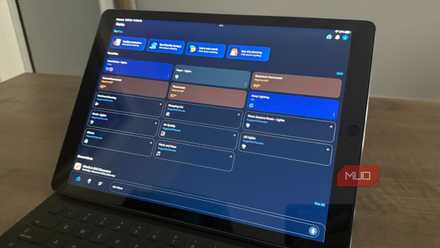
I turned my old tablet into a smart home dashboard, and it's perfect
I use my 1st-gen iPad Pro as a smart home dashboard
Every smart home needs a solid foundation
Why starting with the right Home Assistant hub saves headaches later
First, you'll need a computer to run your Home Assistant instance. The Raspberry Pi 3B+ is the board I'd hand to anyone building their first hub and comes with a quad-core Cortex-A53 at 1.4GHz, 1GB of RAM, dual-band Wi-Fi, and Gigabit Ethernet. Amazon has it at $49.79, basically the floor. The 1GB ceiling means it'll get cramped if you start stacking add-ons, but this $50 board can easily replace your smart home hub without complaint. It also has enough left over to run a home server once your automations are humming.

- Brand
- Raspberry Pi
- Memory
- 1 GB
Raspberry Pi 3B+ is a compact single-board computer featuring a quad-core ARM processor, Gigabit Ethernet, dual-band Wi-Fi, and Bluetooth, making it ideal for DIY, IoT, and home server projects.
If you want to run more add-ons or have quite a few smart devices around the house, you'll need more computing power, and that's where the Raspberry Pi 4 and 5 come in. The quad-core Cortex-A72 at 1.8GHz with USB 3.0 and true Gigabit Ethernet handles all of that comfortably. The problem, however, is that supply constraints have pushed it to $123.88 on Amazon, well above its $55 MSRP, and Pi boards almost never see Prime Day cuts. The Pi 5 8GB at $199.99 brings a quad-core Cortex-A76 and PCIe 2.0 for NVMe SSDs, which give you two to three times the data transfer speed of the Pi 4. Neither is a Prime Day bargain, but if you're building something you won't outgrow in five years, they're worth it.

- Brand
- Raspberry
- Memory
- 4GB LPDDR4-3200 SDRAM
- CPU
- Broadcom BCM2711, Quad core Cortex-A72 (ARM v8) 64-bit SoC @ 1.5GHz
- Ports
- 2 USB 3.0 ports, 2 USB 2.0 ports, 2 micro-HDMI ports (up to 4kp60 supported)
Raspberry Pi 4 Model B is a versatile single-board computer featuring a quad-core ARM processor, up to 8GB RAM, Gigabit Ethernet, dual 4K display support, and enough performance for home servers, media centers, and DIY computing projects.
If the Pi's price has you looking elsewhere, the Libre Computer Le Potato ($60) shares the Pi 2 and 3 footprint, has a Pi-compatible 40-pin GPIO header, runs official Home Assistant OS builds, and your cases and HATs still work. The Orange Pi 3B ($70 for 2GB) adds Wi-Fi 5 and an M.2 NVMe slot, which matters more than it sounds. Home Assistant writes to a database constantly, and NVMe over microSD makes a real difference once your sensor history builds up. Neither board has a Prime Day deal, but both beat the Pi 4's current Amazon price, and neither requires you to give anything up that matters for a Home Assistant build.

Libre Computer Le Potato
- Brand
- Libre Computer
- Memory
- 2GB 32-bit DDR3 SDRAM
- CPU
- Amlogic S905X
- Operating System
- Linux
Libre Computer Le Potato is a budget-friendly single-board computer based on the Amlogic S905X processor, offering Raspberry Pi-compatible GPIO, 4K video output, and solid Linux support for media centers, home servers, and DIY projects.
The sensors are the easy part now
Affordable smart devices have never been simpler to deploy
If Home Assistant is the brain of your smart home, the ESP32 boards you'll use to wire up sensors, switches, and everything else are the nervous system. ESPHome turns them into Home Assistant devices automatically, no cloud required. They're also capable enough that a $5 board is enough to turn a dumb lamp into a smart one, which should give you a sense of how far your money goes here. You'll need a bunch of them around the house, and the current prices help with that massively.
The Elegoo ESP32 3-pack is $16.14 at 19% off for $5.38 a board. The Hosyond ESP32-S3 N16R8 3-pack is $15.19 at 20% off — $5.06 a board, with faster cores and Bluetooth 5. The EC Buying ESP32-C3 2-pack is $7.19 at 20% off — $3.60 a board, ideal for battery-powered nodes. The sleeper pick is the Lafvin ESP32-C6 with a built-in 1.47-inch color display at $13.29, down 22%. Wi-Fi 6, Bluetooth 5.3, ESPHome-supported, and the screen comes pre-wired. A bedroom node showing time, temperature, and weather for thirteen bucks is a genuine deal.

ESP32
- Brand
- Espressif
- Connectivity Features
- Wi-Fi, Bluetooth
ESP32 is a low-cost microcontroller with built-in Wi-Fi and Bluetooth, widely used for IoT projects and DIY electronics.
You'll also need some sensors for keeping track of temperature, humidity, presence, and whatnot. These sensors generally don't cost all that much, even without a sale going on. The BME280 2-pack reads temperature, humidity, and barometric pressure over I2C for $12.99, or $12.34 with the 5% clip coupon on the page. The DHT22 3-pack is simpler and more beginner-friendly at $8.99.
You can also go for something like the Elegoo 37-in-1 Sensor Kit. It's $31.44 on Prime Day and covers light, sound, IR, relay, tilt, and temperature modules, useful for figuring out what you actually want to build before buying five of the same thing. If you want your sensor node to show readings locally, on the wall, on a nightstand, without pulling out a phone, OLED displays are on Prime Day sale too. The Elegoo OLED 3-pack 0.96" SSD1306 is one of the best deals at $8.49, $2.83 a screen, and ESPHome has native support for the SSD1306 with a handful of config lines. The Hosyond 5-pack runs $11.98 if you want extras for multiple rooms.

ESP32-S3
- Brand
- Espressif
ESP32-S3 is a low-cost ESP32 variant with built-in Wi-Fi, Bluetooth LE, USB support, and AI/vector acceleration designed for IoT, embedded, and edge AI projects.
Building a smart home no longer requires a big budget
Prime Day discounts make local automation more accessible than ever
A complete starter stack — Pi 3B+ ($49.79), ESP32 3-pack ($16.14), and DHT22 3-pack ($8.99) totals $74.92. That's a one-time purchase that'll give you a device to run Home Assistant on and three nodes that can report temperature, presence, API data, and more, while replacing a cloud subscription you'd otherwise pay indefinitely. As you start building on top of your initial framework, the final cost will be a fraction of what smart home companies will have you believe.
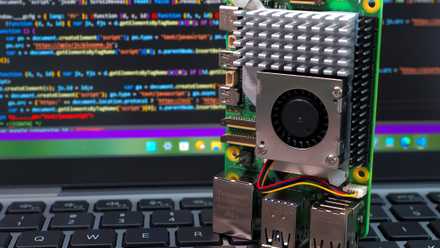
7 Projects For Your New 16GB Raspberry Pi 5
Put your new, ultra-powerful Raspberry Pi 5 to good use.
Once the dashboard looks as good as the hardware underneath it and your sensors are all reporting, you'll have a home that responds to how you actually live, not to whatever a product manager at a smart home company decided your routine should look like.