


I adore the Steam Deck, and I don’t think Valve gets enough credit for birthing an entire generation of PC gaming handhelds and putting Linux gaming front and center.
Despite other powerful options on the market, like the Lenovo Legion Go 2 or the MSI Claw, the Steam Deck OLED kept its edge thanks to its amazing ergonomics, sleek design, and, best of all, the SteamOS, which accounts for the majority of what makes owning the handheld worthwhile.
For years, the Steam Deck used to be the obvious choice — until it wasn't, just because of a single price hike that has pushed the 512GB model to $789 and the 1TB to $949. It's hard to justify such high prices for a 3-year-old device, especially given that better and more powerful options exist within the same price bracket.
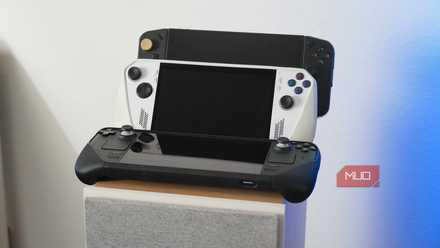
I own 3 PC gaming handhelds, and this is the one I barely use
Until Linux gets serious about multiplayer gaming, my Steam Deck will collect dust while I play on my Windows gaming handhelds instead.
The Steam Deck may no longer be a viable option after the recent price hike
Valve just raised prices by up to $300 on a 3-year-old device
Initially, the Steam Deck OLED was launched at $549 for the 512GB version and $649 for the 1TB version. Now, nearly 3 years into its release, just when prices are supposed to go down, Valve has raised the handheld's price by up to $300: the 512GB version now costs $789 (up from $549), and the 1TB version is now $949 (up from $649).
The 1TB version costs more than the PS5 Pro, and for that price, you can build a PC that supersedes both devices. For reference, Valve's Steam Deck OLED packs 16GB of LPDDR5 memory and a SoC featuring an RDNA 2 GPU and a Zen 2 4-core processor. Unfortunately, the hardware struggles to keep up with newer AAA releases, i.e. Monster Hunter: Wilds, and for a handheld costing nearly $1,000, one would expect more.
Even so, I'll admit that the Steam Deck has never really been the primary device for gaming, and this survey shows as much, noting that 90% of its owners also played on PC (as per WNHub). Unfortunately, this argument runs counter to the Steam Deck, since dropping nearly $1,000 on a secondary gaming device isn't a smart financial decision.
The Xbox Ally X outperforms the Steam Deck OLED for just $50 more
Better specs, better performance, and a similar console-like experience

The PC handheld space has gotten so crowded in recent times that it's easy to miss new releases. For those not up to date, Microsoft and ASUS collaborated in 2025 for the new Xbox-themed ROG Ally devices. Specifically, the higher-end Xbox Ally X model released is one of the most powerful PC gaming handhelds on the market and outperforms the Steam Deck OLED for just $50 more.
The Xbox Ally X packs 24GB of shared memory and an SoC featuring the Ryzen AI Z2 (Zen 4) with an RDNA 3 GPU equivalent to the GTX 1650 in terms of specifications. For a small-form-factor device, it's remarkable how much power ASUS was able to pack into the handheld. The great part is that you won't even miss out on the console interface on the Xbox Ally X, as it replicates Xbox consoles pretty well, and you'll also see a performance improvement compared to using the base Windows, which you might already know is pretty bad for gaming because of the bloat.
|
Spec |
Steam Deck OLED |
Xbox Ally X |
|
CPU |
Custom Zen 2 4-core 8-thread processor |
AMD Ryzen AI Z2 Extreme Zen 4 8-core 16-thread processor |
|
GPU |
RDNA 2 (8 CUs) |
RDNA 3 (12 CUs) |
|
RAM |
16GB LPDDR5 |
24GB LPDDR5X |
|
Display |
7.4-inch OLED @1280×800, 90Hz |
7-inch IPS-level LCD @ 1080p, 120Hz |
|
Battery |
50Wh |
80Wh |
|
TDP |
4-15W |
9-30W |
Now, for the shocking surprise. The Xbox Ally X retails at $999, and for just $50 more than the Steam Deck, you get roughly 20–30% better game performance on average thanks to the Ryzen AI Z2 chip. Not to mention that the new Auto SR update for the handheld enables upscaling at the OS level, which in return promises up to 30% more FPS and a clear and sharp final image result (via Microsoft).

ROG Xbox Ally X
- Chipset
- AMD Ryzen AI Z2 Extreme
- RAM
- 24GB LPDDR5X
- Display
- 7-inch IPS-level LCD @ 1080p
The ASUS ROG XBOX Ally X combines the best of ROG hardware and integrates with XBOX's ecosystem. The handheld PC packs a 7-inch LCD, Ryzen AI Z2 Extreme, and 24GB of shared memory, making it capable of running even the most demanding AAA games
- Battery
- 80Wh
- Operating System
- Windows 11
Valve has bigger plans — the Steam Deck isn't one of them
The Steam Machine may be the reason why Valve is letting go of the Steam Deck

Since the Steam Deck's release in 2022, Valve's gaming device has outsold every other PC gaming handheld launched since 2022 (The Verge via IDC), including the Lenovo Legion Go, ROG Ally, and others. Valve has been dominating this space, but now they're just headed in a different direction.
The Steam makers are now committed to the Steam Machine, their new home console built on the same philosophy as the Steam Deck — a PC running SteamOS. If anything, the Steam Deck was Valve testing the waters again in the hardware space. Now successful with the handheld, they're moving towards the console market next, directly competing with the Xbox and PlayStation. Therefore, it makes sense why they're not pushing the Steam Deck excessively; rather, they're just milking the handheld's final stages.
To be fair, Valve is in a perplexing situation for the time being: Steam Machine has reportedly been pushed back several times due to the AI-driven memory shortage, and Valve has yet to decide on the console's final price.
The Steam Machine's specs make it nearly equivalent to the PS5 and the Xbox Series X, but as a PC, it will be priced higher than a typical console. The Steam Deck is already selling for $949, so a safe bet for the Steam Machine would be a $1,000 price tag, which would leave a margin for Valve and avoid subsidizing, since, unlike the rest, they won't be making money off subscription services.
The Steam Deck had a great run, but it's time to move on
To be fair, the Steam Deck has had a pretty good run for nearly four years now, and I'm surprised the competition hasn't caught up so quickly. Unfortunately, all good things do come to an end. As I said earlier, the Steam Deck has started to show its age, and it makes sense that Valve is moving on from the handheld now towards the Steam Machine. They did tease a new iteration of the Steam Deck somewhere down the line, but that won't be happening anytime soon.
If you've already bought a Steam Deck at the non-inflated price, you're in luck because even with the recent price hike, the handheld is good for at least a couple more years. If not, then opting for the Xbox Ally X or the Lenovo Legion Go 2 is a smarter choice.

Steam Deck OLED
- Chipset
- AMD Zen 2 CPU + RDNA 2 GPU
- RAM
- 16GB LPDDR5 (6400 MT/s)
- Display
- 7.4-inch HDR OLED, 1280 × 800, up to 90Hz
- Battery
- 50Wh
The Steam Deck OLED is a makeover of the original LCD version. Aside from a major display upgrade with improved brightness and a higher refresh rate, the Steam Deck OLED also came with a slightly larger battery and other hardware refinements, including a lighter body, a much more efficient chip, and improved controls.