


I don’t think you need to get to the bunker-building stage to appreciate what happens when your phone can’t find a signal, and the Wi-Fi suddenly dies. I’m as guilty as anyone when it comes to treating our modern communication infrastructure as an “always on” magic that just keeps flowing through apps, towers, and fiber-optic cables. That’s because when it works, I barely think about how it all works. But when it doesn’t, I get a whole new understanding of just how fragile telecommunication networks are.
Funnily enough, it’s that very fragility that made radio interesting to me again. It feels like old tech and long nights yelling “CQ” into a microphone, but it has a place in modern society alongside smartphones and laptops.
In the US, the entry-level amateur radio Technician license is actually a lot easier to get than most assume. Once you get it, it opens up legal access to technologies that are both interesting and invaluable in times and areas where mobile and Wi-Fi simply aren’t available.
I turned my browser into a worldwide radio scanner, and I wasn’t ready for what I heard
These controllable, public radio receivers let you hear the world without the expensive gear
CB radio is the no-license starting point, but comes with significant limits
It’s an easy doorway into radio, but it doesn’t get you much further


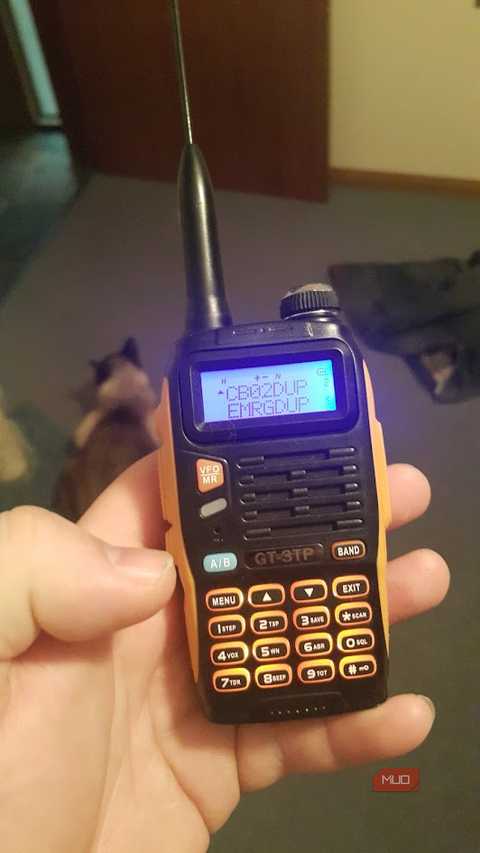
CB, or “Citizens’ Band” radio, is the option most people have at least heard of. I have always associated it with truckers, farmers, off-roaders, and people who just need a simple way to talk without having to think about frequencies or modes.
That familiarity is what makes CB so useful, because it’s not intimidating, and you’re unlikely to cause interference or accidentally broadcast over an emergency channel. In the US, it also doesn’t require an FCC license, which makes it the easiest way to experiment with radio communication.
In the US, CB radio offers 40 channels in the 27 MHz range (11 meters), and modern radios can use AM, FM, and Single-Side Band (SSB). In other countries such as Australia and New Zealand, UHF frequencies can also be used alongside the 11-meter band. CB is a good starting point if you need short-range communication or something to do when the internet is out, but I wouldn’t rely on it for anything beyond line of sight. CB can get your foot in the door in the world of radio, but a licensed operation is where radio starts to become far more useful.
GMRS is easier to get into than amateur radio, but it’s still licensed
No exam, family-friendly, and more practical than CB
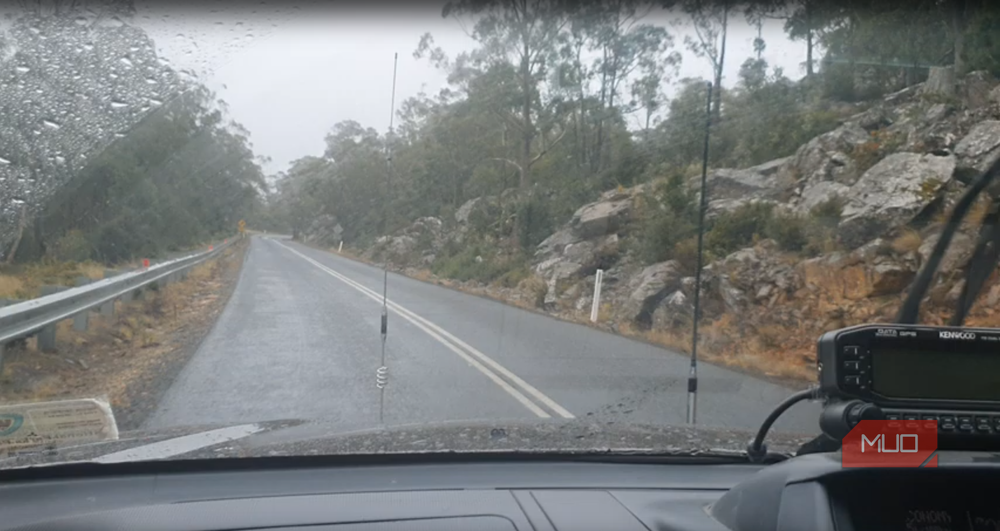
General Mobile Radio Service (GMRS) is still a personal radio service, and the gear looks and functions similarly to handheld radios or “walkie-talkies” that most people have seen before. In the US, GMRS does require an FCC license, but without an exam, which eliminates a big hurdle for anyone who just wants better local communication.
That makes GMRS an option I’d personally point out to anyone who wants practical family or group radios. GMRS operates over the 462 and 467 MHz bands with 5 watts of power, allowing for shorter antenna lengths and more compact handheld units. Among the benefits is also the use of repeaters, which have higher power limits of 50 watts and typically sit in elevated positions to repeat received transmissions over a much wider area.
For many US users, GMRS is a simpler way to use a radio because it’s easy to license and far more capable than a basic walkie-talkie or CB radio. The next upgrade, if you’re looking for some serious capability over long distances, is to get your amateur radio license.
The Technician license is where radio gets properly useful
A short exam unlocks repeaters, handhelds, antennas, and a hobby that works 100% offline

The Technician Class license is a big upgrade and is considered a serious technical hobby. In the US, it is the entry-level amateur radio license, and it is far more approachable than I expected. Those wanting to complete their license will find a short 35-question exam that covers basic rules, operating practice, radio theory, and enough safety content to make sure you aren’t causing any havoc with your antenna.
This information is important to know because amateur radio isn’t just selecting pre-programmed channels or spinning a dial and hitting transmit. A licensed operator gains access to specific amateur bands, designated slices of the radio spectrum reserved for amateur use only.
As some frequencies are used by the military, aircraft, emergency services, and even satellites, accidentally transmitting in these bands is not only considered irresponsible but is also illegal. The license is there to make sure you understand where you can and can’t transmit, what power you can use, and how to identify yourself and your station properly.
The license also gets you some serious power limits, as stated by the ARRL:
- On allowed HF bands, 200 watts PEP is enough to get your signal across to the other side of the planet.
- On VHF and UHF bands (above 30 MHz), 1,500 watts PEP with some geographical exceptions.
- On 219–220 MHz, 50 watts PEP with a 100 kHz bandwidth.
For most new Technician Class license holders, the practical no mobile, no Wi-Fi usage starts with VHF and UHF. UHF is commonly used for handheld local use and works well around towns and buildings. VHF performs really well across open ground and on certain frequencies refracts around geography and terrain for extended reach.

For people who need GPS and location capability, the Technician Class license gets you access to the 2-meter band (144.390 MHz) and the Automated Packet Reporting System (APRS). APRS allows your radio to send small data packets over the radio, including offline GPS position, short messages, DIY weather station data, and status updates. APRS data connects to the internet via the APRS.fi website, but you can plot individual radio and station positions on a map without the internet, using supported offline mapping projects.
You can take free practice exams in preparation for the real Technician Class license exam on the ARRL website.
I wouldn’t start with the radio, I’d start with the license
The gear is tempting, but the license is what makes the hobby useful
The radio gear is, of course, the practical part of communication when there's no mobile connection or Wi-Fi, but I’d start by getting the license first. CB radio is fine if you want something limited and simple, GMRS is definitely a practical US-only option if you want more reach without needing to take an exam. But if I wanted radio to be useful when mobile services and Wi-Fi disappear, I’d go straight for the technician license.
The exam is easy enough to get through, but it still gives you enough insight into how radio works. It also gives you room to explore ways to extend your reach with repeaters, better antennas, APRS, and all the parts of the hobby that make radio more practical.
For radio operators outside the US, the same classes of license exist under different names but with similar access to bands, power, and technologies. While ham radio won’t replace the functionality of your smartphone, it does give you a communication skill that doesn’t rely on the same fragile chain of apps, routers, and towers. It also means you can keep communication open long after paying for access or a subscription is no longer an option.

How to Use the Walkie Talkie Feature in Microsoft Teams
Microsoft Teams has a Walkie Talkie feature that allows users to communicate via push-to-talk. Here's how to use it.