


VS Code is a lean, mean writing machine, and it might just be the perfect writing app. However, the program in its stock form can be a bit underwhelming, and before long, you'll find yourself installing several extensions as you use it more. Because VS Code is built on Electron, you'll quickly find that you add more extensions, and as your files get bigger, the editor starts gasping for air.
If you're like me, you've likely accepted these quirks. Electron might have enabled VS Code to become what it is, but every keystroke doesn't have to pass through a web rendering stack that was never designed for the microsecond precision you want during writing code or documents. And that's where Zed makes a difference.
Built different, from the ground up
Why Zed's Rust-based architecture gives it an edge over traditional editors


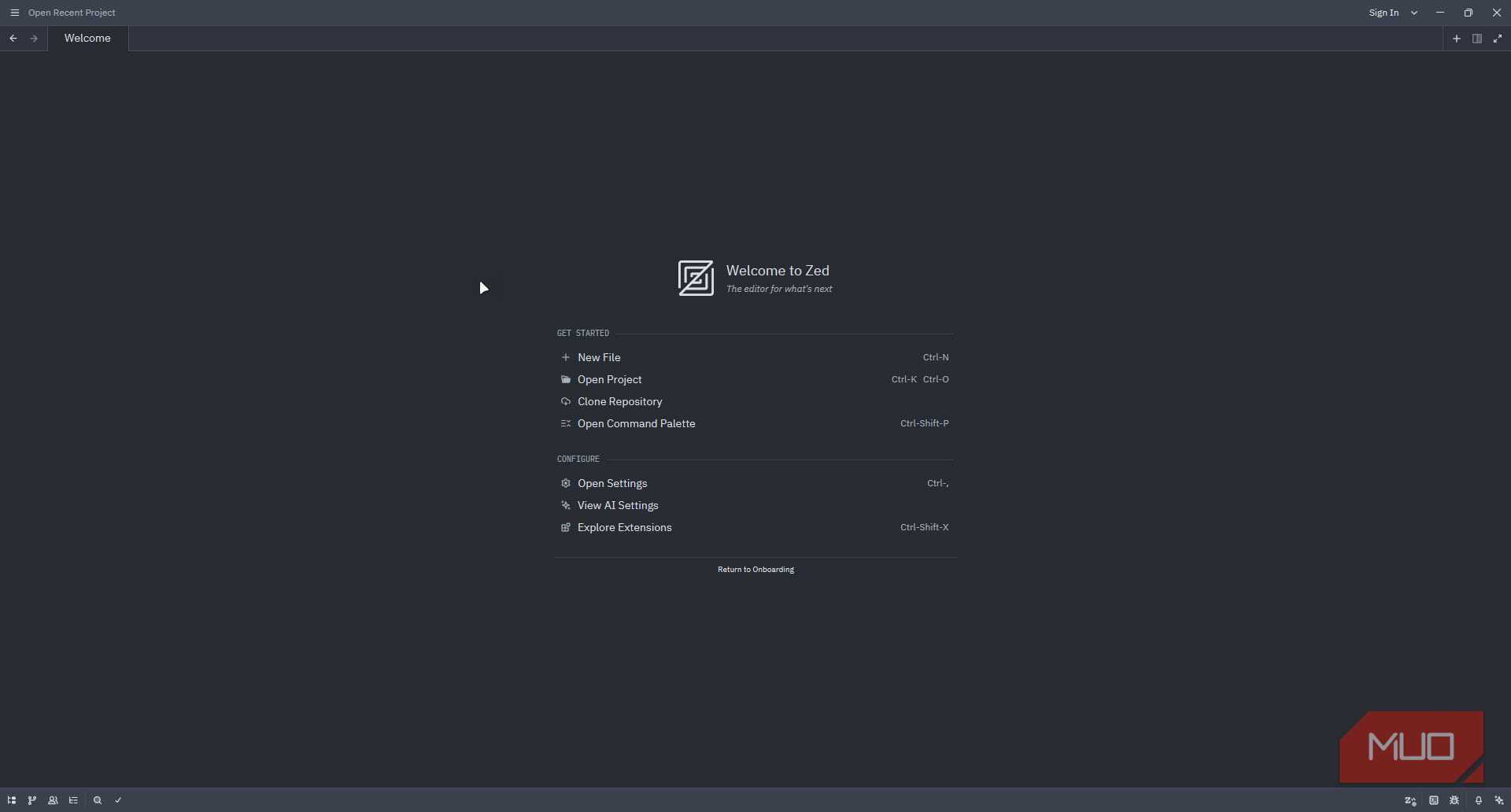
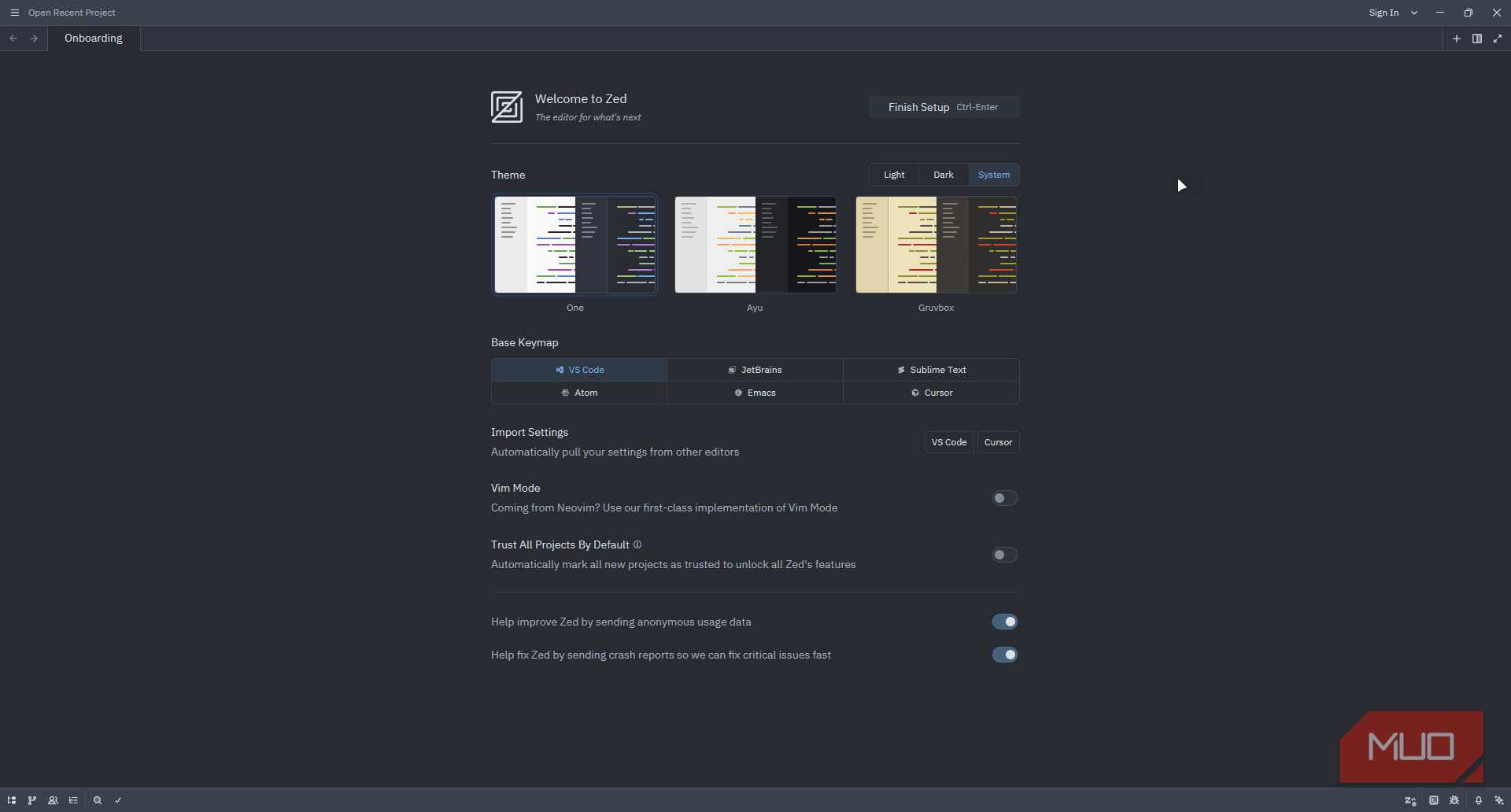
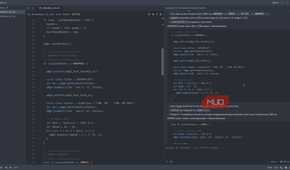
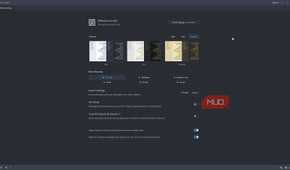
Zed was created by the same team that built Atom and Electron at GitHub. It's a little ironic considering the people who helped build the technology powering VS Code then spent years writing an editor in Rust that specifically avoids it.
The result of a million lines of Rust and half a decade of public previews is what makes Zed different. Zed uses a custom UI framework called GPUI that talks directly to your GPU, bypassing the usual CPU-based rendering pipeline that most applications use. On macOS, it goes through Metal, on Linux through Vulkan. What you get is an editor that renders at a consistent 60 to 120 frames per second, even when scrolling through files with tens of thousands of lines.
 Quiz
Quiz
What do you know about code editors?
Trivia challenge
From syntax highlighting to extensions — find out how well you really know the tools developers live in.
Which code editor, first released in 2015 by Microsoft, became the most widely used editor in the world according to the Stack Overflow Developer Survey?
Vim, one of the most enduring code editors, is based on an earlier editor called Vi. In what year was Vi first created?
What is 'IntelliSense' as found in Visual Studio Code?
Which code editor famously brands itself as 'the text editor you'll fall in love with' and is known for its smooth performance and multiple cursor feature?
In most code editors including VS Code, what does the keyboard shortcut Ctrl+Shift+P (or Cmd+Shift+P on macOS) typically open?
What is the name of the VS Code extension that enables real-time collaborative editing, allowing multiple developers to work in the same file simultaneously?
GNU Emacs is famous for being highly extensible. What programming language is primarily used to customize and extend Emacs?
GitHub announced the sunset of the Atom code editor in 2022. In what year did Atom originally launch to the public?
Your Score
Thanks for playing!
The cold start time is also about half a second. Keystroke-to-display latency is practically non-existent, too. For context, VS Code with a handful of extensions can take three to five seconds to launch on my relatively modern laptop, and there are moments of input latency in large files that make it seem like I'm running a second OS on top of Windows. It might not seem like a lot in daily use, but if you compare Zed to VS Code back to back, VS Code starts feeling obsolete.

Zed
- OS
- Windows, Linux, macOS
- Developer
- Zed
- Price model
- Free, Open-source
Zed is a high-performance, multiplayer-focused code editor built by Zed Industries, currently strongest on macOS.
The speed isn't a benchmark—it’s a feeling
Startup times, navigation, and responsiveness that make VS Code feel sluggish

Raw benchmarks can be misleading. After all, real-life daily usage is what counts most when it comes to a text editor. Memory usage in Zed hovers around 200 to 400 MB. VS Code, by comparison, can hit as high as 700 MB when idle and can take up multiple gigabytes when I've got a bunch of documents loaded. If you work on large monorepos, Zed indexes them and responds well within a second — a situation where other editors can take several seconds to even catch up.
Repo-wide search is also nearly instant in Zed. Results update as you type, and the editor doesn't start stuttering when the codebase gets large. Tab switching is immediate, too, and you can easily scroll through a 100,000-line file with no frame drops. After a few hours with Zed, you'll quickly realize that the editor isn't just fast in a benchmark; it feels fast in a way that Electron-based tools practically cannot.
AI that stays out of your way
Useful coding assistance without turning the editor into a chatbot showroom

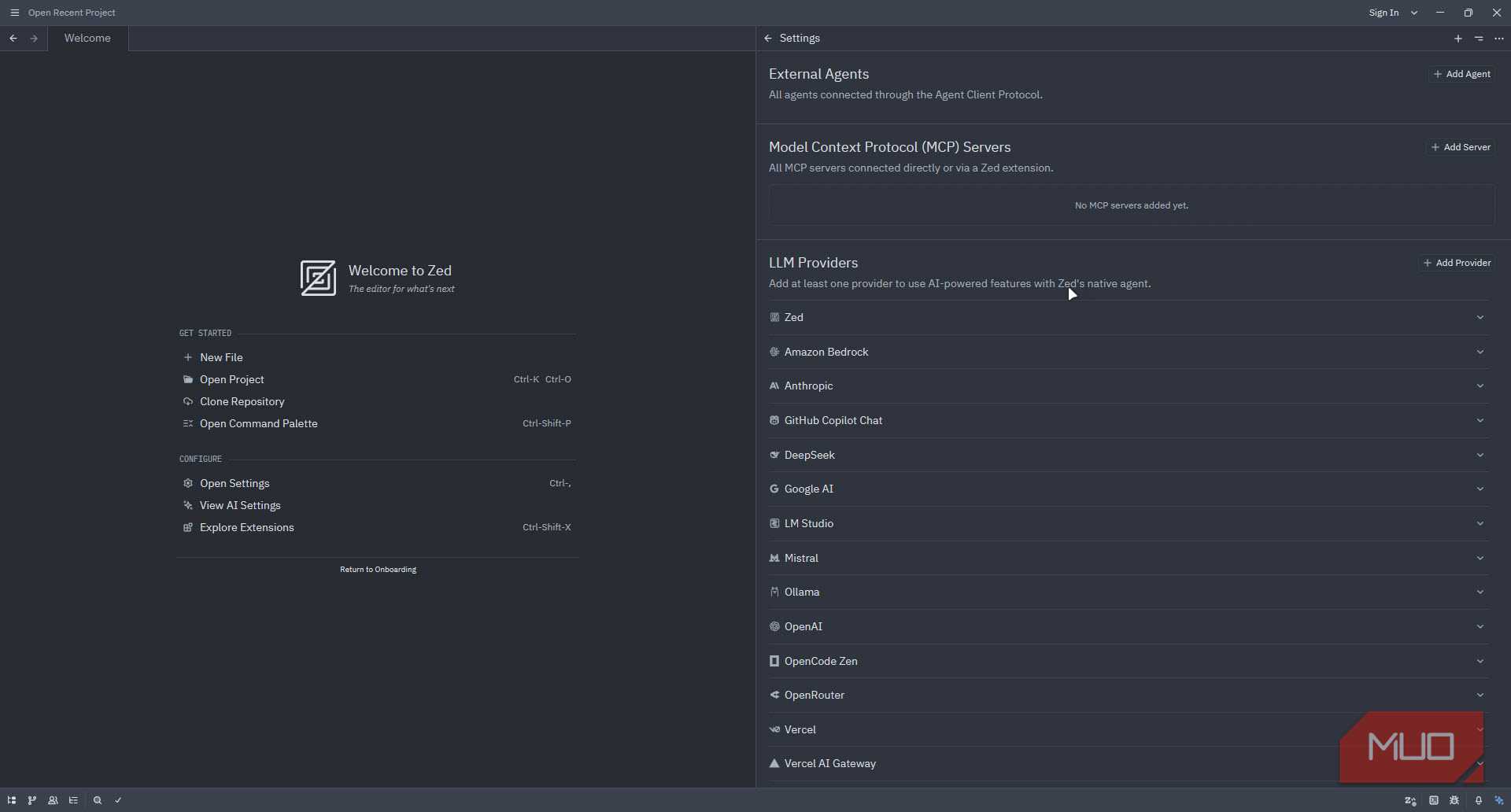
In 2026, just about every code editor comes with some sort of AI integration, and Zed is no different. However, there are no extensions to install, no API wrappers to configure, and no performance overhead on top of your existing usage. The AI layer in Zed is built directly into the editor's code.
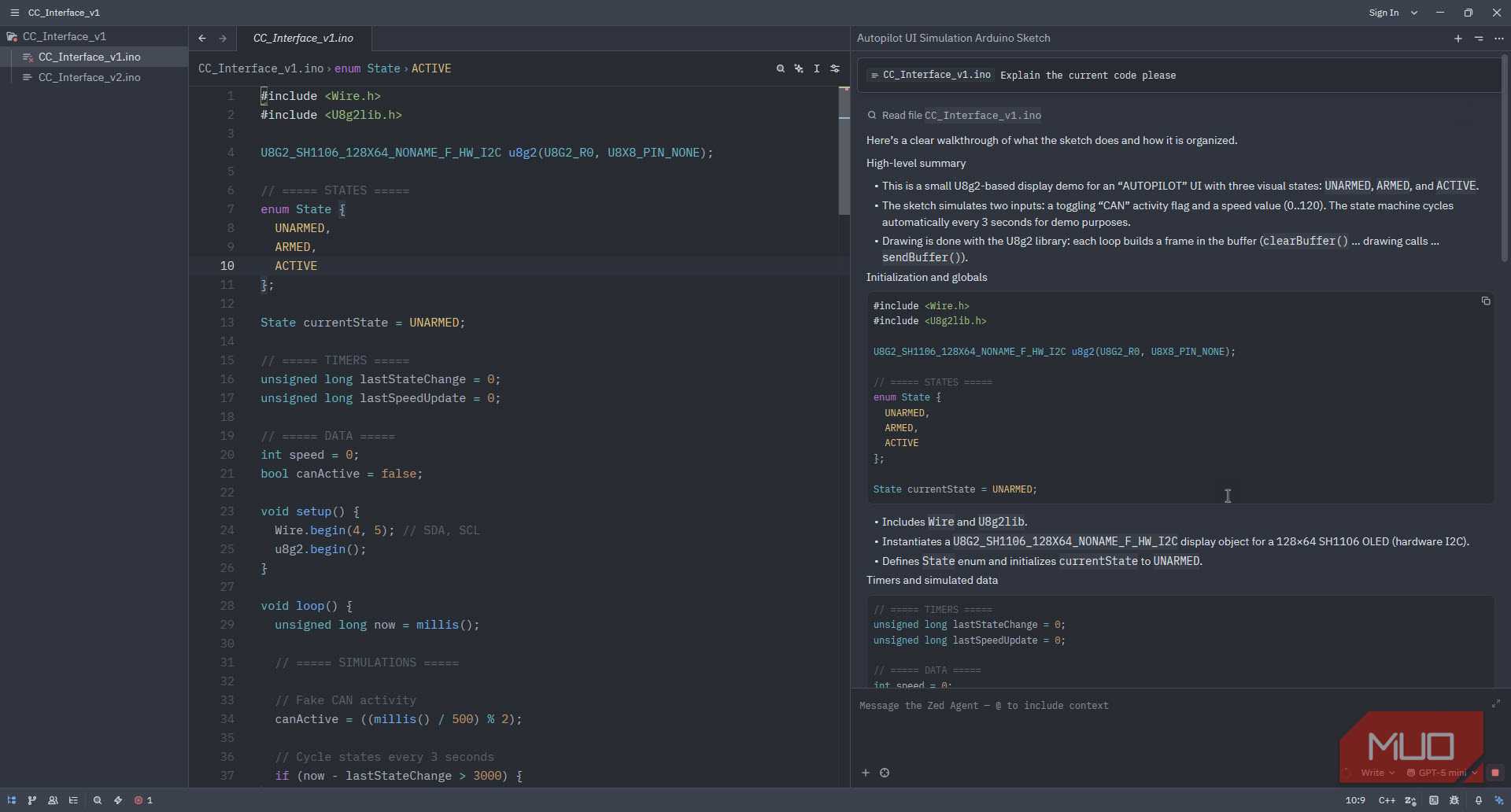
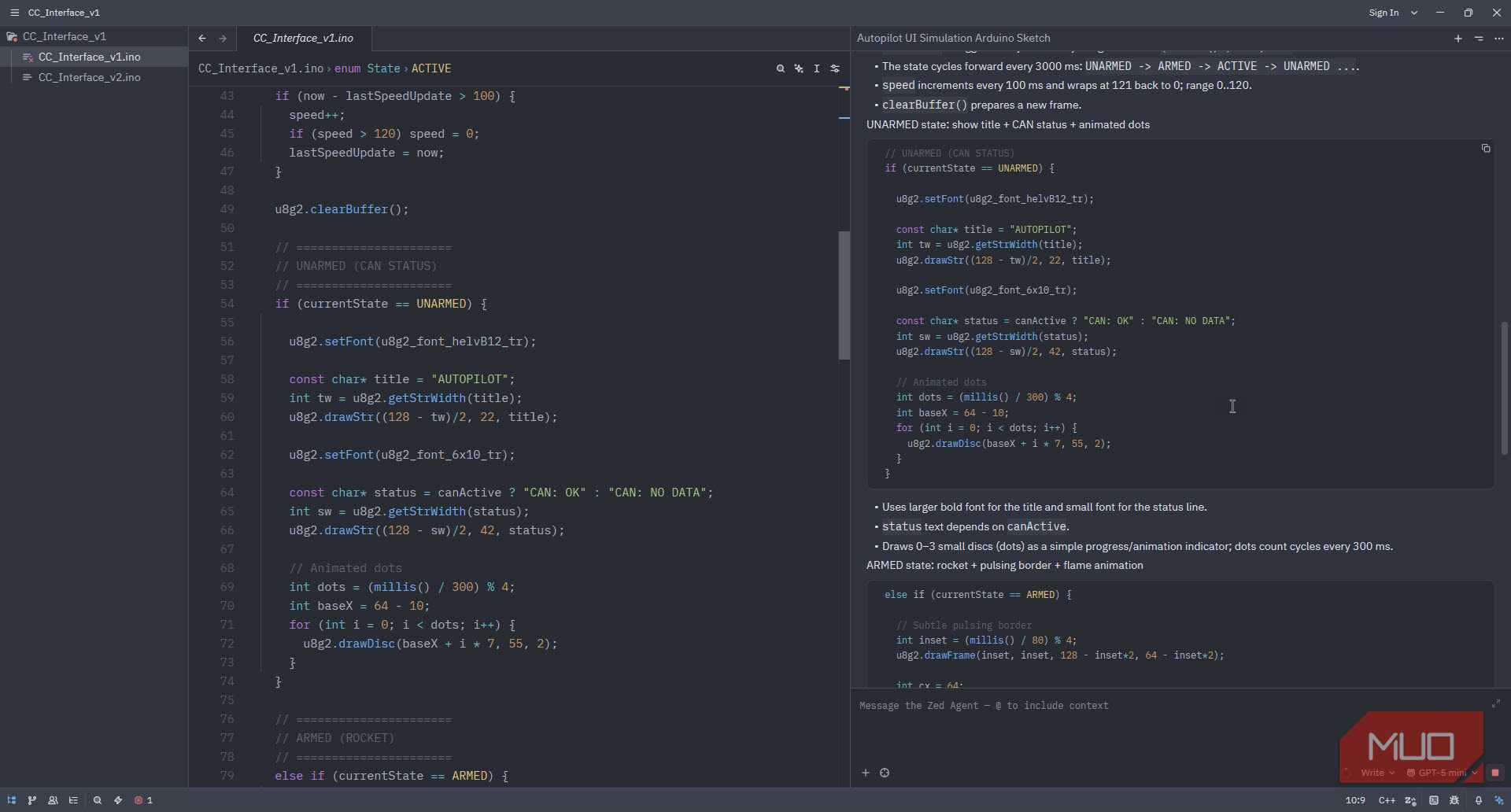
Zed's Agent Panel lets you hand off tasks to AI agents — Claude, Codex, Gemini CLI, or anything that speaks the Agent Communications Protocol (ACP). You can follow the agent across files using Follow Mode, the same multiplayer infrastructure that powers Zed's human collaboration features. Once the agent finishes, you review the changes in an editable unified diff and accept or reject changes — much like a Git merge conflict.
There's also Zeta, Zed's own open-weight model fine-tuned specifically for edit prediction. it predicts your next edit in context — not just the same line. The best part, it runs without sending your code to a third-party server if you set it up that way.
The ecosystem still has catching up to do
Where Zed's young plugin and extension story falls short of VS Code

As good as it is, Zed isn't a VS Code tradeoff for everyone. The extension ecosystem is substantially smaller compared to VS Code, which has over 50,000 extensions. Zed also uses WebAssembly for its extensions, meaning VS Code extensions can't be directly ported over. There's no GitLens equivalent, no database browser panel, and remote development over SSH or inside Docker containers has yet to catch up.
If your workflow depends on specific extensions or niche language tools that only exist in VS Code, you'll find Zed's marketplace on the thinner side. The debugger is also newer and has received a bit of a mixed reaction for missing several platform-specific features. Oh, and if you're a data scientist with a bunch of Jupyter notebooks, stick to VS Code. Zed isn't your editor yet.
Should you actually switch?
It's not for everyone, but if it works, it works great
If you write code in mainstream languages like Python, TypeScript, Go, Rust, and JavaScript, among others, and you've started to feel VS Code slow under the weight of everything you've bolted on to it, Zed is well worth a week-long excursion. The speed isn't just marketing, it's the kind of improvement you immediately notice when you switch over.
Zed is what happens when you build a code editor with the benefit of hindsight, knowing what Electron costs, knowing what developers actually need, and refusing to compromise on those fundamentals. Native apps might be disappearing, but for the first time in years, there's genuinely a serious alternative sitting at the table right next to VS Code. VS Code isn't going anywhere, and it doesn't need to, but it's always better to have options, especially if everything you write doesn't need to handle a bolted-on installation with dozens of extensions in the background.