


It is easy to get lost reading through various privacy policies and marketing pages when trying to choose a Virtual Private Network (VPN). Once you realize how much it is needed, you have to deal with the confusing marketing material. There are too many websites with claims about military-grade protection or total anonymity, and it is hard to tell what actually keeps you private and what is just noise. Most of the time, the features being pushed do not solve the problems they claim to fix. You don't need marketing buzzwords to protect your traffic. You just need to focus on a few features that actually impact your security.
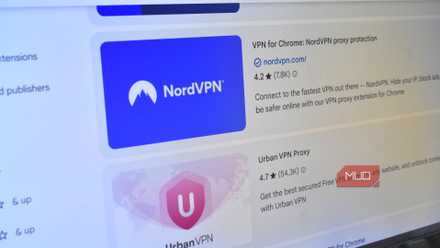
I stopped using browser VPNs after this—and you should too
You should avoid browser VPNs for security and performance reasons.
Privacy and performance are important
You should understand what keeps you private

No logs is a marketing term I see all the time, with no standard definition to enforce it. So every provider can define it however they need. You need to look for evidence to distinguish marketing claims from a true no-logs policy, starting with independent third-party audits. Audits from cybersecurity firms or accounting agencies evaluate the server configurations and code to confirm that no data is being recorded.
The best verification comes from real-world legal tests. Also, a provider that gives zero customer data when subpoenaed has proven its architecture in practice. I love to see a company back up its marketing claims with actual court victories.
Top-tier services use RAM-only, diskless servers where data is stored in volatile memory. This setup wipes all operational data the moment the server is rebooted or loses power. I used to worry about server security until I realized that a physical break-in does nothing if pulling the plug deletes the data. This is the main difference between a good and a bad VPN.
Even with a strong technical architecture, a company's legal jurisdiction plays a role in protecting your data. A well-written privacy policy can still be overridden by a court order, making it a good idea to choose a company headquartered outside of the 5, 9, or 14 Eyes surveillance alliances. These are countries like the US, the UK, and others. These intelligence-sharing agreements let member nations cooperate on surveillance.
Providers operating within these jurisdictions can be legally compelled to log traffic through domestic subpoenas. That said, operating in privacy-friendly countries outside these alliances means the provider is above the direct subpoena power of these networks. It takes a much higher legal threshold to compel any data disclosure. I think that's what makes picking the right country worth it in the end.
For performance, the underlying protocol you use determines your speed, which is critical for high-bandwidth activities like 4K streaming or gaming. Look at what customers are saying about it. If customer reviews highlight speed, make sure to pay attention.
Every VPN should at least get past network restrictions
This is the number one priority
The main reason most people pay for a VPN is to bypass network blocks by using international servers to access content unavailable in their location. Whether you are overcoming government censorship or evading corporate firewalls, a VPN routes your traffic through an encrypted tunnel to a server of your choice, changing your visible IP address.
For most people, this is about getting around geo-restrictions on streaming services like Netflix, Hulu, or BBC iPlayer. By connecting to a server in a different country, you can trick these platforms into thinking you are browsing from that region. This lets you stream movies and television shows from international catalogs that would otherwise remain hidden behind regional paywalls.
While that may sound basic, consistently bypassing these restrictions requires more than just masking your IPv4 address. Streaming platforms like Netflix use anti-proxy detection systems that compare incoming network signals to detect location spoofing.
If your VPN masks your IPv4 address to appear to be a server in New York, but your device leaks your true location via an IPv6 address assigned by your internet service provider, the streaming service will detect the mismatch. When this happens, the platform will typically snap back to your local catalog, display proxy error codes, or log you out of your account.
Since this happens, a high-quality VPN must either provide full IPv6 tunneling support or block all IPv6 traffic system-wide to prevent your real location from slipping outside the encrypted tunnel, which happens often.
Ignoring the marketing claims
Filtering out the noise

The biggest hurdle when shopping for a VPN is learning not to fall for buzzwords that exist only to sell products. This makes people believe they need features that are embellished or misunderstood. One of the most common examples is the promise of military-grade encryption.
In reality, this is just marketing copy with no real definition. Most of the time, it refers to the Advanced Encryption Standard with a 256-bit key length. Standard encryption is secure for everyday internet use. No standard will magically guarantee absolute security. The integrity of a VPN depends on more than just its cipher. You need to think about the authentication mechanism, the key exchange protocol, and the physical security of the server nodes.
It's easy to be fooled by the idea of all-in-one protection, but the built-in antivirus tools and ad blockers advertised by VPNs are usually weak and limited by their technical implementation. These features typically use basic network-level DNS sinkholing.
When a webpage attempts to load a known tracker or malware domain, the VPN's DNS server intercepts the query and returns a loopback address to block it. While helpful for basic filtering, this is a blunt tool. It can't distinguish between an advertisement and legitimate content served by the same domain, which can break complex websites.
Dedicated browser-level blockers are better because they inspect the page code to strip out malicious scripts, proving that a VPN's tools can't replace a proper local security setup.
That said, the most dangerous myth is the promise of complete anonymity. It's not true. It's technically impossible to get absolute anonymity at the network layer because a VPN only secures the transport channel between your device and the VPN server.
No security network makes you anonymous if you log into personal accounts anyway, and the moment you sign in to Facebook, Google, or Amazon while using a VPN, that session is associated with your real-world identity. Even with the VPN masking your IP address, your actions still leave a trackable trail.
This is just one step of many
A VPN isn't a magic button for total anonymity, regardless of what people say. Even with the best setup, logging into your accounts or letting websites track you through cookies means you aren't invisible online. It's a single part of your security routine, not a replacement for good digital habits. That said, when you cut through the marketing noise and focus on server architecture, jurisdiction, and connection stability, you get a tool that does its job without the extra bloat.

NordVPN
- Logging policy
- Audited no-logs
- Mobile app
- Android, iOS
- Number Of Servers
- 9,000+
- Price Category
- Premium
NordVPN is a top-tier service known for its high speeds and robust security. It features a verified no-logs policy, Double VPN encryption, and built-in malware protection. With over 9,000 servers, it’s ideal for bypassing geo-blocks on streaming sites while keeping up to ten devices secure simultaneously.