

The Thinking Machine: Jensen Huang, Nvidia, and the World's Most Coveted Microchip
Charting Nvidia’s rise to become one of the most valuable companies on earth, this biography of cofounder and CEO Jensen Huang is educational and entertaining. Witt explains how the company spun GPU (graphics processing unit) manufacturing for gaming into parallel processing and a marriage of hardware and software that has powered the rise of AI. It has also made Huang very rich, but he isn’t always painted in a flattering light, which helps to counterbalance the founder worship vibe.
For a slightly different view on Nvidia's history, try The Nvidia Way: Jensen Huang and the Making of a Tech Giant by Tae Kim. This book, a well-deserved winner of the Pulitzer Prize, should be required reading for anyone who works in technology or harbors a curiosity about how it came to dominate our lives. First published in 1981, the book reveals the inner workings of Data General in the 1970s as the company strives to design and release a successful next-generation minicomputer. Kidder captures the struggle between management and creatives and weaves a fascinating tale from an ostensibly dry subject. He explains the intense time pressure on engineers that led to a constant state of crunch, the need for recruits to feel like they are working on something important they have some stake in, and the psychology of leadership intent on realizing ambitious projects. It is positively prescient about the dangers of burnout for the unsung heroes who sacrifice so much to build new machines.
Follow this up with WIRED’s article chatting with some of the subjects in the book 20 years after it was published (this article itself is now more than 20 years old).
Doppelganger: A Trip Into the Mirror World
This fascinating dive down the rabbit hole of Covid conspiracy is ostensibly about how people confuse Naomi Klein with Naomi Wolf. Klein is a leftist journalist and climate activist; Wolf was a third-wave feminist but is now a rabid anti-vaxxer. If you’re still puzzled over the convergence of wellness and the far-right or wondering why so many ordinary folks are swallowing the kind of misinformation that breeds racism and climate denialism, Klein has some convincing answers. This is challenging and sometimes bleak reading, but it was also the most important book of 2023. It's brutally honest, calling out the absurdities of capitalism and the role social media has played in the rise of narcissism.
Apple in China: The Capture of the World's Greatest Company
Who would have thought that maximizing profit at any cost might lead to problems? Apple’s pursuit of every cent led it to outsource virtually all of its gadget production to China, and now it’s grappling with the economic, political, and cultural fallout. McGee has spoken with many former Apple executives and engineers to uncover what happened, why, and what it means for Apple and the US.
For a Less Jobs-Centric Exploration of the Mac’s Development
Read Revolution in The Valley: The Insanely Great Story of How the Mac Was Made by Andy Hertzfeld. This book offers a less Jobs-centric exploration of the Mac’s development, focusing on the development of the Mac, iTunes, the iPhone, and the iPad.
The Dark Side of the Internet’s Hive Mind
The dark side of the internet’s hive mind is brought into sharp relief by Ronson’s cast of characters, all have been publicly shamed via the internet. From the fascinating tale of Jonah Lehrer’s plagiarism to the vilification of Justine Sacco after an ill-advised joke tweet decried as racist, Ronson digs into the stories behind the scandals and looks at the havoc relentless online shaming can wreak. The book is a fun and fascinating look at how shame, empowered by social media, is a forceful form of social control with real-life consequences.
Bad Blood: Secrets and Lies in a Silicon Valley Startup
Noble aims and raw ambition are lauded in the tech world, often attracting praise and investment, but what happens when a project goes wrong? Building on Wall Street Journal reporter Carreyrou’s shocking exposé of Theranos, this book follows charismatic founder Elizabeth Holmes as she tries and fails to build a blood testing machine to sweep away the need for hypodermic needles, with the promise of accurate tests done from a drop or two of blood via a pinprick on the finger. Although the company raised hundreds of millions of dollars, its technology was horribly inaccurate. Rather than admit defeat, it pressed on, which is why Holmes was put on trial for fraud and sentenced to 11 years in prison. The book highlights the dangers of the popular “fake it till you make it” approach. Theranos reached a paper valuation of $9 billion and employed more than 800 people before its spectacular fall.
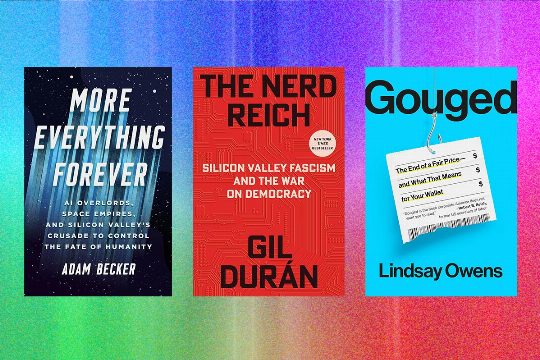
Silicon Valley ideology and the self-serving narratives of tech billionaires are exposed as delusional rationalizations for the crazed accumulation of wealth and power in this fascinating, reasoned, sometimes depressing, but always well-argued book. Becker does his homework thoroughly to debunk our immoral CEO overlords and the philosophies and movements they espouse.
You Look Like a Thing and I Love You: How Artificial Intelligence Works and Why It's Making the World a Weirder Place
If you can't help but ponder about artificial intelligence these days, you'll get a kick out of this book. It delves into machine-learning algorithms and their limitations, as well as the ethical and social implications of AI. This fascinating book exposes the dark side of AI and its potential to shape the future of humanity.
Comments