

Introduction
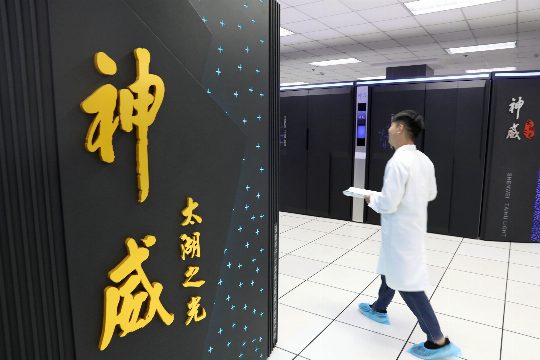
China has emerged as the world's fastest supercomputer, displacing the United States from the top position in the TOP500 ranking. The LineShine system, installed at the National Supercomputing Center in Shenzhen, has a power consumption of approximately 42.2 megawatts and delivers 2,198 exaflops. Unlike most next-generation supercomputers, it relies solely on CPUs, which are commonly found in consumer devices. The system's architecture is based on the LingKun platform and consists of roughly 45,000 LX2 processors. The entire system runs on Kylin OS, a Linux-based operating system widely used in China's scientific and government computing infrastructure. This achievement underscores China's technological resilience despite restrictions on US hardware and software components.
Power Consumption and Performance
The LineShine supercomputer boasts a power consumption of approximately 42.2 megawatts, which is a significant improvement over the previous top system, El Capitan, which consumed around 38 megawatts. This system delivers 2,198 exaflops, meaning it can perform more than 2 quintillion operations per second. The LineShine's performance exceeds the US system's processing capacity by more than 20 percent, indicating its superior computational power.
CPU Dominance
Unlike most next-generation supercomputers, the LineShine does not use graphics processing units (GPUs). Instead, it relies exclusively on central processing units (CPUs), components widely used in smartphones, desktop computers, and laptops but rarely found in large-scale scientific computing systems. This unique feature highlights the system's innovative architecture and design.
Infrastructure and Architecture
The LineShine's infrastructure is built with hardware and software developed in China. The system's architecture is based on the LingKun platform and consists of roughly 45,000 LX2 processors. Each processor has 304 cores and operates at a clock speed of 1.55 GHz. The nodes are connected through a high-speed network called LingQi, designed to minimize latency and accelerate data exchange. The entire system runs on Kylin OS, a Linux-based operating system widely used in China's scientific and government computing infrastructure.
Technological Resilience
China's return to the top of the TOP500 ranking is seen as a testament to its technological resilience. Despite restrictions on US hardware and software components, China has invested in developing new architectures and technologies capable of building supercomputers that can compete with the highest-performing US systems. This achievement demonstrates China's commitment to maintaining technological leadership despite challenges.
Conclusion
China's LineShine supercomputer represents a significant technological achievement, showcasing China's ability to develop and operate high-performance computing systems despite restrictions on US hardware and software components. This breakthrough underscores the importance of technological self-reliance and the potential for China to maintain its position as a leader in the global supercomputing landscape.
Comments