

Understanding the Next Two Solar Eclipses
The total solar eclipse of August 12, 2021, was a spectacular event, and the mini golden age of eclipses in Europe is just beginning. The Iberian eclipse trio, which includes the 2027 and 2028 eclipses, still has two events to go. Both are expected to be even more incredible than the one that just occurred. The next eclipse, scheduled for August 2, 2027, will be the longest total solar eclipse of the century, lasting approximately 6 minutes and 23 seconds. The 2028 eclipse will offer a chance to see the "ring of fire" associated with an annular eclipse. It's not too early to start planning for these events, whether you're in Spain or planning to be there.
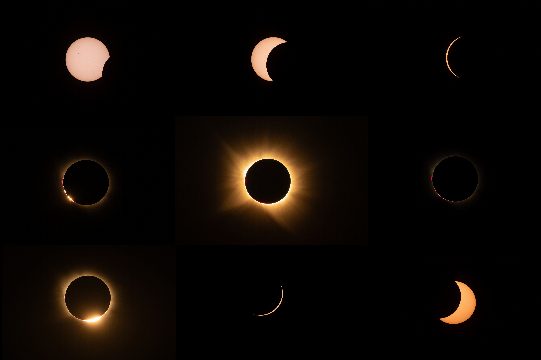
The 2027 Eclipse: The Eclipse of the Century
The 2027 eclipse will be the longest total solar eclipse of the century, with the moon covering the sun for 6 minutes and 23 seconds at its peak. This eclipse will be visible from a narrow band across the planet, starting in southern Spain and northern Africa, crossing Morocco, Algeria, Tunisia, Libya, and Egypt, and then continuing through Saudi Arabia, Yemen, and Somalia. Spain will be the only European country from which the total phase can be observed. Egypt will see both the peak of the eclipse and the longest duration, with the moon's shadow falling over ancient Thebes and the Valley of the Kings. The pyramids of Giza, further north, will experience a partial eclipse.
The third eclipse in the series will occur on January 26, 2028. This time, the moon will not completely cover the sun. Instead, it will leave a bright ring of fire visible around it. The path of annularity will cross South America, from Ecuador and Peru to Brazil, before crossing the Atlantic and ending in Portugal and Spain. Brazil will offer the longest-lasting spectacle, with the ring remaining visible for 10 minutes and 27 seconds. Spain will experience a shorter but potentially very photogenic version, with the ring of fire lasting about seven minutes and appearing very close to the horizon, shortly before sunset.
Planning Your Viewing Experience
Whether you're in Spain or planning to be there, it's not too early to create your viewing plan. With detailed information on viewing locations and durations, you can start planning your experience for these incredible events.
Conclusion
The next two solar eclipses in 2027 and 2028 are a once-in-a-lifetime opportunity to witness one of the most spectacular natural phenomena. By planning ahead, you can ensure that you're in the right place at the right time to experience these incredible events.
Comments