

Introduction
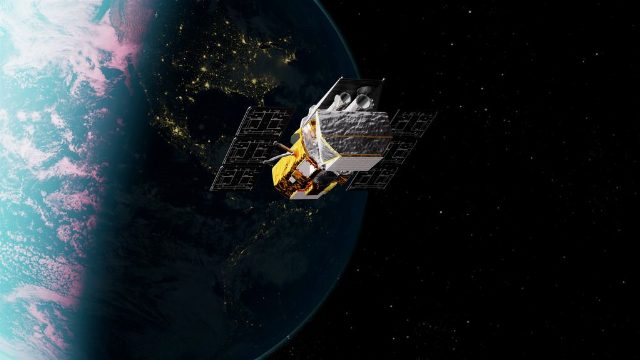
The Swift space observatory, launched in 2004, has been in operation for over two decades, specializing in gamma-ray bursts (GRBs), the most energetic electromagnetic explosions in the universe. Originally designed to last just two years, Swift continues to explore some of the most violent phenomena in the cosmos. However, its limited propulsion system and the increasing drag from Earth's atmosphere have led to concerns about its future. NASA decided to attempt a rescue mission to extend Swift's operational life, but the mission was ultimately canceled due to technical issues.
Swift Telescope's Lifespan
Swift was launched with a mission duration of just two years, but its longevity has been remarkable. The telescope has been observing gamma-ray bursts and other cosmic phenomena since its launch. Its continued operation has provided valuable insights into some of the most energetic events in the universe. However, as the telescope approached the end of its operational life, NASA recognized the need for a rescue mission to ensure Swift could continue its important work.
NASA's Rescue Mission Plan
NASA's plan for the rescue mission involved a robotic spacecraft, the LINK, which was designed to capture and repair the aging Swift telescope. The mission was intended to be a high-risk, high-reward endeavor, aiming to extend Swift's operational life by raising its orbit to a safer altitude. The rescue mission was seen as a critical opportunity to advance satellite servicing technology and gather valuable data for future missions.
Challenges and Technical Failures
Despite the ambitious nature of the rescue mission, several technical challenges arose. The LINK spacecraft, launched on July 3, 2026, faced issues with its attitude control system, which is responsible for keeping the spacecraft properly oriented and stable in space. Engineers worked diligently to regain control of the spacecraft, but problems persisted. The issues with the control system ultimately led to the cancellation of the rescue mission.
In a statement, NASA administrator Jared Isaacman explained the cancellation of the rescue mission. He emphasized that the mission was worth attempting due to the potential benefits for future satellite servicing missions. Isaacman noted that the team had moved with extraordinary speed to give Swift a chance to carry out more science and to gather information that could be applied to future missions. The agency hopes to use the attempt to learn from the LINK spacecraft's rendezvous and close-proximity operations.
Without an intervention to raise its orbit, Swift will continue to lose altitude, eventually reaching the denser layers of the atmosphere. NASA estimates that Swift will likely reenter the atmosphere before the end of the year. The cancellation of the rescue mission highlights the challenges and risks associated with extending the operational life of aging space observatories.
Conclusion
NASA's decision to cancel the rescue mission for the Swift telescope underscores the complexities and risks associated with extending the operational life of aging space observatories. The mission, while ultimately unsuccessful, provided valuable insights and data for future satellite servicing missions. As space technology continues to advance, the challenges and risks associated with extending the operational life of space observatories will likely remain a critical area of focus for space agencies.
Comments