

Introduction
NASA has recently made nearly 1 terabyte of data from the Artemis II mission available to the public. This data includes a vast array of scientific images and videos, as well as detailed spoken observations and notes taken by the astronauts. The release of this data is significant as it marks the first set of planetary science data obtained outside Earth, directly by humans, in more than half a century.
The Artemis II Mission Data
The data archive covers the return of the astronauts to the far side of the moon, including 11,000 full-resolution images and videos, 8. Additionally, the data includes transcripts, photographs from cameras aboard the Orion capsule, and photographs taken by the astronauts themselves. These materials are available through NASA's Planetary Data System, a public repository where the space agency stores data from its planetary missions.
Reports and Summaries
In addition to the public database, NASA has also released three reports summarizing the findings from the Artemis II mission. These reports include the Artemis II Preliminary Lunar Science Report, the Artemis II Lunar Science Operations Report, and the Artemis II Lunar Science Data User Guide. These reports provide a comprehensive overview of the mission's findings and data.
The data is primarily intended for the scientific community, but anyone can access the public database. For those interested in exploring the data more deeply, NASA has set up an Artemis II science page where users can download the three reports, view a selection of photographs, and access the mission's audio library. For those wishing to work directly with the raw data, the Planetary Data System offers scientific files and their metadata for individual download and analysis.
Initial Analyses of the Data
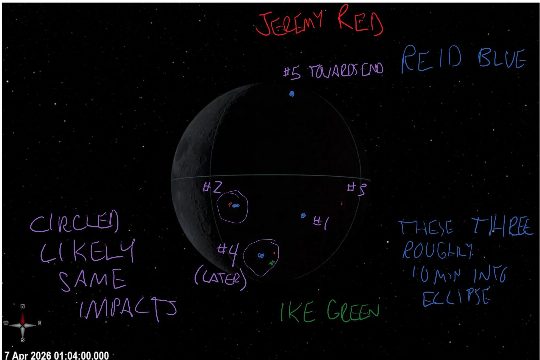
Initial analyses of some of the Artemis II data have already yielded concrete results. For instance, the data has allowed scientists to detect five small meteoroid impacts on the lunar surface during the 54-minute eclipse observed by the Orion crew. These findings have improved estimates of how often fragments just a few centimeters in size strike the moon, a key factor in calculating the risks future lunar bases, vehicles, and astronauts will face.
The data is particularly useful for planetary geologists, flight engineers, heliophysicists, experts in telecommunications and remote sensing, as well as specialists in meteoroid impacts. For example, the data can help scientists compare lunar regions with previously obtained composition maps from orbit. Additionally, the data can assist astronauts in navigating and recognizing terrain, especially in areas near the south pole, where NASA plans to conduct the next Artemis missions.
Conclusion
NASA's release of nearly 1 terabyte of Artemis II data is a significant step forward in planetary science. The data provides valuable insights into the moon's surface and potential future missions, and it will be instrumental in advancing our understanding of the lunar environment. This release not only expands access to scientific data but also underscores NASA's commitment to sharing its findings with the broader scientific community.
Comments