

Introduction
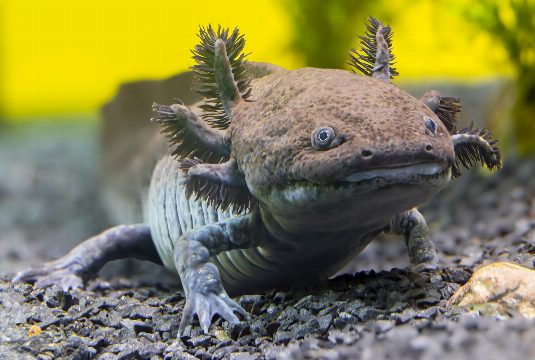
Scientists at the Zaragoza School of Advanced Studies (FES Zaragoza) at the National Autonomous University of Mexico (UNAM) have identified a new fossil species of axolotl in the state of Hidalgo. The species, named Ambystoma quetzalcoatli, is the first fossil salamander species to be formally described in Mexico and the oldest known record of the genus Ambystoma in the country. The discovery sheds light on the origin and evolution of Mexican biodiversity.
Discovery and Context
The fossils were discovered in the municipality of Atotonilco el Grande, a region that was once home to an extensive freshwater lake system covering approximately 85 square kilometers. The region's temperate, subhumid environment has yielded fossils of numerous plants, diatoms, gastropods, ostracods, beetles, and fish. Until now, however, the amphibian remains from the site had not been formally studied or described.
Examination and Identification
The researchers examined a dozen fossil salamander specimens collected in the early 2000s by the FES Zaragoza Paleobotany Research Group. Many of the fossils were exceptionally well preserved, with complete, articulated skeletons that allowed for a detailed anatomical analysis and a precise assessment of their morphology. The fossils were initially identified as belonging to a species of the genus Ambystoma, the group that includes modern axolotls. However, a team led by researchers Jorge Herrera Flores and María Patricia Velasco de León revisited the material using modern techniques, including computed tomography (CT) scanning and detailed anatomical comparisons with living species, to determine its identity more accurately.
Characteristics and Significance
Their analysis revealed that the fossils collected nearly three decades ago belonged to an entirely new species, distinguished from modern axolotls by several significant anatomical differences. Among the most notable are an elongated opening on the top of the skull, a differently structured palate, variations in the arrangement of several cranial bones, and the presence of 17 trunk vertebrae. This last characteristic is particularly significant, as modern axolotls have 16 or fewer trunk vertebrae. The fossils display distinctive features of the skull and skeleton that are absent in living species.
Evolutionary Insights
To establish the fossils' identity, the researchers compared them with 13 living Ambystoma species, including several endemic to Mexico, such as the Xochimilco axolotl (Ambystoma mexicanum), as well as tiger salamanders from Mexico and the United States. They relied on three-dimensional imaging and CT scans available through international scientific collections. The scientists then investigated the evolutionary relationships between the fossil salamanders and their living relatives through a comparative analysis of skeletal characteristics, incorporating the results of previous DNA-based studies of modern salamanders. Their findings indicate that Ambystoma quetzalcoatli exhibited neoteny, the biological trait that allows an animal to retain juvenile characteristics throughout adulthood. This adaptation typically evolves in stable, isolated lake environments, where there is little evolutionary pressure to undergo the complete metamorphosis seen in most other amphibians. The discovery suggests that this life-history strategy was already present in Mexican axolotls during the Pliocene, several million years ago.
Conclusion
The discovery of Ambystoma quetzalcoatli confirms that the evolutionary history of axolotls stretches much farther back than previously believed and that these amphibians have inhabited what is now Mexico for millions of years. The study provides important insights into the biodiversity and evolution of Mexican fauna.
Comments