

Introduction to Space Lasers and Solar Power Generation
Space lasers are poised to revolutionize the way we generate and transmit energy in space. Google, SpaceX, and a myriad of startups are planning to establish data centers in orbit. However, the challenge lies in providing power to these centers. Star Catcher, a startup from Jacksonville, Florida, proposes a novel solution by concentrating sunlight using lasers to beam power to satellites equipped with solar panels.
The Star Catcher Solution
Star Catcher’s approach involves an array of power nodes designed to both generate solar power and transmit it. These power nodes gather sunlight using lenses and convert it into specific wavelengths of light, which can deliver up to ten times more power than diffuse sunlight. The company then emits a laser beam, akin to an ethereal transmission cable, aimed at satellites in need of energy. This system promises increased uptime and profitability for satellite operators.
Historical Context and Future Feasibility
The concept of generating solar power in space dates back decades, with early mentions in Isaac Asimov's 1941 sci-fi piece. NASA studied the idea in the 1970s, but the high cost of launching large amounts of hardware into orbit rendered such endeavors impractical. However, with declining launch costs, the feasibility of space-based industries has increased. Star Catcher’s solution addresses this by reducing battery size and adding more useful instruments, such as GPUs, for space data centers.
Current Status and Funding
Star Catcher has already secured significant funding, including a $65 million round of funding and a $30 million award from the US Space Force. The company has also inked 40 letters of intent from prospective buyers and 10 power purchase agreements. The upcoming launch of Protostar, a small-scale version of Star Catcher’s satellites, marks the first time the complete system will be tested in orbit.
Testing and Milestones
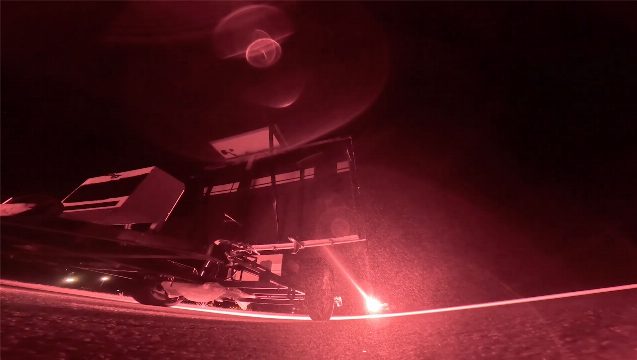
Star Catcher has conducted a space-based test of its technology to track satellites receiving energy, setting a record for power transmission on the ground. The company is currently in the "crawl" phase, preparing to transition to walking and running. Although the Naval Research Laboratory completed a similar experiment in 2023, Star Catcher’s system is more advanced, capable of delivering more power and operating in the cold vacuum of space.
Challenges and Future Potential
Despite the progress, challenges remain. The efficiency of the laser system needs to be improved, and the tracking and thermal management systems must be refined to ensure long-term reliability. However, Star Catcher’s success could pave the way for other space-based solar power initiatives, including those proposed by Google. As the company continues to develop its technology, the potential for space-based energy generation becomes increasingly feasible."
Conclusion
Star Catcher’s space laser system represents a significant step forward in the quest to harness solar power in space. While challenges persist, the company’s progress and the growing interest in space-based industries suggest that space-based solar power generation is no longer just a concept. With continued development and testing, Star Catcher’s system could be a game-changer for the space sector and beyond.
Comments