

Introduction to Eärendil-1 and Its Purpose
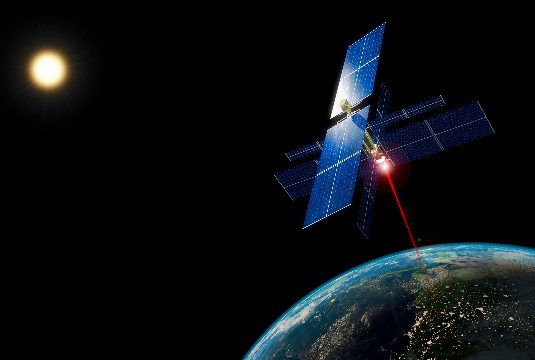
Reflect Orbital, a startup based in Santa Monica, California, has received authorization from the US Federal Communications Commission (FCC) to launch and operate Eärendil-1, a mirror satellite designed to illuminate specific areas on Earth during the night. The satellite, named after a character from J. Tolkien's 'The Lord of the Rings,' will have a primary reflector with an 18-meter diameter. This satellite is part of a larger initiative to deploy up to 50,000 satellites by 2035. The FCC's approval is a significant step towards testing the technical feasibility of this innovative technology.
Technical Specifications of Eärendil-1
Eärendil-1 is equipped with an 18-meter reflector capable of illuminating areas 5 to 6 kilometers in diameter for brief periods. The satellite will be deployed at an altitude of about 625 kilometers. The primary objective of the satellite is to evaluate the technical feasibility of its ultrathin, highly reflective film-based reflector. Reflect Orbital has stated that the company is grateful for the FCC's approval, which they see as a validation of their innovative space technology.
Potential Applications of Eärendil-1
Reflect Orbital envisions a variety of civilian, commercial, and government applications for Eärendil-1. These include providing illumination for search-and-rescue operations, supporting critical infrastructure during emergencies, extending productive hours for solar energy facilities, and temporarily lighting remote construction sites without relying on conventional generators. The startup argues that this technology could overcome one of the main limitations of solar energy, allowing solar panel installations to generate electricity even at night.
Critiques and Concerns
The FCC's decision has not gone without controversy. The project has faced criticism from astronomers and environmental advocates, who argue that ground-based observatories are already struggling with interference from thousands of satellites in low Earth orbit. These satellites can interfere with astronomical observations, potentially increasing light pollution and making observations more difficult. The potential for flashes of reflected light that could affect aircraft pilots, drivers, or wildlife that depends on natural cycles of light and darkness has also been raised. The American Astronomical Society, DarkSky International, and the Royal Astronomical Society have expressed concerns about the potential impact on astronomy, nocturnal ecosystems, and aviation safety.
Regulatory Review and Future Implications
During the regulatory review process, the FCC received nearly 2,000 public comments questioning the proposal. The agency concluded that the application covers only a single experimental satellite, not a commercial constellation. The FCC's decision states that Eärendil-1 is a limited-duration technology demonstration whose results will help determine whether the concept is technically viable and identify the challenges associated with any future developments. Any future deployment of multiple satellites would require new regulatory approvals. While the FCC's decision does not address concerns related to astronomy, it does provide a framework for future regulatory oversight.
Conclusion
Reflect Orbital's Eärendil-1 represents a significant step towards testing the technical feasibility of a new technology. While the project has the potential to provide valuable benefits, including improved solar energy efficiency and support for critical infrastructure during emergencies, it also raises concerns about the potential impact on astronomy, nocturnal ecosystems, and aviation safety. The FCC's decision to authorize Eärendil-1 is a crucial step towards understanding the implications of this innovative technology and ensuring that any future deployments are subject to appropriate regulatory oversight.
Comments