
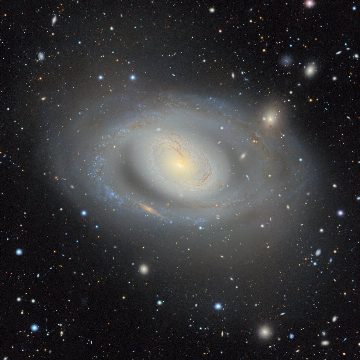
Astronomers Have Completed the Largest Map of Space. Yes, You Can Play With It.
The intricate, 5.6 trillion-pixel map covers approximately 75 percent of the sky and includes about 4 billion celestial.
Search
Results for "Astronomers".
The intricate, 5.6 trillion-pixel map covers approximately 75 percent of the sky and includes about 4 billion celestial.

Astronomers have detected a sugar molecule, erythrulose, floating in interstellar space for the first time, potentially shedding light on the origin of life on Earth.

The promising candidate contains roughly 2 billion times the sun’s mass in hydrogen, yet appears to have no stars. Studying it could help answer questions that have vexed astronomers for years.
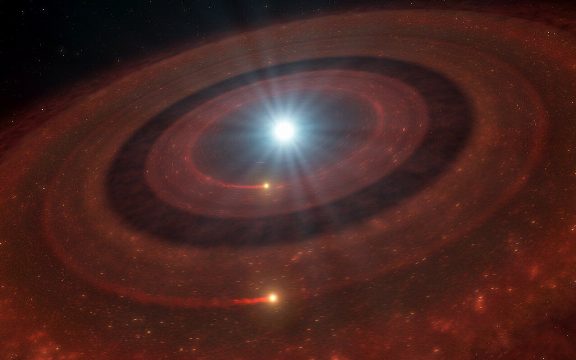
Astronomers find a debris disk around a white dwarf, offering clues to our solar system's future.

Astronomers at the Vera C. Rubin Observatory have identified a new dwarf planet candidate, potentially the 6th dwarf planet in our solar system.

Learn how to view the Orionid meteor shower and other notable astronomical events in October, including Saturn's opposition and the Pleiades star cluster.

Astronomers have captured the most detailed image yet of a supernova remnant, revealing structures not seen before and shedding light on the mystery of zombie stars.

Astronomers have identified the youngest exoplanet ever, located 450 light-years away, challenging existing formation models.
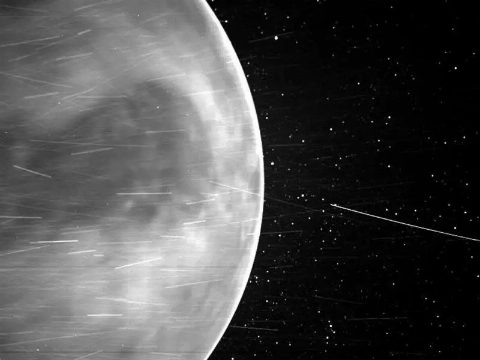
A recent study suggests Venus may have consumed its moon due to its slow rotation, challenging our understanding of planetary evolution.
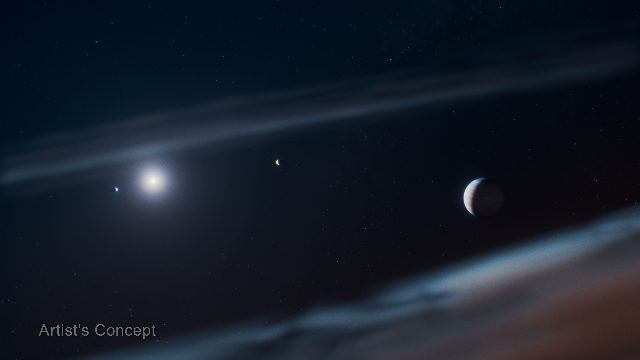
Researchers have detected radio emissions from Beta Pictoris b, the middle planet in a young planetary system, marking a groundbreaking discovery.

NASA’s Nancy Grace Roman Space Telescope will revolutionize astrophysics with a specialized coronagraph, testing its ability to capture starlight reflected off planets for the first time.
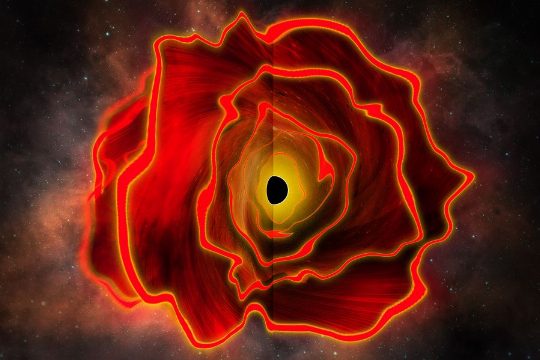
Astronomers have discovered a mysterious celestial body that appears to be a black hole star, emitting 100 billion times more energy than any star.

The Korea Aerospace Research Institute shared the first photographs of a Falcon 9 rocket stage impact on the moon's surface, adding to evidence of the collision's crater.
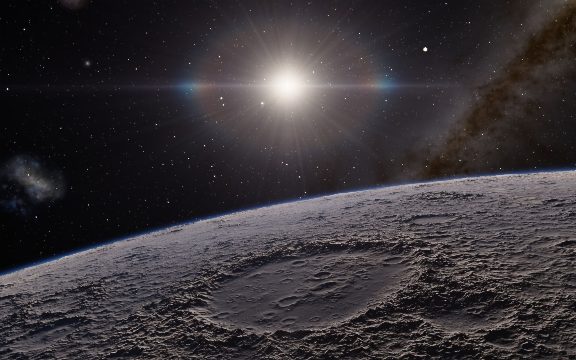
SpaceX’s Falcon 9 rocket crashed into the moon on Wednesday, but no images or video were captured, despite astronomers’ efforts.
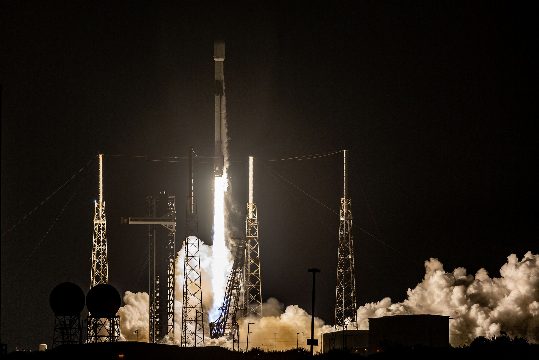
A SpaceX Falcon 9 rocket is set to crash into the moon’s sunlit region, potentially visible from Earth with the right equipment, marking a historic event for astronomers.

Astronomers have confirmed the existence of a rocky planet with a retained atmosphere in the habitable zone, 48 light-years away, marking a significant step in the search for another Earth-like planet.

The US Federal Communications Commission has approved Reflect Orbital's Eärendil-1, a mirror satellite capable of reflecting sunlight to illuminate specific Earth locations at night.

Astronomers have identified a chemical signature on Pluto and Titan that does not match any known compounds, leading to new questions in planetary science.