
The Rise of Science and Health Advocates in U.S. Politics: A Comprehensive Guide
Michigan, South Carolina, Ohio, and North Carolina politicians with medical or scientific backgrounds have been backed by 314 Action, a pro-science PAC.
Search
Results for "Science".
Michigan, South Carolina, Ohio, and North Carolina politicians with medical or scientific backgrounds have been backed by 314 Action, a pro-science PAC.

Anthropic and OpenAI say they’ve disproved a key tenet of computer science. Researchers are struggling with the fall but also feel like “overexcited bunnies” as they look at new questions to explore.
AI may soon be the default way to solve theoretical problems in economics, high-energy physics, and other fields, MIT researchers tell.

Rubedo Life Sciences is developing a topical cream to reduce the appearance of aging by targeting cellular senescence, showing early promise in clinical trials.

Beyond Elon Musk’s interpretation of The Odyssey, Silicon Valley leaders have often misunderstood classic books like Foundation and The Hitchhiker’s Guide to the Galaxy.

Sotheby's is gearing up for a significant auction of fossils, including a rare 67-million-year-old Tyrannosaurus rex skeleton. The auction raises concerns about the impact of private collectors on scientific research.

Research shows that watching high-pressure soccer matches can significantly increase your heart rate and stress levels, even more so than on a normal day.

Influencers are promoting EMF straws, claiming they can protect against electromagnetic radiation. These products, which are not FDA-approved, are part of a broader industry of EMF-blocking or -neutralizing products.

The US government and Texas-based de-extinction company Colossal Biosciences are collaborating to establish a national repository of endangered and threatened species' genetic material, aiming to strengthen wildlife conservation efforts amid weakening.

OpenAI appears to be testing a new subscription and experience for science use cases, but it's unclear if it'll be available to everyone regardless of their background.

A longevity startup has initiated a clinical trial for a drug designed to reverse age-related sight loss, marking a significant step in the field of aging biology and longevity science.

Hackers compromised 19 packages on the PyPI, collectively downloaded hundreds of thousands of times, in a new Shai-Hulud supply-chain attack that delivered malware designed to steal developer secrets.

Biologist Richard Bodmer's research station in the Peruvian Amazon showcases how tourists can support conservation efforts, leading to a better understanding of the ecosystem and its inhabitants.

Cacti, once thought to be resilient in arid conditions, are facing new challenges as climate change intensifies drought and other stressors, threatening their survival and the ecosystems they support.

New research reveals the climate is pushing the cryosphere, including ice, permafrost, and snow, beyond its safe operating space, with grave implications for global stability.

Radical Numerics has developed a model that it says can identify natural and AI-engineered pathogens without an internet connection.
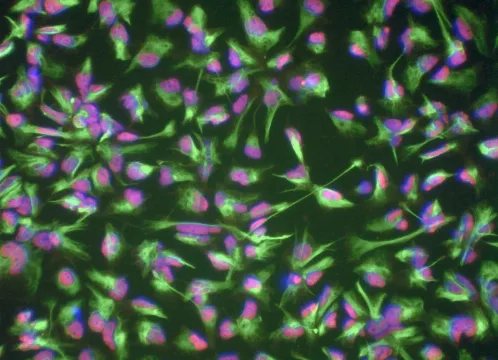
Researchers in Germany gradually reversed human cells’ ages by decades. By doing so, they could track the de-aging process in a way previous rejuvenation experiments could not.

The promising candidate contains roughly 2 billion times the sun’s mass in hydrogen, yet appears to have no stars. Studying it could help answer questions that have vexed astronomers for years.
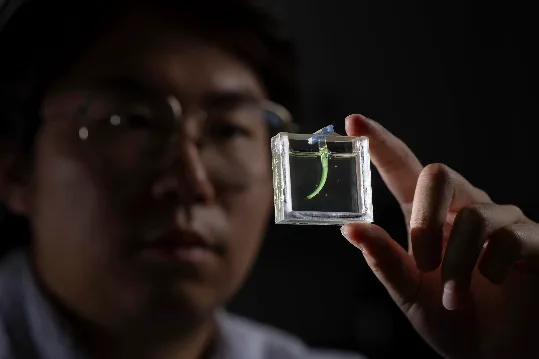
The key to the movement of these flexible robots is the algae’s photosynthetic capabilities.

Tesla’s massive EV is the second within the last year to get the ax, while smaller vehicles are proliferating. It could be a huge benefit for the US battery supply chain.

Outsourcing planning to AI can lead people to surrender their own critical thinking, which can have potentially deadly results in places like the backcountry.

Maison Lineti, a French whisky company, is using wine-making techniques to create a new type of whisky that is both innovative and flavorful.

A biotech startup let an agent choose a gene therapy and successfully inject the treatment, offering a startling glimpse of the future of research labs.

The Iran War's impact on oil prices is affecting key Senate races, with high fuel costs and fertilizer prices impacting voters in various states.

Death Clock promises to predict when you’re going to die and help you extend your time on Earth. After a month, I felt like it was sucking the life out of me.

The University of New Mexico Health Sciences Center disclosed a cyberattack that caused system outages and disrupted patient care and academic activities. [.

New research reveals the Deepwater Horizon oil spill's long-lasting impact on marine life, even a decade after the disaster.

Warhound, a new startup led by Palmer Luckey and Ben Lamm, aims to genetically enhance dogs for military, law enforcement, and emergency response roles.

WIRED's Katie Drummond shares her exclusive interview with Nathan Fielder, the director of You Can See Everything, a documentary about Elizabeth Holmes.

A new study suggests that human activities, particularly the burning of fossil fuels, may have prevented the Earth from entering another ice age.